


London Diaries with Burcu Yatmazoğlu
One of the things I love most about living in London is that some exhibitions refuse to stay within the walls of a museum. They spill into the streets, inspire restaurant menus, appear in shop windows and, for a while, become part of everyday life.
This summer, that cultural presence belonged to Frida Kahlo.
It all began with Frida: The Making of an Icon at Tate Modern. Frida is one of those rare artists we think we know. Her flower crowns, signature brows and striking self-portraits have become instantly recognisable around the world. Yet perhaps that is where the contradiction lies. Almost everyone recognises Frida’s face, but how many of us truly know her work?
That is precisely the question Tate Modern’s exhibition explores.
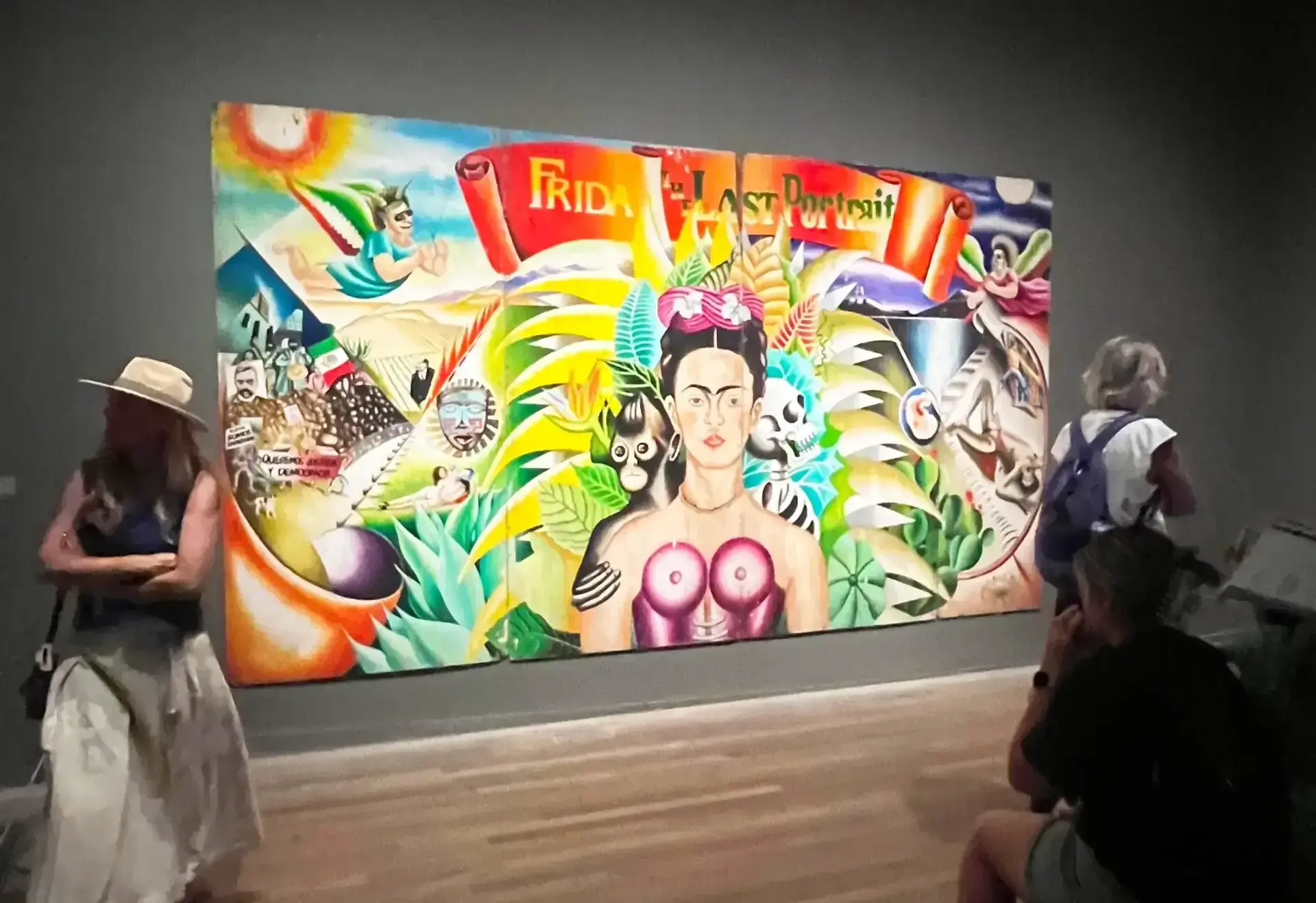
Frida’s influence extends far beyond her own body of work; it lives on through the hands and imaginations of other artists. Her colours, her stance, and the way she claimed ownership of her own story still move quietly yet powerfully through contemporary art today.
What struck me most was not a particular painting, but the cultural phenomenon surrounding the artist herself. Today, Frida’s image appears everywhere, from fashion campaigns and coffee mugs to tote bags and social media feeds. In many ways, her likeness has become as famous as her art.
An essay in Tate Etc. magazine touches on this very idea. It questions how Frida became one of the most reproduced artistic figures of our time, while reminding us that this transformation was not entirely accidental. Long before the age of personal branding, Frida understood the power of image. Through her clothing, jewellery, hairstyles and carefully crafted self-portraits, she wasn’t simply creating art; she was consciously creating and communicating an identity.
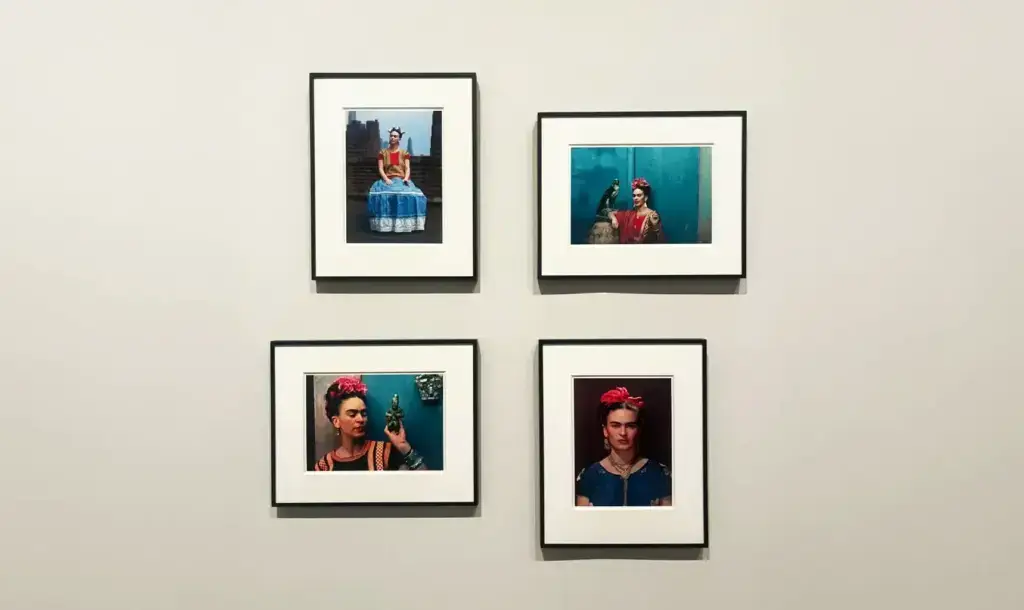
Perhaps that is why she still feels remarkably contemporary.
Standing in front of her self-portraits, I found myself looking beyond the iconic face. What emerges instead is someone who placed identity, pain, politics, love and resilience at the centre of her work. There is no pursuit of perfection in Frida’s paintings—quite the opposite. Vulnerability and strength coexist effortlessly. Physical suffering sits alongside defiance. Intimacy and performance blur into one another.
I have always found that honesty compelling. In a world increasingly filtered through carefully curated images, Frida’s work feels refreshingly direct. Her paintings do not ask us to admire perfection. They invite us to confront complexity. Perhaps that is why they continue to resonate decades later.
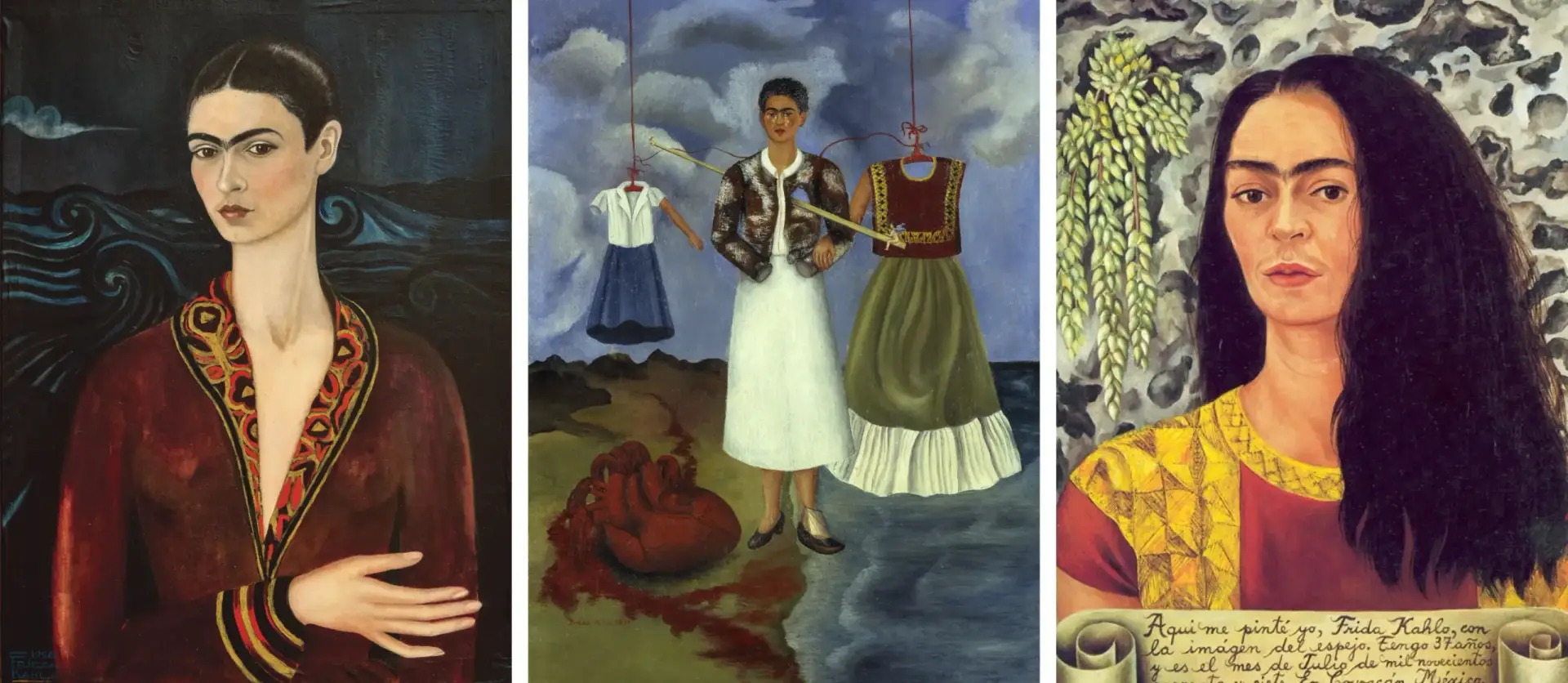
The exhibition also moves beyond the familiar narrative of Frida as a tragic figure. Too often, conversations about her focus exclusively on pain, illness or heartbreak. Here, a different Frida emerges: politically engaged, intellectually curious, witty, ambitious and deeply aware of the story she wanted to tell about herself.
By the time I left the galleries, I wasn’t thinking about a single artwork. It was the idea that what made Frida an icon was not simply her artistic talent, but her ability to turn her life, identity and worldview into something entirely her own.
Yet the Frida experience did not end at Tate Modern.
Following the exhibition, I made my way to Tate Modern Restaurant, where a special menu had been created in collaboration with Santiago Lastra, founder of Michelin-starred KOL. Normally, my expectations of museum restaurants are relatively modest. A good coffee and a pleasant view of the Thames usually suffice.
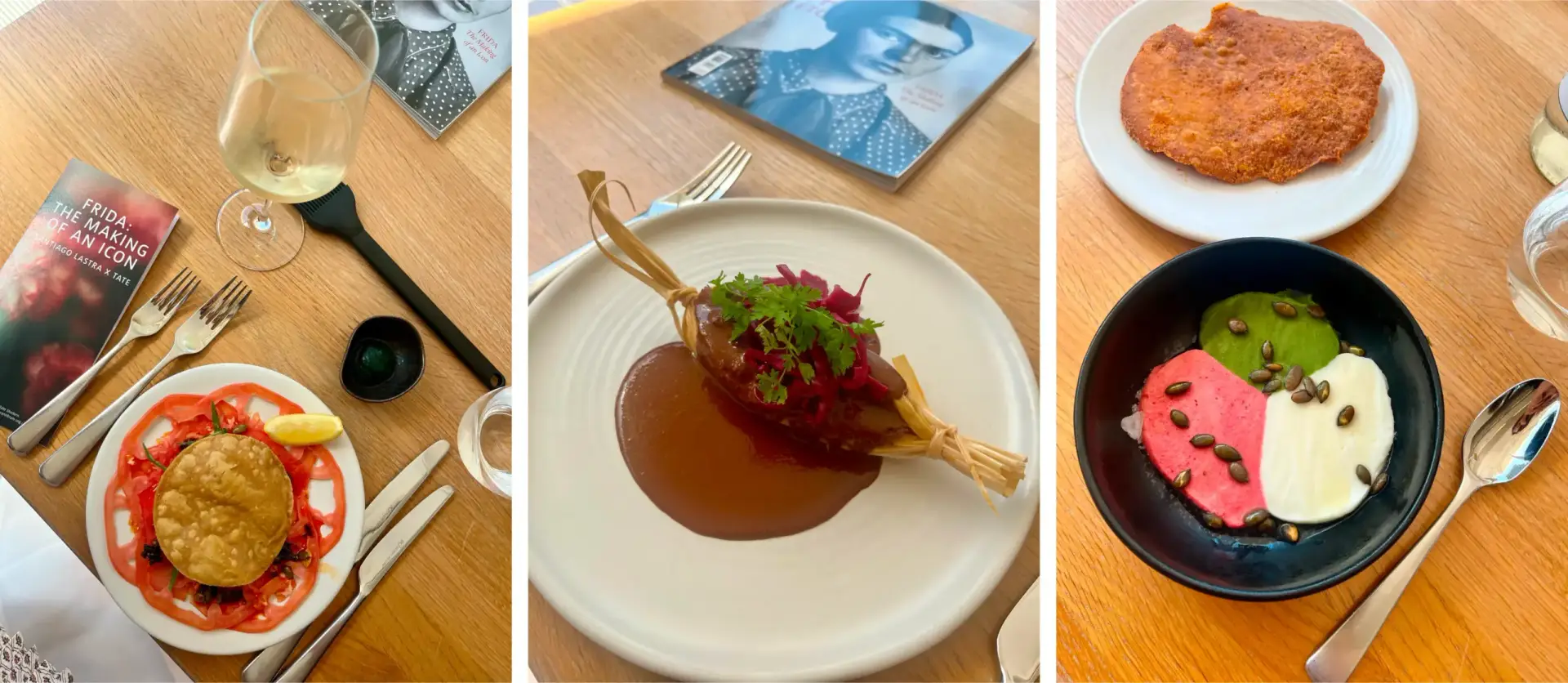
This experience was something else entirely. The menu took inspiration from different moments in Frida’s life, translating them into a culinary narrative. One highlight was La Casa Azul, a tribute to Frida’s famous Blue House in Mexico City. Served with a vivid blue sauce that transformed colour when citrus was added, the dish felt less like a starter and more like a small performance piece.
Playfulness ran through the meal, a quality often present in Frida’s own world. The main course featured a short rib tamal inspired by mole, a sauce closely associated with Mexican culinary heritage and reportedly one of Frida’s favourites. Rich, layered and deeply comforting, it captured the complexity and warmth that runs through Mexican cuisine.
My favourite course, however, arrived at the very end. Inspired by Viva La Vida, Frida’s final painting, the dessert brought together vibrant colours and fresh flavours in a way that felt both joyful and poetic. It seemed to echo the energy that lingered in my mind after walking through the exhibition.
One of the things London does exceptionally well is allow culture to move across disciplines. An exhibition becomes a meal. A story becomes an experience. Art escapes the gallery and finds new forms of expression.
A few days later, Frida appeared once again.
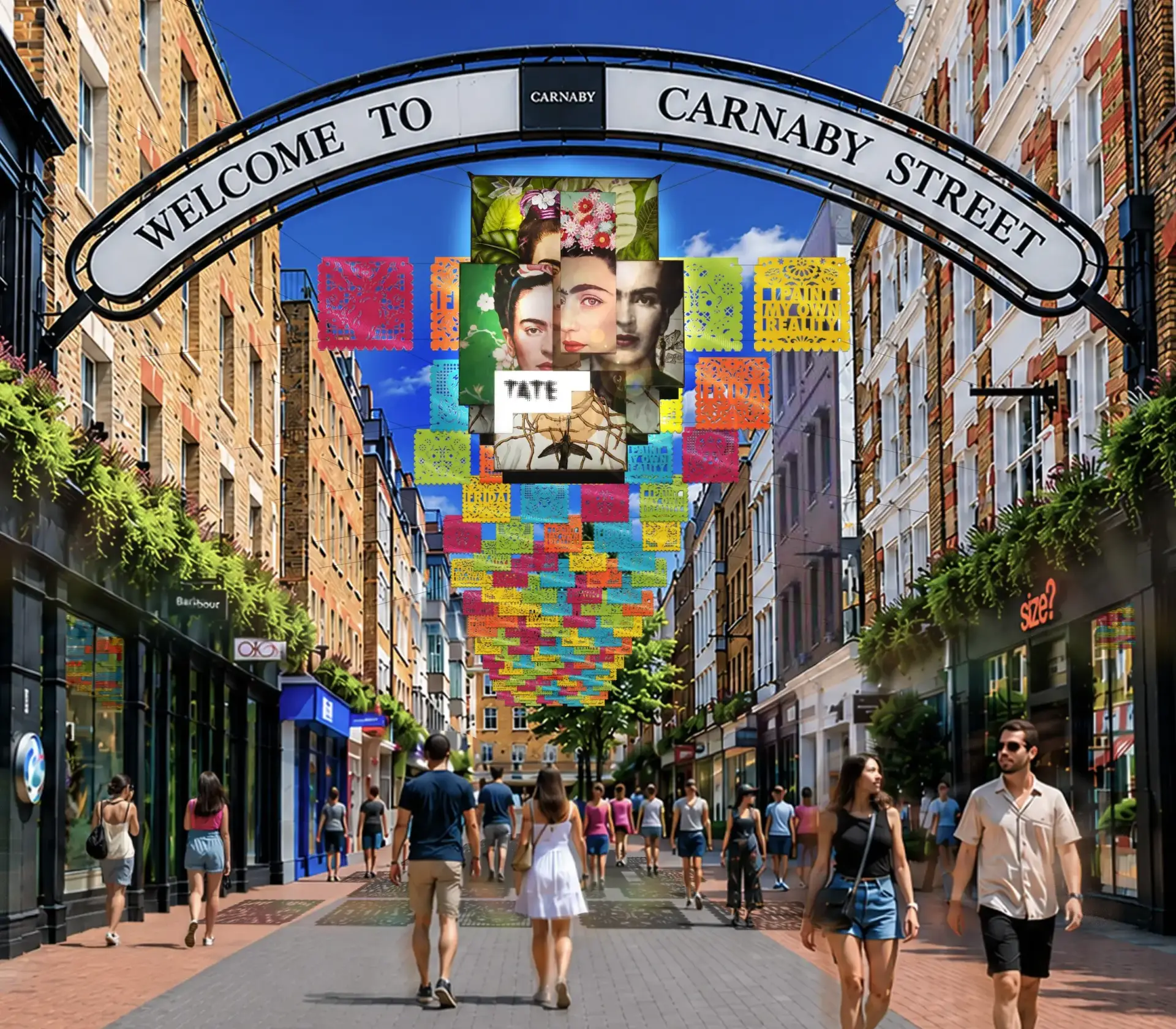
Soho always has a particular energy. People drift between cafés, shops and side streets, creating a sense of movement that feels uniquely London. Through exhibition activations and visual installations connected to the show, Frida seemed to have travelled beyond Tate Modern and into the city’s everyday rhythm.
People stopped to take photographs. Others paused briefly before moving on. Some were discovering the exhibition for the first time. Watching this unfold, I found myself reflecting on why Frida still feels so relevant. She has become far more than an artist. For many, she represents individuality, self-expression and the courage to embrace every part of one’s identity.
Perhaps that is why London suits her so well. This is a city that celebrates difference. A city constantly shaped by new voices, perspectives and stories.
On my journey home, I thought about the various fragments of the day. The galleries at Tate Modern. Lunch overlooking the Thames. The Frida-inspired menu. The Soho shopfronts. The moments where art unexpectedly intersected with daily life.
The memory that stayed with me was not a particular painting. It was a feeling. Some artists are exhibited in museums. Others seem to take up temporary residence in the cities they visit.
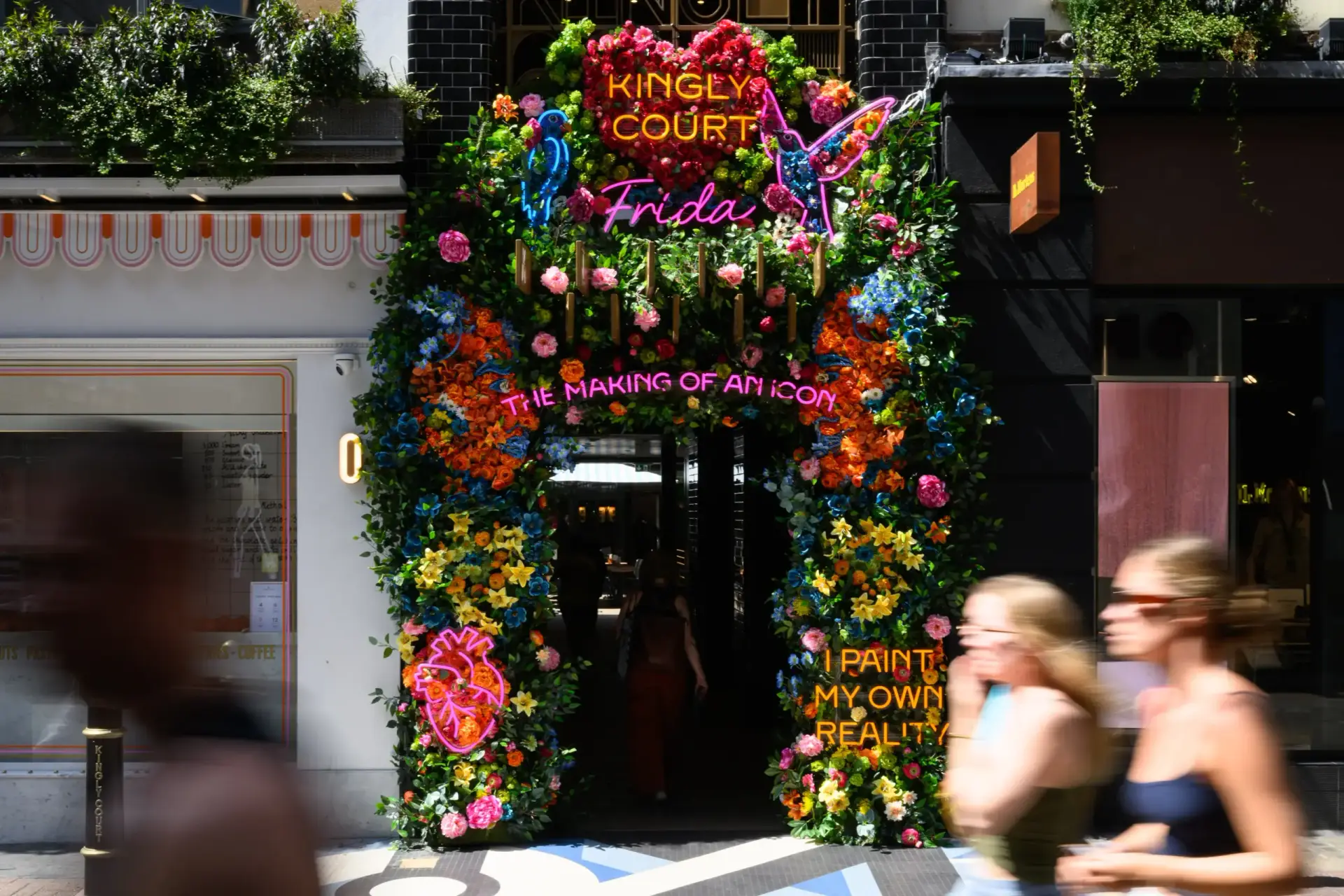
This summer, Frida Kahlo did exactly that. What began as an exhibition became something much bigger: a story unfolding across galleries, restaurant tables and city streets. And perhaps that is one of London’s greatest strengths. Its ability to weave culture into everyday life, until it becomes impossible to tell where the exhibition ends and the city begins.
This piece was penned for Art50.net by Burcu Yatmazoğlu, a London-based marketing professional. Working for Hilton, Burcu enjoys exploring the intersection of gastronomy and travel, discovering cities through their exhibitions, dining scenes and streetscapes.
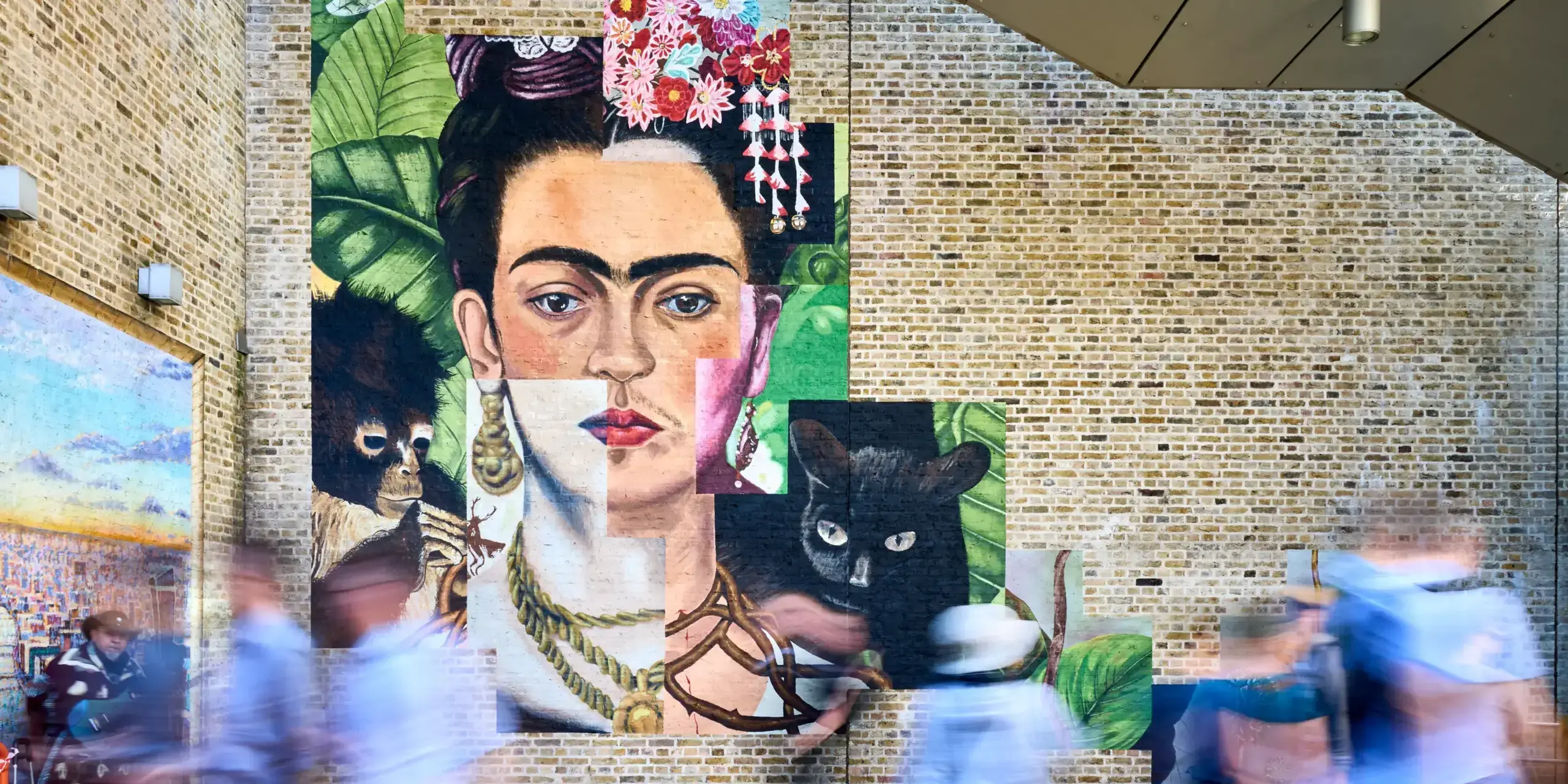
Cover Image: Frida: The Making of an Icon mural. Thames Path, Blackfriars Station