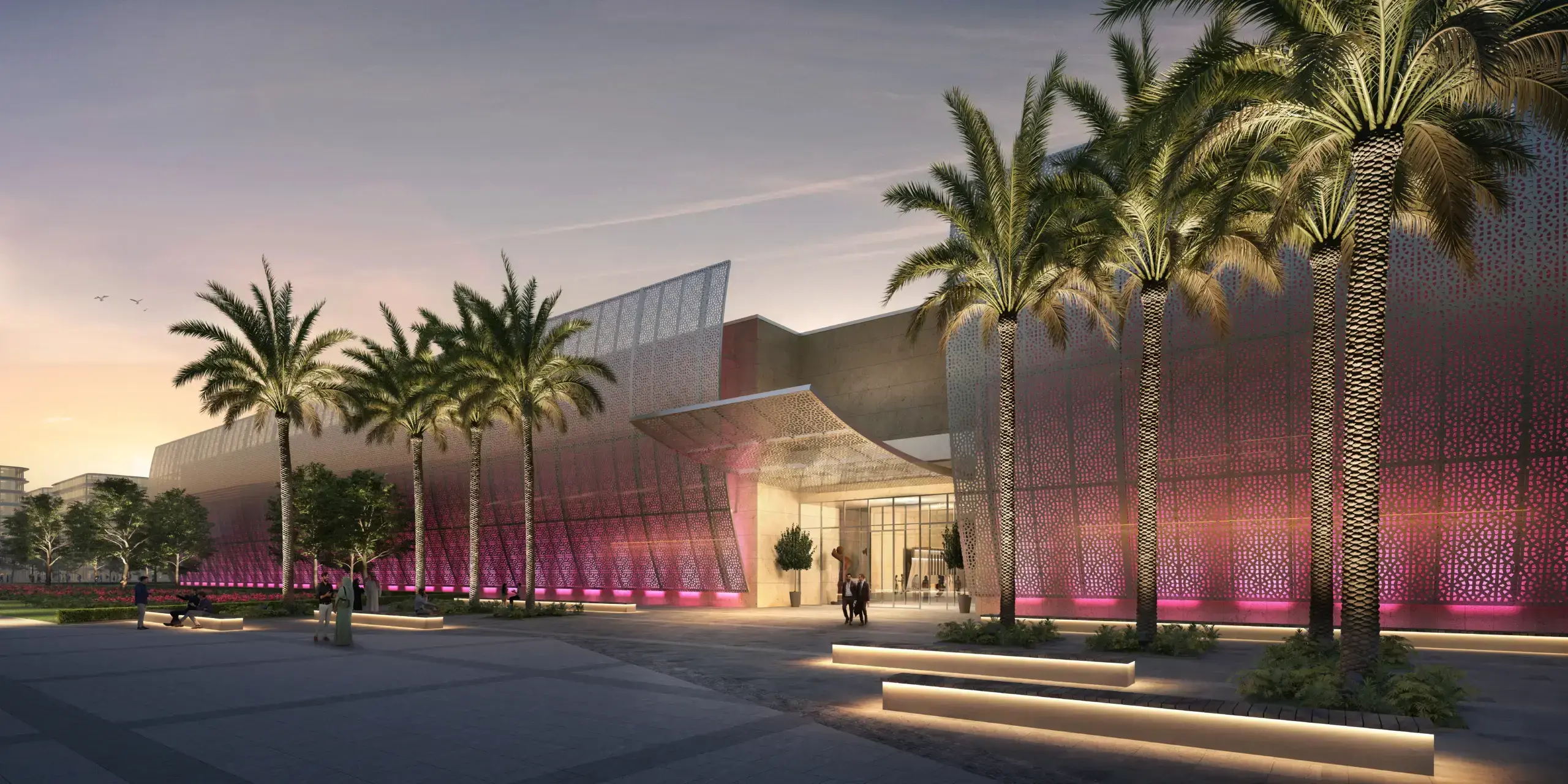
In November 2026, Frieze expands its international art fair network into a new geography with the inaugural edition of Frieze Abu Dhabi. Taking place at Manarat Al Saadiyat from 19 to 22 November, the fair will welcome 89 galleries from 64 cities.
With artistic production from West Asia, North Africa and South Asia (WANASA) at its core, the programme places the region’s art histories in dialogue with contemporary international debates through presentations spanning antiquity to the present day.
Building on the 17-year legacy of Abu Dhabi Art, Frieze Abu Dhabi joins Frieze’s established fairs in London, Los Angeles, New York, Chicago and Seoul. Directed by Dyala Nusseibeh, the event will take place in the Saadiyat Cultural District, home to Louvre Abu Dhabi, Zayed National Museum and Guggenheim Abu Dhabi. Frieze Masters Abu Dhabi, curated by Marika Sardar, and Global Futures, curated by Tarini Malik, form the programme’s two principal curatorial strands.
The fair’s Selection Committee comprises Yasmin Atassi (Green Art Gallery), Asmaa Al-Shabibi (Lawrie Shabibi), Amrita Jhaveri (Jhaveri Contemporary), Sandhini Poddar (Curator-at-Large, Guggenheim Abu Dhabi Project) and Glenn Scott Wright (Victoria Miro). Deutsche Bank, Frieze’s long-standing Global Lead Partner, is also supporting the fair. The bank’s dedicated lounge will feature a presentation by UAE-based artist Omar Al Gurg, whose practice explores ecological change and overlooked narratives.
Galleries
The fair’s main Galleries section will feature more than 60 galleries from 56 cities and 32 countries, presenting works dating from the mid-20th century to the present day. Alongside international galleries such as Gagosian, Pace Gallery, Thaddaeus Ropac, Timothy Taylor, Vito Schnabel Gallery and Johyun Gallery, the selection will include leading regional galleries such as Athr, Experimenter, Gypsum, Marfa’ and The Third Line.
Thaddaeus Ropac will present Imran Qureshi’s The Opening Word of this New Scripture (2026), a work informed by the tradition of Mughal miniature painting, alongside two newly created paintings of eagles by Yan Pei-Ming.
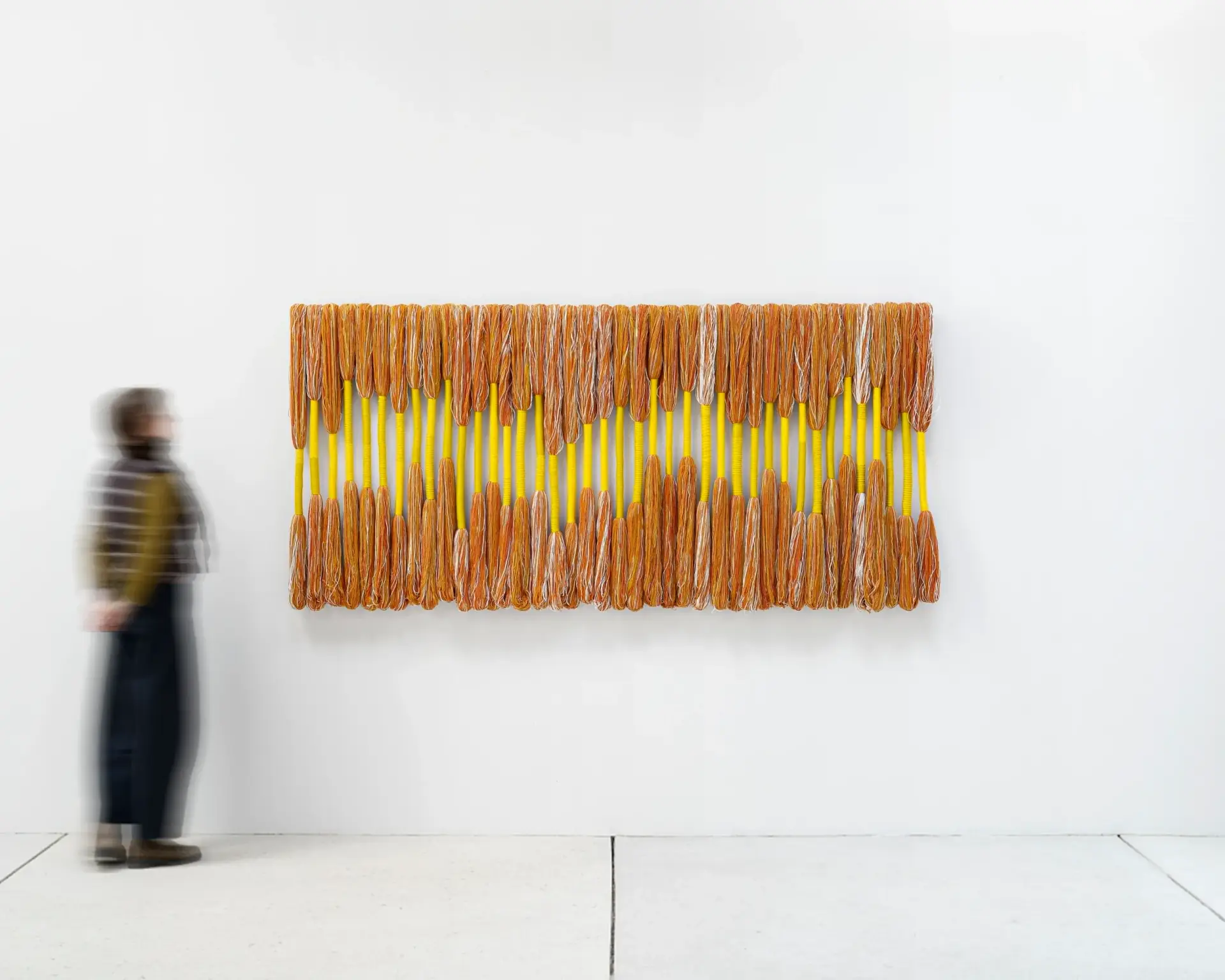
galerie frank elbaz brings together works by Sheila Hicks from different periods of her career. The presentation traces the artist’s transformation of textiles into a sculptural and conceptual medium, while also offering a perspective on her longstanding relationship with the Arab world, which dates back to the early 1960s.
Sheila Hicks, Contained Energy, 2026. Courtesy of the artist and galerie frank elbaz. Photo: Claire Dorn
Athr will present a special focus on the early works of Mounirah Mosly, a pioneering Saudi artist. Bringing together rarely exhibited works, the presentation will be shown alongside Public Viewing Room, a participatory project by Galleria Franco Noero and Rami Farook.
Vigo Gallery brings together eight works from Ibrahim El-Salahi’s Tree series. Inspired by the Haraz tree native to Sudan, these works approach the tree as both a personal self-portrait and a spiritual metaphor.
Leila Heller Gallery will present a retrospective of Farideh Lashai (1944–2013), encompassing her work across painting, works on paper, installation and moving image.
Pace Gallery will trace different stages of Emily Kam Kngwarray’s artistic career, from her early batik textiles to her later canvases. The presentation will also include paintings that have never previously been exhibited.
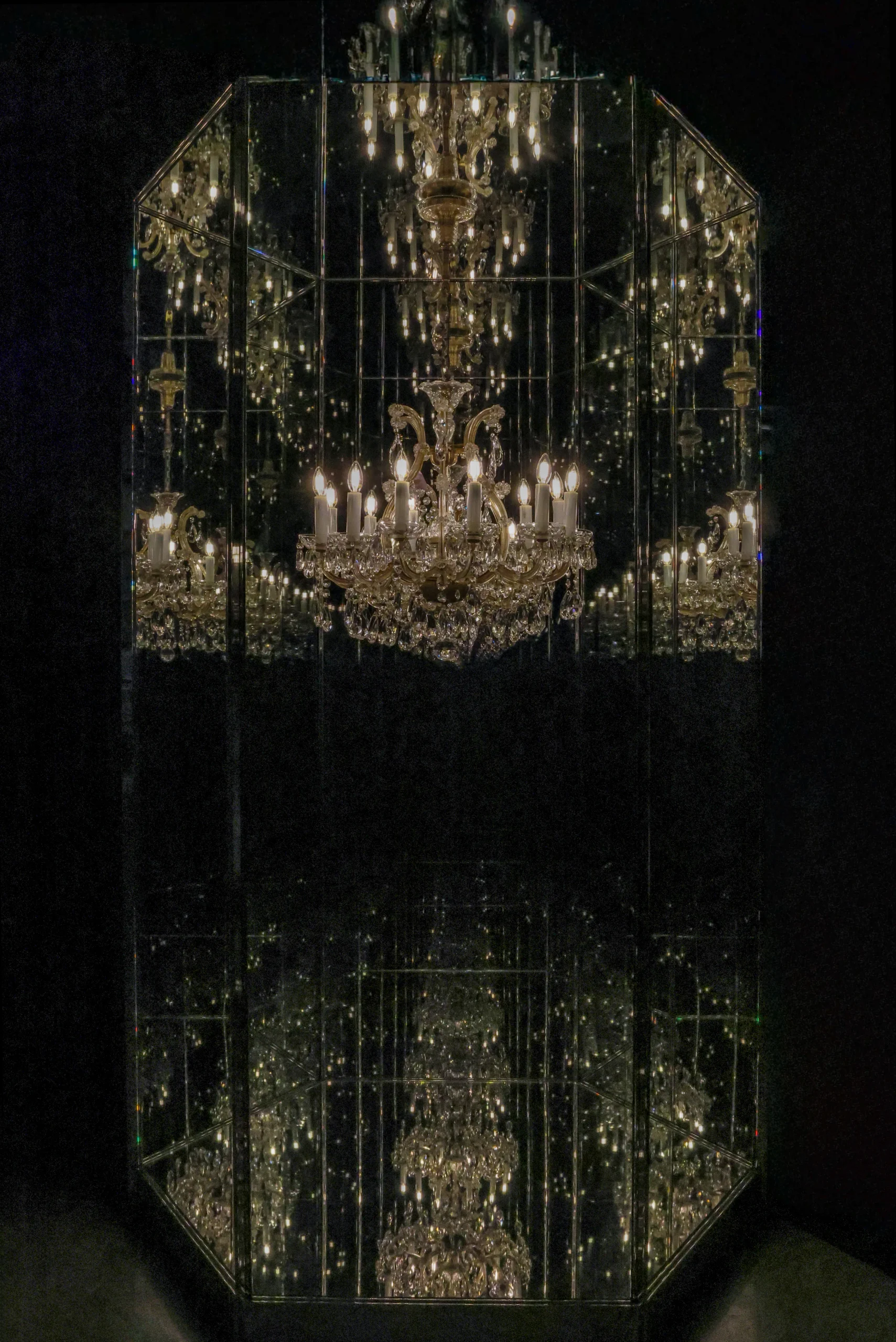
Victoria Miro will take part with a group presentation bringing together works by Idris Khan, NS Harsha and Yayoi Kusama. Kusama’s Infinity Mirror sculpture will also feature in the selection. The artist’s Infinity Mirror room, conceived for Guggenheim Abu Dhabi, is scheduled to go on view when the museum opens on 11 December 2026.
Sfeir-Semler Gallery will bring together three generations of artists from the Arab world. Works by pioneering figures such as Etel Adnan, MARWAN and Samia Halaby will be presented alongside those of Lawrence Abu Hamdan, Khalil Rabah and Taysir Batniji, as well as younger artists including Tarik Kiswanson, Alia Farid and Dana Awartani.
Abu Dhabi: Artistic Legacies and New Directions
This section considers the historical foundations of the art scene in Abu Dhabi and its surroundings in dialogue with contemporary artistic practices. Bringing together pioneering artists and younger generations, the selection explores identity, materiality and space, as well as the impact of rapid urbanisation on artistic expression.
Salwa Zeidan Gallery brings together works by Hassan Sharif (1951–2016) and Hussain Sharif in a presentation titled Art Without Compromise. Shaped around the concepts of repetition, accumulation, gesture and labour, the works offer an opportunity to reconsider the ground-breaking contribution Hassan Sharif made to the history of contemporary art.
Carbon 12 will present Sarah Almehairi’s Off Centred series. In these works, the surface moves beyond its conventional role as a support for painting, taking on a sculptural quality. Developed through the relationship between space and material, the works question notions of space, structure, abstraction and identity.
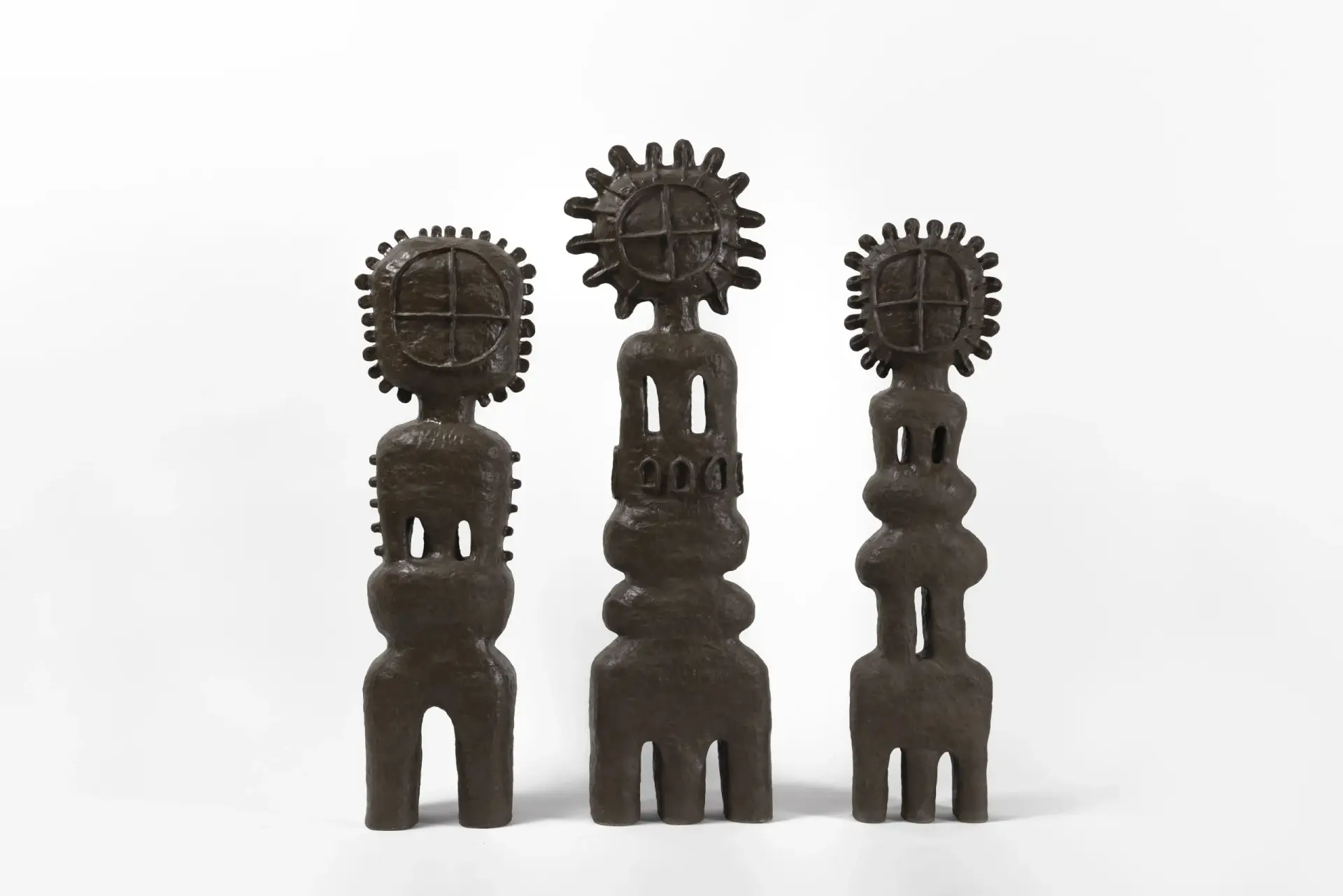
Iris Projects will present works by Ammar Al Attar, Dhabia Al Qubaisi, Juma Al Haj, Shamsa Al Omaira, Suliman Al Salem and Eman Al Hashemi, who has recently joined the gallery’s roster, under the title Fields After the Digital Flood. Bringing together artists from across the Gulf, the selection explores new visual languages shaped by technological transformation and urbanisation.
Eman Al Hashemi, Sculptures i, ii, iii, 2026. Courtesy of the artist and Iris Projects
Iyad Qanazea Gallery will present Jawad Al Malhi’s works Caves of the Forgotten and Memories of Future. Drawing on landscapes in Abu Dhabi and Palestine, the works examine the relationship between urban change, displacement and landscapes gradually fading from collective memory, as seen through the transformation of Saadiyat Island.
Focus: Emerging Generation
Dedicated to younger galleries, the Focus section brings together solo presentations that foreground experimental approaches and personal narratives. Addressing themes such as migration, belonging, land and memory, the section also provides bursary support to each participating gallery.
Thuy Tien Nguyen, presented by Solo, draws on the imagery and mechanisms of automatic music boxes in her works. Placing the historic interiors of the Independence Palace of the Republic of Vietnam alongside the contemporary aesthetics of corporate offices, the artist examines the relationships between furniture, power and representation.
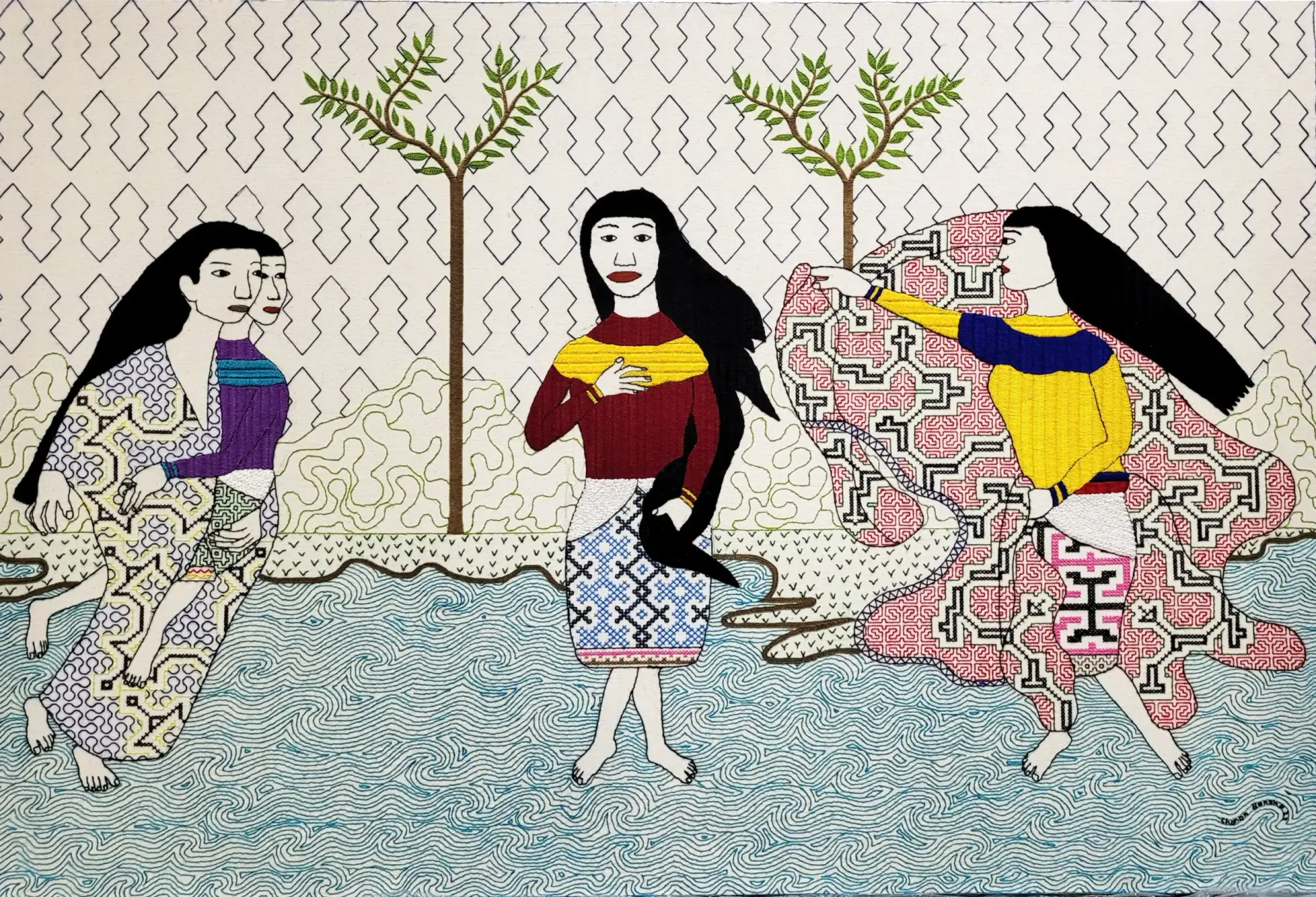
Chonon Bensho, presented by W-galería, draws on the knowledge systems and visual culture of the Shipibo-Konibo community in the Peruvian Amazon. Making visible the interconnectedness of humans, plants, animals and the spiritual world, the artist explores how local knowledge can find expression within contemporary art.
Chonon Bensho, Jone Metsa Noma (The beautiful woman of the invisible jungle), 2022. Courtesy of the artist and W-galería
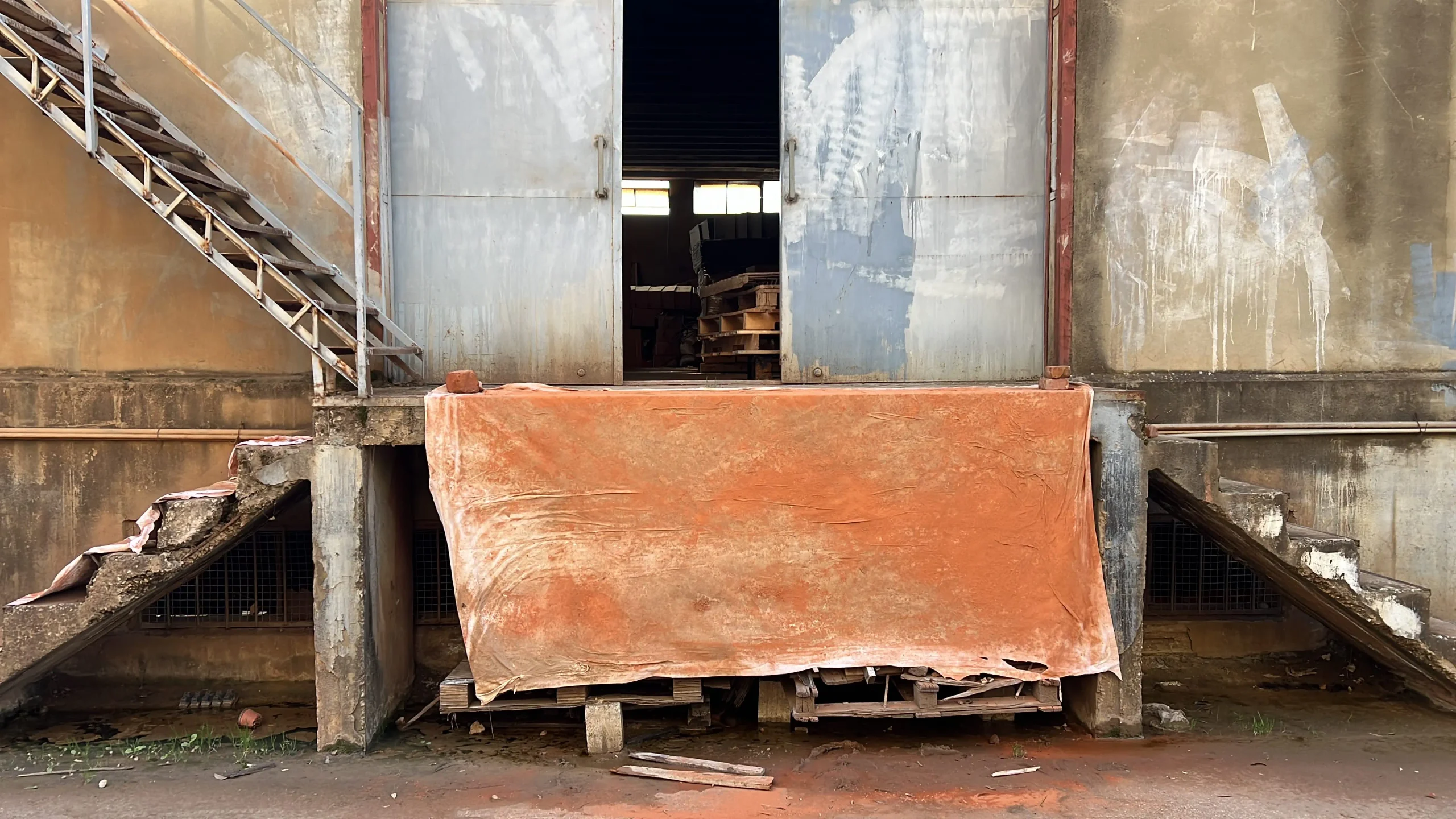
Dala Nasser will participate with Commonwealth and Council and, as the inaugural recipient of the Frieze Abu Dhabi Artist Award, will present a new installation at the fair. In Innocents at Home, she transfers traces of ruins, tombs and rock surfaces from West Asia onto fabric. Marks created on muslin and cotton using ash and natural pigments are transformed into an installation through handmade wooden supports.
Marigold Santos, presented by Patel Brown, brings together ink drawings, sculptures made from Capiz shells and figurative paintings. Drawing on Filipino mythology and her diasporic experience, the artist explores transformation, hybridity and ancestral memory, with particular attention to the shape-shifting figure of the asuang.
Frieze Masters Abu Dhabi: Across the Indian Ocean
Curated by Marika Sardar, Frieze Masters Abu Dhabi approaches the Indian Ocean as a historic crossroads of trade, knowledge and cultural exchange. Spanning antiquity to the early 20th century, the selection traces connections between West Asia, East Africa and South Asia through rare books, manuscripts, maps and historical objects.
ArtAncient will present Portrait L, a portrait of a woman made in Egypt in the 1st century CE. Considered one of the oldest surviving examples of painted portraiture, the work is being exhibited in the Middle East for the first time since it left Egypt in 1888. The figure’s pearl earrings originated in the Persian Gulf, while her emeralds came from the Eastern Desert near the Red Sea. The work also bears early traces of the trade networks that developed around the Indian Ocean.
Daniel Crouch Rare Books, in a presentation titled Monumenta Cartographica, brings together maps, globes and photographs spanning the 1680s to the 1980s. The selection includes Hendrik Doncker’s 1644 map of the Indian Ocean.
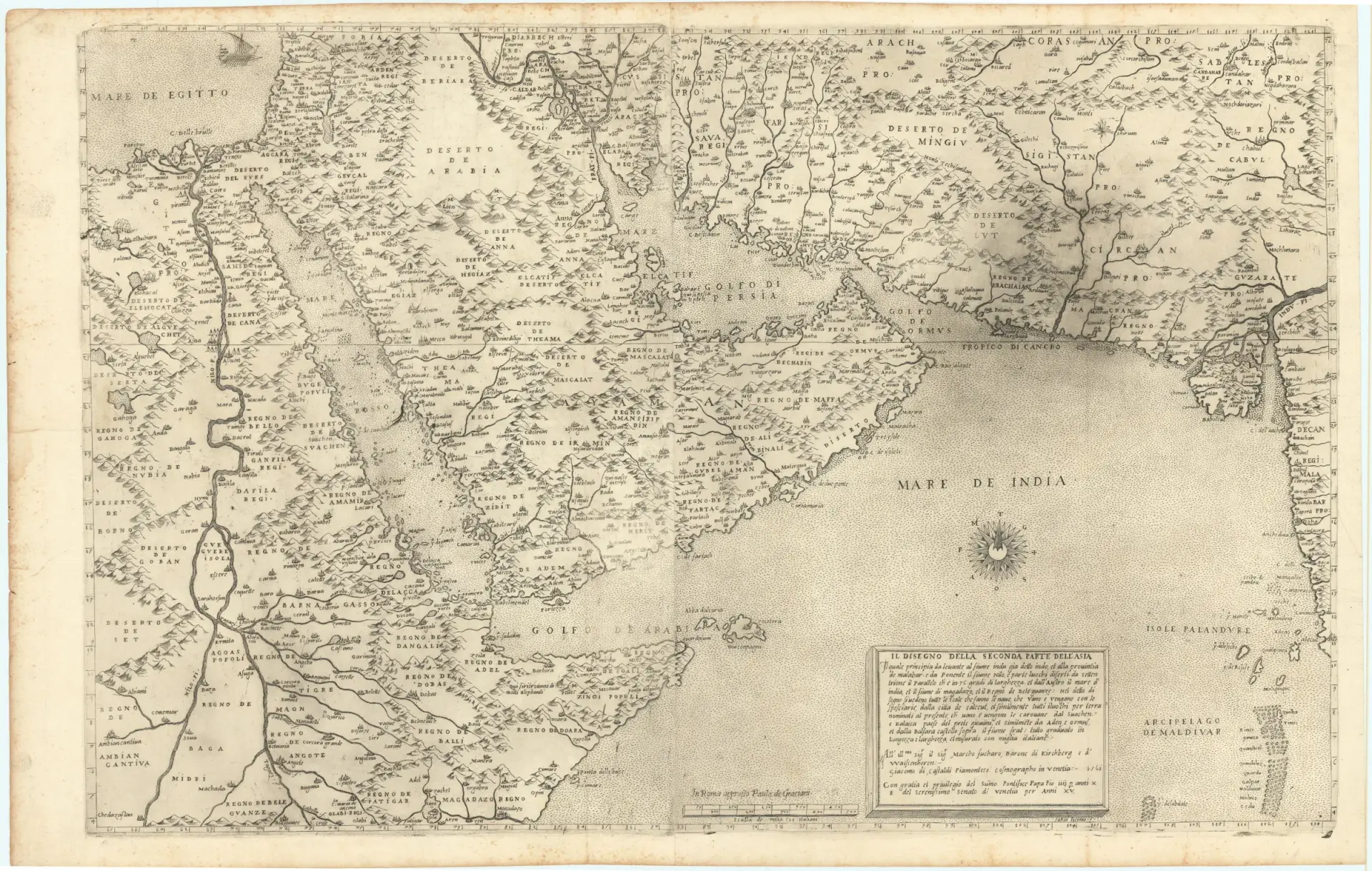
EQTNA Rare Books explores the circulation of knowledge and culture between Arabia, India and the Indian Ocean through rare books, manuscripts, maps and works of art.
Giacomo Gastaldi (c. 1500’1566), Il disegno della seconda parte dell’Asia. Venice, 1561. Courtesy of EQTNA Rare Books
Peter Finer presents a selection of historical arms and armour from Europe, East Asia, India and the Islamic world. Highlights include a 17th-century Indian dagger with a blue jade hilt in the shape of a horse’s head, and a 14th-century Mongol helmet from the Golden Horde, inscribed with Qur’anic verses in silver.
Peter Harrington turns to the early history of exploration and navigation through books and maps ranging from Marco Polo’s travel accounts to the cartographic works of Ptolemy and Dudley, as well as Linschoten’s maritime guide.
Inlibris Rare Books & Manuscripts, in a presentation titled Across the Indian Ocean: Routes of Faith, Trade, Diplomacy and Empire, traces networks of faith, trade and power across the Indian Ocean. The selection includes a royal funerary stele from Yemen, Albuquerque’s Commentarios, documenting Portuguese expansion into East Africa, India, Muscat and Hormuz, and an Arabic medical manuscript copied in Gujarat.
Global Futures: Across Generations and Geographies
Curated by Tarini Malik, Global Futures brings together the histories, materials and personal experiences of artists from different generations through eight solo presentations. Their practices are connected through questions of place, identity and memory in relation to the United Arab Emirates and the wider geographies surrounding it.
Ala Younis, presented by Taymour Grahne Projects, will show new mosaic works titled Climate Conditions. Made using materials sourced from Jordan, the panels reconstruct Abu Dhabi’s modernist architecture through the medium of handcrafted mosaics. In doing so, they bring the relationship between architecture, climate and geography into focus through the material itself.
Abdullah Al Saadi, presented by Aisha Alabbar Art Gallery, will show works from his Naked Sweet Potato series. Initiated in 2011 for the United Arab Emirates Pavilion at the 54th Venice Biennale, the series takes the everyday sweet potato as its subject through drawing, painting and sculpture. Opening familiar forms onto abstraction, the works question the place of the ordinary within artistic representation.
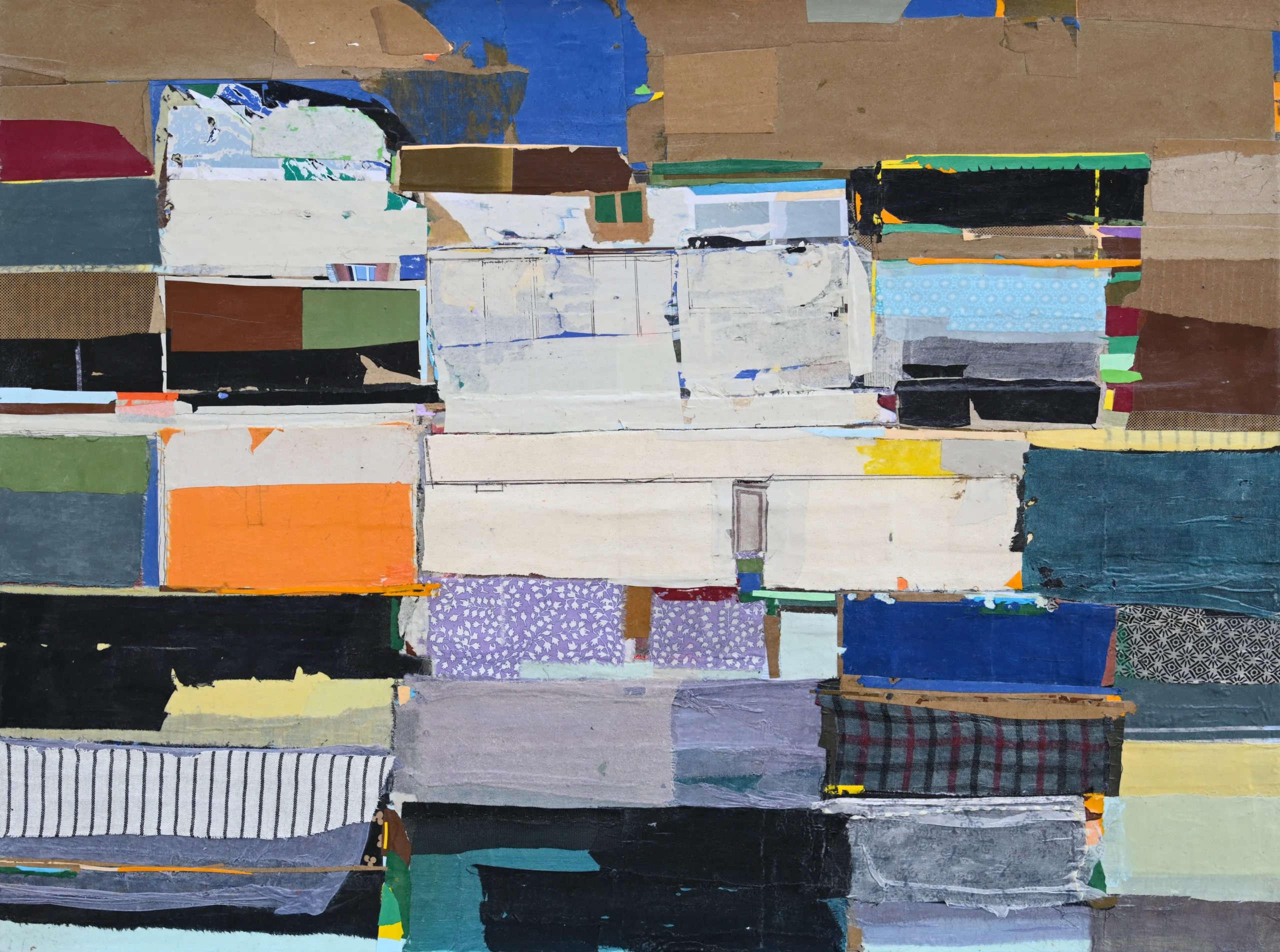
Mohammed Joha, presented by Zawyeh Gallery, will show a presentation titled No Shelter. Following the artist’s recent presentation at the 61st Venice Biennale, the works arriving in Abu Dhabi address displacement, memory and belonging through textile and paper collages. By drawing a distinction between being houseless and being homeless, Joha reminds us that identity is not tied solely to a physical place.
Mohammed Joha, No Shelter 01, 2026. Courtesy of Zawyeh Gallery and the Artist
Tania Candiani, presented by Vermelho, will show her project Roots System. Through embroidery, the artist makes visible the underground root networks of plants, usually hidden from view. Bringing together installation, image and sound, the work explores the connections that make life possible but so often go unnoticed.
Seta Manoukian, presented by Marfa’, will exhibit Willing to Begin (1990), from her T-Shape series. A work connected to the experience of exile, it will be presented alongside pieces made after the artist returned to painting in 2016. Manoukian’s renewed engagement with painting following more than a decade of Buddhist practice points to the relationship between personal transformation and artistic expression.
Curatorial Programme
Frieze Abu Dhabi’s curatorial programme comprises a series of projects that bring the region’s art histories into dialogue with contemporary practices. At its centre is a newly commissioned work by Dala Nasser. The programme also includes In Dialogue, an exhibition bringing together artists from the United Arab Emirates, and Frieze Sculpture Abu Dhabi, which will take place at Mamsha Beach on Saadiyat Island. Together, these initiatives extend the fair’s programme beyond its exhibition halls.
Frieze Abu Dhabi Artist Award
The inaugural Frieze Abu Dhabi Artist Award has been awarded to Lebanese artist Dala Nasser, with Nabila Abdel Nabi as curator. As part of the award, the artist is developing Qubbat Duris, a site-specific installation that will occupy a central space at the fair.
The title refers to a 13th-century monument near Baalbek in Lebanon’s Bekaa Valley. Constructed from fragments of Roman-era limestone sarcophagi placed atop eight older granite columns, the structure brings traces of different periods and cultures together within a single architectural form. Drawing on this layered historical heritage, Nasser’s project explores the relationship between material, memory and cultural continuity. The award is made possible with the support of Friends of Frieze Abu Dhabi.
Dala Nasser, Qubbat Duris in progress, 2026, Beirut, Lebanon. Courtesy of the artist and Commonwealth and Council
In Dialogue
Conceived as the fair’s new main exhibition programme, In Dialogue aims to bring together two artists from different generations in the United Arab Emirates each year. The programme is organised by Abu Dhabi-based Dirwaza Curatorial Lab and curated by the institution’s founder, Munira Al Sayegh, together with Hessa Al Nuaimi and Dania Al Tamimi.
The inaugural exhibition, titled At Another Meeting Point, places the works of Mohammed Kazem and Alia Zaal in conversation, bringing different generational approaches to art into view. Rather than establishing direct similarities between the two artists’ practices, the exhibition considers how art develops different forms of expression in response to changing social and cultural conditions.
Frieze Sculpture Abu Dhabi
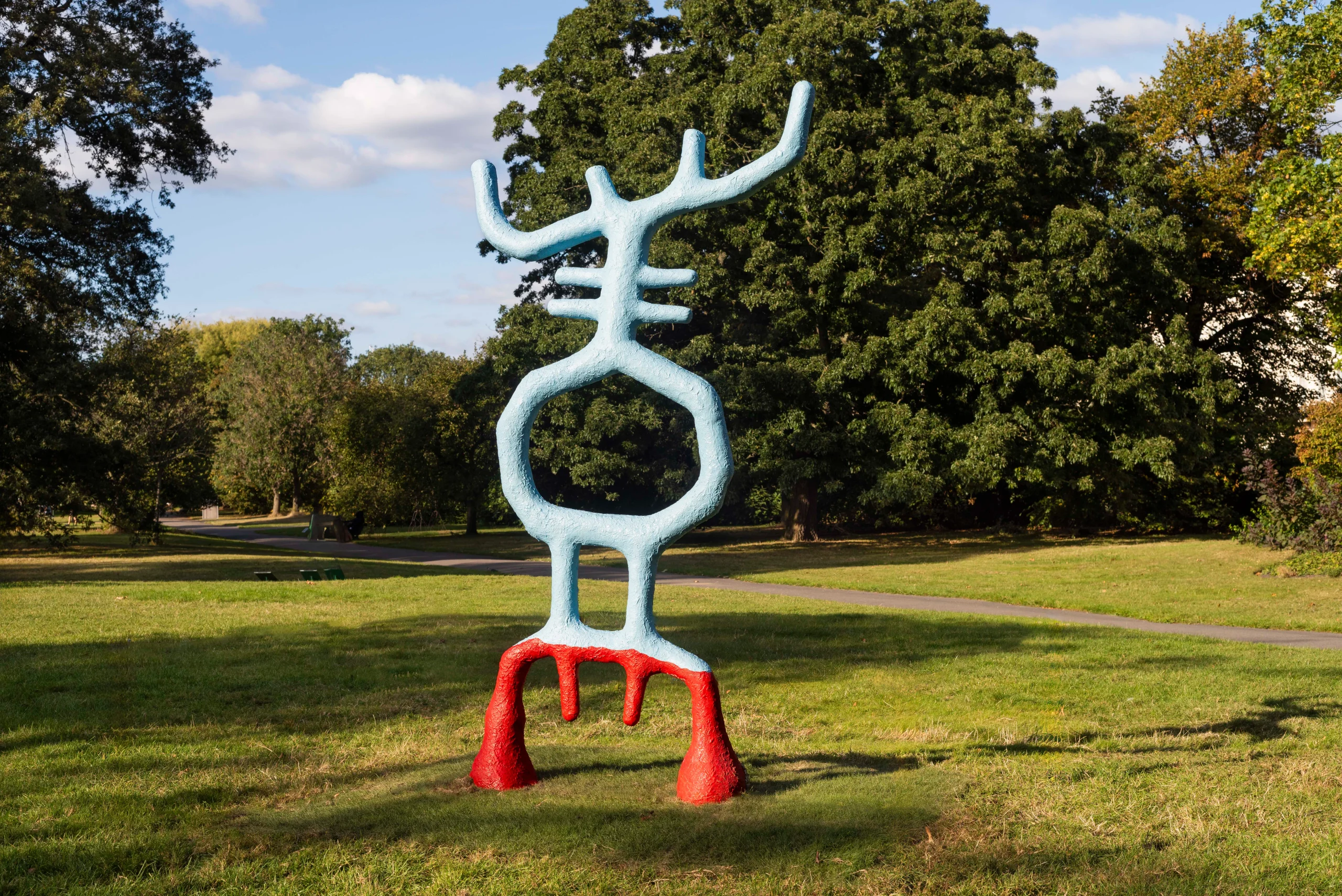
Extending along Mamsha Beach on Saadiyat Island, Frieze Sculpture Abu Dhabi brings sculpture into the everyday experience of public space. Among the works in a selection shaped around ideas of form, material and time is Zeinab Alhashemi’s The Nut and Bolt. Presented by Tabari, the work recontextualises the nut-and-bolt mechanism, an everyday component of urban construction, exploring the sculptural potential of ordinary objects.
The programme also includes works by artists such as Mohamed Ahmed Ibrahim (Lawrie Shabibi), Imran Qureshi (Thaddaeus Ropac) and Kamran Samimi (The Third Line). Addressing relationships between the natural and built environments, and between past and present, the selection reveals the connections sculpture can establish with public space at different scales.
Mohamed Ahmed Ibrahim, The Form, 2024. Courtesy of the artist and Lawrie Shabibi