


New-generation art & travel experiences
In recent years, content on the Art50.net platform has increasingly centered on major art events worldwide and art-driven travel experiences.
Biennials, art fairs, museum openings, and emerging cultural destinations are reshaping not only artistic production, but also the ways in which art is encountered and experienced. We place particular emphasis on exploring and highlighting how art resonates beyond exhibition spaces—within cities, across geographies, and through travel itself.
Since 2022, we have been closely tracking leading art events, art-led journeys, and cultural routes in Turkey and around the world, advancing our aim of serving as a trusted, informative, and inspiring resource for art professionals, collectors, and those who enjoy traveling through art.
As we reflect on the events that defined 2025—guided by the insights and recommendations of key voices in the art world—we also turn our focus toward identifying the most compelling art destinations for 2026 and beyond, through the following questions:
- Art events you attended in Turkey or abroad during 2025 that left a lasting impression on you…
- Art fairs and/or art events you plan to prioritize in 2026…
For art lovers who enjoy traveling, your recommendations for art routes and/or events to see in 2026 and beyond…
The most memorable events of 2025 included the 18th Istanbul Biennial, the 1st Bukhara Biennial, and many hi-calibar museum and gallery exhibitions in Turkey and abroad, while popular destinations—alongside the ever-popular Paris and London—were routes offering new experiences such as Central and East Asia and Japan’s art islands.
The main events and art destinations standing out in 2026 are shaping up as follows:
The 61st Venice Biennale, to be held between 9 May and 22 November 2026 under the title “In Minor Keys”, will once again transform Venice/Italy into one of the global centers of contemporary art with this edition.
The 7th Mardin Biennial, to take place between 15 May and 21 June 2026 under the title “SKYground”, curated by Çelenk Bafra, will offer a broad experience encompassing surrounding art and cultural destinations along with new areas of expansion.
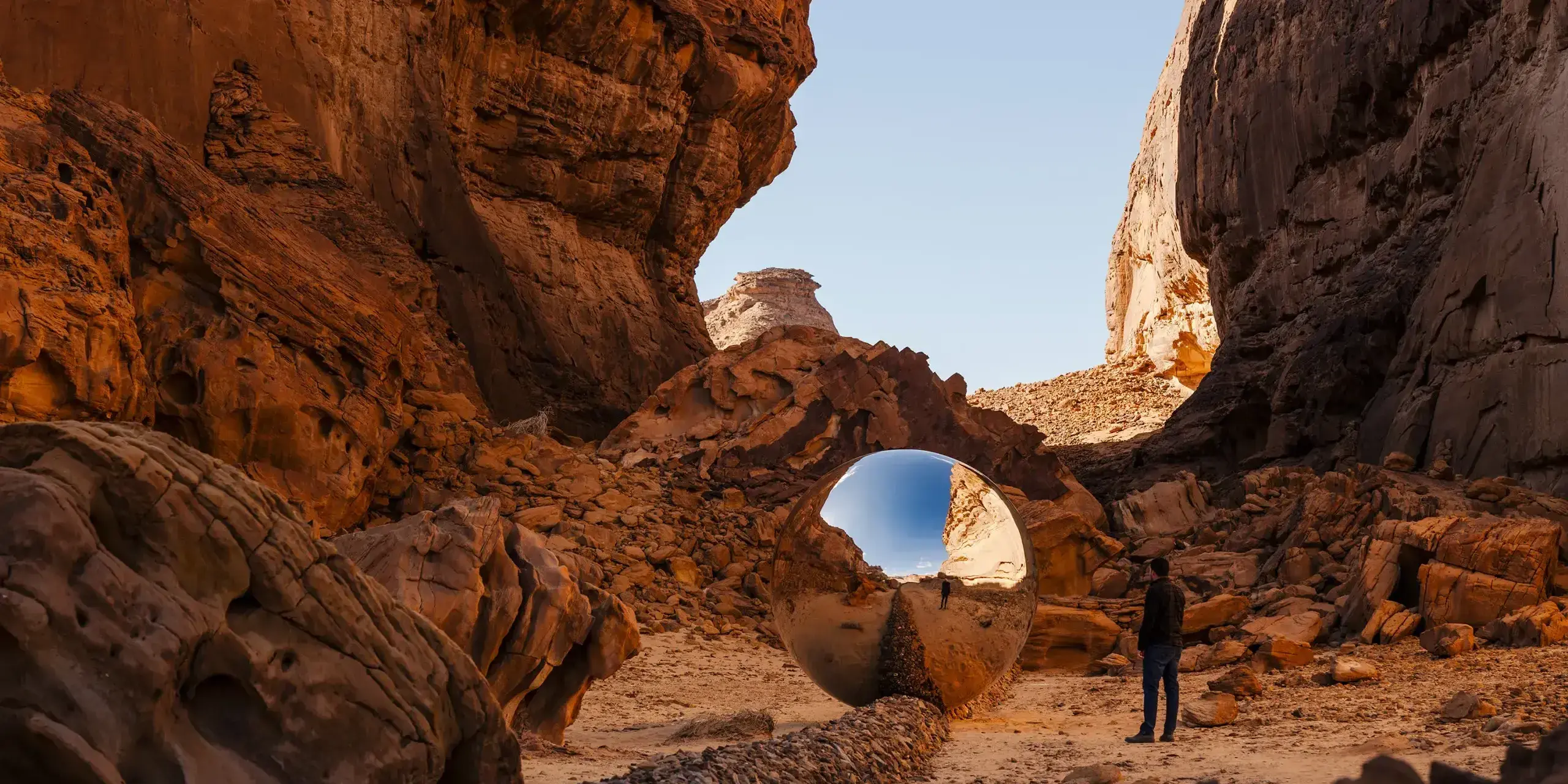
The rise of the Gulf region is clearly felt through ambitious projects such as the first edition of Art Basel Qatar, the Abu Dhabi Art Fair coming under Frieze management, the 3rd Diriyah Biennale in Saudi Arabia, as well as the AlUla Arts Festival and Desert X AlUla.
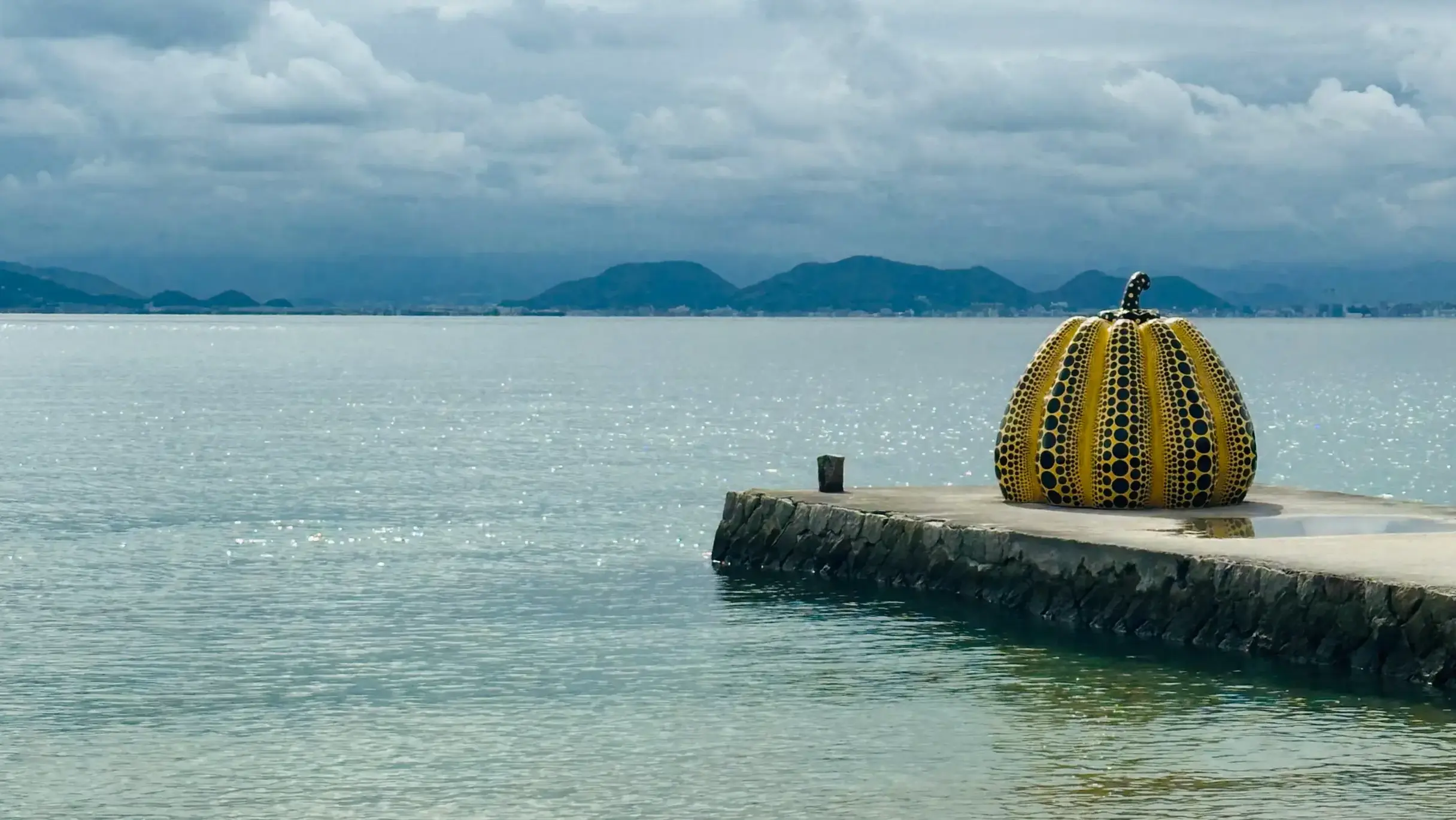
Japan, particularly with the art islands of the Seto Inland Sea and the new-generation museum and spatial experiences developing in and around the region, has become one of the leading destinations attracting the attention of collectors and serious followers of contemporary art.
We hope you will enjoy reading the informative and inspiring perspectives of art professionals addressing different areas of interest.
ÇELENK BAFRA
Artistic Director, Istanbul Modern
1. Art events you attended in Turkey or abroad during 2025 that left a lasting impression on you…
In my view, 2025 marked a clear rise in the visibility and impact of art events across Asia. Alongside the established fair and art week circuit in Hong Kong, the emergence of newly opened museums and cultural institutions in Kazakhstan and Uzbekistan stood out prominently. The Sharjah Biennial, continuing its steady ascent, and the inaugural edition of the Bukhara Biennial were among the year’s most significant highlights, the latter leaving a particularly strong impression by establishing a compelling new platform from its very first edition. Additionally, during an October visit to Paris accompanying Istanbul Modern’s board members and premium members, I encountered notable developments even in a city I know well. The newly opened building of Fondation Cartier, as well as the large-scale, ambitious exhibition programs of private institutions such as Fondation Louis Vuitton and Fondation Pinault, were particularly striking. While I remain somewhat critical of Paris’s increasing reliance on the private sector and luxury brands to sustain its cultural landscape, observing these transformations firsthand is undeniably instructive—especially at a moment when one of the world’s most important public museums, the Centre Pompidou, is preparing to close for at least five years, amid elaborate farewell ceremonies.
2. Art fairs and/or art events you plan to prioritize in 2026…
As the curator of the 7th Mardin Biennial, set to open on 15 May, it naturally occupies the center of my focus this year. Beyond this, for over two decades I have consistently followed artistic production and cultural activity along the Mardin–Diyarbakır axis. I am also eager to attend the first edition of Art Basel Qatar in Doha this February, as well as the Venice Biennale, which opens in early May.
3. For art lovers who enjoy traveling, your recommendations for art routes and/or events to see in 2026 and beyond…
Within Turkey, the Mardin Biennial and the Baksı Museum should be high on the list for the spring–summer season, particularly for those who have yet to experience them. In winter, if one can align travel plans with fair season, I would especially recommend Cape Town or Mexico City. Both destinations are far more accessible than they might initially seem—particularly when weighed against the steadily rising costs of traveling in Europe. African art and the Americas continue to hold great interest for us. Given more opportunities, I would very much like to see the Taipei Biennial, which runs until March, as well as the Sydney Biennale, opening next March; both are curated by highly respected figures in the field, and the relationship these geographies have with art is both deep-rooted and historically rich.
EMİN HİTAY
Collector
1. Art events you attended in Turkey or abroad during 2025 that left a lasting impression on you…
Art Basel Paris was one of the fairs I found most impressive this year. Within the shifting geography of art centres, and at a time when Europe has been perceived as losing momentum, Paris has once again emerged as a highly desirable hub for art. The selection of participating galleries and artists made for a compelling fair.
Another event that truly excited me was the inaugural edition of the Bukhara Biennial, realised under the artistic direction of Diana Campbell and presented under the title Recipes for Broken Hearts. With the dedicated contributions and vision of Gayane Umerova—Commissioner of the Biennial and Head of the Creative Economy and Tourism Department of the Presidential Administration of the Republic of Uzbekistan, as well as Chair of the Uzbekistan Art and Culture Development Foundation—the biennial represented a major and rapid step toward positioning Uzbekistan as a central hub for art in Central Asia. Strengthening Tashkent while offering an entirely new artistic and touristic perspective across Uzbekistan, the biennial took its place in history as an important exhibition that revitalised Bukhara’s historical and craft traditions along the Silk Road route. By forming a triangle between craft, design, and art—expanded further to include gastronomy and cultural values—the first Bukhara Biennial became an event I now eagerly anticipate seeing develop in future editions.
The 18th Istanbul Biennial was also among the biennials I was most excited to see this year, both in Turkey and internationally. Curated by Christine Tohmé under the title Three-Legged Cat, the biennial presented a conceptual framework that focused on socio-cultural and societal issues in Istanbul and beyond.
Another highly impactful programme was the Japan trip organised with SAHA Association. It was an exceptionally comprehensive journey in terms of art and culture. In particular, the islands known as the “art islands” within Japan’s Setouchi archipelago—Inujima, Teshima, and Naoshima—were deeply exciting.
On Inujima, the Seirensho Art Museum and the Inujima Art House Project stood out, while on Teshima, the Teshima Art Museum’s modern art collection, Lee Ufan & The Valley Gallery, and Les Archives du Cœur were particularly striking. On Naoshima, the Art House Project, Ando Museum, Chichu Art Museum, and the Naoshima New Art Museum, which opened last summer, offered an important perspective on Japan’s art and cultural environment, artistic production, and contemporary outlook.
2. Art fairs and/or art events you plan to prioritize in 2026…
I will try to visit the biennials and fairs listed below. I believe these events are important for understanding shifts in artistic production, transformations in social issues, and the contemporary world at large. I also prioritise fairs as research spaces—opportunities to observe movements and tendencies within the art market.
• Art Basel Qatar
• 2nd Malta Biennale
• ARCO Madrid
• Zona Maco
• Venice Biennale
• Art Basel Paris
• Frieze London
• Sinop Bienali
3. For art lovers who enjoy traveling, your recommendations for art routes and/or events to see in 2026 and beyond…
In Turkey, the Sinop Biennial, Mardin Biennial, and Çanakkale Biennial will all take place this year, and I believe it is important to prioritise seeing these biennials within our own country. Beyond that, I think the biennials and museum projects emerging across Central Asia, as well as the biennials and fairs in the Gulf countries, should be followed closely as rising cultural forces.
FERDA DEDEOĞLU
Architect, Founder of Ferda Art Platform
1. Art events you attended in Turkey or abroad during 2025 that left a lasting impression on you…
In 2025, what affected me most was not individual exhibitions as much as the experience of spending time within spaces designed either specifically for an artwork or, at times, for the artist themselves. In Japan, the islands of Naoshima and Teshima—often referred to as “art islands”—radically transformed the familiar museum-going experience. The architecture in these spaces withdraws almost entirely to make room for a single work, framing the visit around an intense spatial encounter rather than a circulating collection. Experiencing art as a deeply immersive spatial condition rather than a sequence of objects was profoundly impactful for me, both as a viewer and as someone who thinks through space.
However, the most defining museum experience for me as an architect was the Simose Art Museum in Otake City, located about an hour from Hiroshima. Composed of container galleries, the building establishes a natural continuity with the surrounding port area, itself filled with containers. Without producing any excessive architectural gestures, it creates a highly intuitive and original circulation route, clearly demonstrating how architecture can generate a powerful experience through a sensitive relationship with its context.
Another project from Japan that particularly caught my attention was the Tokyo Toilet Project. For me, this was less an art project than a striking demonstration of how architecture can intervene in everyday life. It showed, in very tangible terms, how even one of the most ordinary and invisible structures—a public toilet—can make a meaningful difference in the metropolitan public realm through thoughtful architectural intervention and its relationship with its surroundings.
Another memorable visit was the Grand Egyptian Museum in Cairo. Rather than feeling like a contemporary museum visit, it felt like walking through a continuation of Egypt’s traditional architectural heritage, translated into an immense contemporary scale. The building’s proportions, voids, courtyard, and interplay between open and enclosed spaces made it one of the most architecturally impactful places I have experienced in recent years.
2. Art fairs and/or art events you plan to prioritize in 2026…
One of the events I am most curious about in 2026 is the AlUla Arts Festival, held in the historic oasis city of AlUla in northwestern Saudi Arabia. What excites me most is not only the programme itself, but the opportunity to experience first-hand the new cultural architecture being developed within this unique geography.
In terms of fairs, my focus is less on individual discovery and more on events in which we will actively take part. In this context, miart in Milan—particularly as it will take place in a Frank Gehry–designed building—stands out as a priority for 2026, offering the chance to read both the spatial experience and the contemporary art scene from within.
3. For art lovers who enjoy traveling, your recommendations for art routes and/or events to see in 2026 and beyond…
Based on my own travel plans, Uzbekistan is currently at the top of my list. The biennial in Bukhara this year greatly piqued my curiosity, and missing it was disappointing; as a result, Bukhara and Samarkand now hold priority in my route. I would like to explore this region slowly and over an extended period of time.
We are also planning to revisit Egypt with a more comprehensive, multi-stage itinerary.
In addition, I would like to travel to Japan for a third time, this time focusing on different regions and cities. Building on previous experiences, my aim is to explore artistic and architectural practices beyond the established routes.
New York and Paris, meanwhile, remain constant reference points for us—cities we continue to visit every year as a family.
Dr. FERİDE ÇELİK
Art Consultant, Curator, and Editor
1. Art events you attended in Turkey or abroad during 2025 that left a lasting impression on you…
The art events that impressed me most this year were the 18th Istanbul Biennial and the exhibition “Folia” at the Abdülmecid Efendi Pavilion.
2. Art fairs and/or art events you plan to prioritize in 2026…
At the center of my 2026 art calendar are the 7th Mardin Biennial—with its deeply captivating historical texture—and the 61st Venice Biennale, the global summit of contemporary art. In Mardin, I look forward to witnessing the unique dialogue established between local identity and universal art by works spreading through the streets of the ancient city under the title “SKYground”. In Venice, experiencing on site the curatorial perspective shaped by Koyo Kouoh under the theme “In Minor Keys”, which focuses on more delicate yet resilient voices, is of great importance to me. Especially seeing Nilbar Güreş’s exhibition at the Turkey Pavilion—where she will address issues of gender and cultural memory—will be an indispensable part of my 2026 route, allowing me to explore the distinct yet complementary artistic languages offered by both biennials.
3. For art lovers who enjoy traveling, your recommendations for art routes and/or events to see in 2026 and beyond…
The New Route of Art: The Middle East and Beyond
In my 2026 travel plans, I am placing special emphasis on the Middle East, the rising new center of the art world. In particular, I am to see monumental institutions such as Guggenheim Abu Dhabi and Zayed National Museum—true cultural sanctuaries for art lovers—emerging in Abu Dhabi’s Saadiyat Cultural District.
To experience the region’s artistic energy and market dynamics, including Frieze Abu Dhabi, which will take on a global identity as of 2026, and Art Dubai—one of the region’s most prestigious events—into my route is indispensable for me. This multi-layered journey, combining the curatorial depth of biennials with the modern and contemporary art fairs of the Middle East, offers a unique opportunity to explore not only art’s relationship with the past, but also its future direction.
GÜLİZ ÖZBEK COLLINI
Founder, Art50.net
1. Art events you attended in Turkey or abroad during 2025 that left a lasting impression on you…
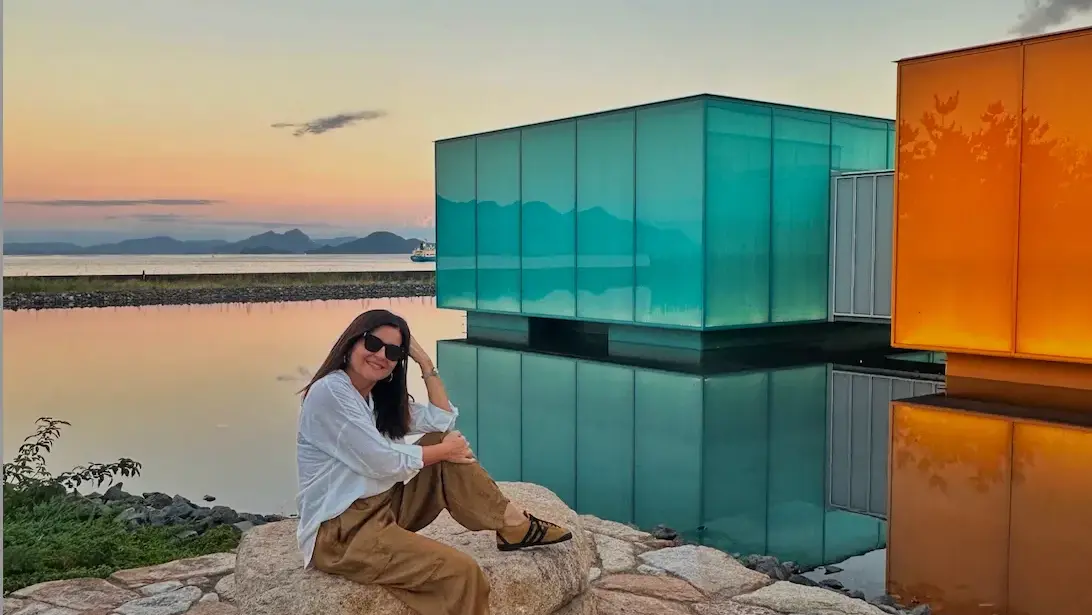
Japan offered an experience far beyond my expectations. Visiting the art islands of the Seto Inland Sea—Naoshima, Teshima, and Inujima—within the scope of the Setouchi Triennale was invaluable. With Tadao Ando–designed museums, Benesse Art Site, and outdoor installations by international artists stretching from beaches to rice fields, these islands present a powerful contemporary art destination exemplifying the union of nature, architecture, and art. The Art House Project, specific to the Triennale, stands as a model worth emulating, aiming to revitalize abandoned villages, preserve cultural heritage, and bring contemporary art together with local communities.
Another significant stop in the region was the Simose Art Museum, which brings architecture, nature, and art together in an aesthetic unity—one of the most impressive examples of new-generation museums that transform their location into a destination.
In Cairo, I visited Forever Now—held for the fifth time in 2025—once again, in front of the Giza Pyramids. Realized by Art D’Égypte, this event stands out for bringing one of the world’s most iconic heritage sites together with the global contemporary art scene. During this visit, the Grand Egyptian Museum also ranked among the year’s most striking experiences. Cairo Design Week, taking place at the same time, was an added bonus.
Thanks to Investec Cape Town Art Fair, with its galleries, artist studio visits, collector meetings, auctions, and programs at Zeitz MOCAA and Norval Foundation, South Africa continues to be an indispensable art route for me every February. While there are other important fairs worldwide for those following African art, experiencing Cape Town’s contemporary art ecosystem is, in my opinion, essential.
Among the events of Milan Art Week / Design Week 2025, the most impressive was Es Devlin’s “Library of Light”, realized in collaboration with Pinacoteca di Brera and @fuorisalone. The continuation of this monumental series—where the artist approaches libraries as kinetic public sculptures—was later experienced in December at Art Week Miami through the project “Library of Us.”
In Turkey, among the exhibitions that stood out in 2025 were Yanardağ Sevdalısı, curated by Anlam de Coster, and Staged, curated by Billur Tansel at Arkas Alaçatı.
2. Art fairs and/or art events you plan to prioritize in 2026…
My first fair visit will be the 1-54 Contemporary African Art Fair in Marrakesh in February, followed by Investec Cape Town Art Fair, again with a focus on contemporary African art. If possible, I would like to see Africa Basel, whose first edition I missed last year.
Miart, Milan Design Week / Fuorisalone, and Artissima Torino are among the events I will definitely visit due to their proximity.
I am awaiting the 61st Venice Biennale with bittersweet excitement. Following the sudden passing of Koyo Kouoh—whom we knew as the director of MOCAA in Cape Town—shortly before the full biennale concept was to be announced, the biennale presented by her team will undoubtedly be a very special experience.
The Mardin Biennial is also on my agenda in Turkey, and I am particularly curious about this edition, which expands its curatorial framework beyond the old city into new venues.
If possible, I plan to visit fairs in New York in May, and Frieze London and Sculpture in October. Emerging art markets I wish to experience include Seoul and Mexico City—if not in 2026, then the following year.
In Turkey, I will closely follow new exhibitions at Istanbul Modern, Arter, Sakıp Sabancı Museum and Pera Museum.
3. For art lovers who enjoy traveling, your recommendations for art routes and/or events to see in 2026 and beyond…
• Naoshima and Teshima islands in Japan, Simose Art Museum
• 61st Venice Biennale
• 7th Mardin Biennial
• Cape Town – Art Fair, MOCAA, Norval Foundation, vineyard-based art experiences
• Norway – Munch Museum, Kunstsilo (Kristiansand), Kistefos
MELİKE BAYIK
Art Consultant, Curator, and Editor
1. Art events you attended in Turkey or abroad during 2025 that left a lasting impression on you…
The 2025 edition of Ceramic Brussels was one of the fairs that impressed me most this year. It was exciting to follow the works of artists from different regions—ranging from the Far East, Asia, and Europe—represented by galleries from around the world, and to observe how traditional ceramic techniques were reinterpreted through contemporary perspectives.
Another long-awaited and highly impactful experience was the inaugural edition of the Bukhara Biennial in Uzbekistan. Held under the artistic direction of Diana Campbell and presented with the title Recipes for Broken Hearts, the biennial stood out as one of the strongest biennial experiences of the year for me, with its carefully layered, sensitive, and polyphonic structure that established a dialogue between historical strata and contemporary artistic practices. Rather than treating Bukhara’s architecture, craft traditions, and everyday modes of production merely as a backdrop, the biennial incorporated them directly into the process of artistic production, opening up a vibrant, reciprocal, and transformative space between local knowledge and contemporary art.
Inviting artists to collaborate with local artisans and designers pushed the biennial beyond a representational exhibition format. This approach framed production as a process unfolding over time, centred on sharing, learning, and collective thinking. Featuring works by artists from Turkey such as Hera Büyüktaşçıyan and Vahap Avşar, the biennial brought together international artists alongside locally rooted artists, artisans, and designers, fostering relational and participatory practices.
Elif Uras’s exhibition Ellerinde Toprak at Galerist was another compelling presentation, particularly in its focus on production processes, the visibility of women’s labour, and solidarity.
2. Art fairs and/or art events you plan to prioritize in 2026…
I will try to visit the biennials and fairs listed below. I believe these events are important for understanding shifts in artistic production, transformations in social issues, and the contemporary world at large. I also prioritise fairs as research spaces—opportunities to observe movements and tendencies within the art market.
• Ceramic Brussels
• Art Basel Qatar
• 2nd Malta Biennale
• ARCO Madrid
• Art Dubai
• Venice Biennale
• Manifesta Biennale
• Art Basel Paris
• Frieze London
• Frieze Abu Dhabi
• Sinopale
3. For art lovers who enjoy traveling, your recommendations for art routes and/or events to see in 2026 and beyond…
I believe it will be particularly important to follow the rising art events in Central Asia and to witness the growing momentum of the Gulf region. Observing production, artistic exchange, and the flow of art between emerging cultural capitals will be essential in understanding the broader shift toward the East.
MELİS TERZİOĞLU
Art Consultant
1. Art events you attended in Turkey or abroad during 2025 that left a lasting impression on you…
It was a year in which I encountered a considerable number of exhibitions and biennials that I would describe, at best, as mediocre. I say this without regret, as I believe that understanding what is truly good—and learning to value it—often requires seeing and experiencing what is not. That said, two exhibitions left a deep and lasting impression on me: Why Look at Animals at EMST, and Petrit Halilaj’s An Opera Out of Time at Hamburger Bahnhof, which will continue through June 2026. The exhibition at EMST served as a powerful reminder—particularly in an era when almost everyone claims the role of curator—of what a truly strong curator is capable of and what curatorial responsibility entails. Beyond its scope, the exhibition also introduced me to artists I had never encountered before, expanding my knowledge alongside what I already knew. I first encountered Petrit Halilaj ten years ago through another visionary curator, Okwui Enwezor. Despite a childhood shaped by war and its many hardships, Halilaj’s work demonstrates that remaining compassionate, thoughtful, generous, and playful is both possible and a conscious choice. I believe there is much to learn from artists like him—not only about art, but about what it means to be human.
It is also worth noting that one does not always need to travel far. Hera Büyüktaşçıyan’s exhibition Hayalet Kuartet, which opened at Arter in recent weeks, is a show I would like to see repeatedly—spending time within it and thinking through it. It holds both the calm and the force of an undercurrent.
2. Art fairs and/or art events you plan to prioritize in 2026…
I believe there is broad consensus that the most significant international art event of 2026 will be the Venice Biennale. On a local level, the Mardin Biennial also stands out. I have been trying to follow both consistently for many years.
I am also eagerly awaiting the announcement of the artist lists for the Malta and Lyon Biennials.
While these are the first events that come to mind, I am certain that in the coming months many other exhibitions—such as Simon Fujiwara’s A Whole New World at MUDAM Luxembourg—will capture my attention and spark a desire to visit.
3. For art lovers who enjoy traveling, your recommendations for art routes and/or events to see in 2026 and beyond…
Making lists is the easiest approach. If one travels to a major Western city with a developed art ecosystem during the period of a large fair or biennial, the likelihood of encountering many strong exhibitions is quite high. The global art calendar is so densely packed with biennials, exhibitions, and fairs that even dedicating every day of the year to art would not suffice. Personally, I hope to follow whatever exhibition, place, or individual—new or familiar—will help me rediscover the sense of excitement and love for art that I have felt gradually dulling over the years, embracing both the good and the bad as part of that process.
The repetitive cycles of the same names and locations satisfy me only up to a point; breaking that pattern, or expanding beyond it, feels restorative. The most honest advice I can offer is for everyone to do the same: follow the artists, curators, exhibitions, and biennials that genuinely spark your curiosity, and explore the spaces they open up. The art world—like life itself—is far too vast and diverse to be confined to formulaic solutions or fixed lists.
SELMA AYGÜN
Art Enthusiast
1. Art events you attended in Turkey or abroad during 2025 that left a lasting impression on you…
First and foremost, the 18th Istanbul Biennial captured my interest both through its choice of venues and its conceptual framework.
The exhibition 90’lardan Beri Halıdayız at SALT Beyoğlu was an absolute must-see.
The exhibitions curated by Anlam de Coster at Zeyrek Çinili Hamam also left distinct impressions on viewers.
Among the exhibitions I most enjoyed and made sure not to miss were Elif Uras and İpek Düben’s recent shows at Galerist. Nilbar Güreş at Arter, Folia at the Abdülmecid Efendi Pavilion, and Asa Jungnelius’s exhibition at Pera Museum were also among my favourites.
The 2025 edition of BASE once again brought together the works of 151 newly graduated artists with art audiences. MAMUT Art Project held its 12th edition between 10–14 December at YKB Bomontiada. Within the same edition, the MAMUT Limited section presented a selection of new ceramic works by various artists.
Abroad, Art Basel Paris 2025 and the many exhibitions in galleries and museums across the city were well worth seeing. Held at the Grand Palais with the participation of 206 galleries from 41 countries, the fair was particularly notable for the sales of iconic, high-budget works by established artists. During the same period, art lovers also had the opportunity to visit other fairs in the city, such as Design Miami Paris and Asia Now, as well as solo exhibitions by major figures like Gerhard Richter and George Condo—many of which are still ongoing.
I had the chance to attend LOOP Barcelona with the Elgiz Museum Friends group. Held across three different floors of the Almanac Hotel, the fair rented each room to galleries without any alterations, presenting video works throughout the space. We greatly enjoyed watching Ali Kazma’s video Inkman at Galeria Francisco Fino and had the pleasure of meeting the artist in person.
The exhibition at the Joan Miró Museum in Barcelona, which brings Miró’s work into dialogue with that of his American contemporary artist friends, is also unmissable and will continue until 22 February 2026.
2. Art fairs and/or art events you plan to prioritize in 2026…
In 2026, my first planned visit is to the 1-54 Contemporary African Art Fair in Marrakesh, taking place from 5–7 February. The first edition of Art Basel Qatar in Doha coincides with the same dates.
I would very much like to visit the Venice Biennale, which I consider the most important art event of 2026.
Attending Frieze London is also among my plans for the year.
3. For art lovers who enjoy traveling, your recommendations for art routes and/or events to see in 2026 and beyond…
Among the most widely followed fairs, Art Basel Basel and the different editions of Art Basel in various cities are of course essential. For example, the Qatar edition in February 2026 and the Hong Kong edition in March.
ARCO Madrid, taking place from 4–8 March, offers a perfect opportunity to visit a city rich in museums.
Miart Milan, held from 17–19 April 2026, is also well worth seeing.
The 61st Venice Biennale will run from 9 May to 22 November 2026.
Frieze London, naturally, is not to be missed.
Contemporary art events are increasingly concentrating in the Middle East, the Gulf countries, and East Asia. High-budget, architecturally ambitious museums, galleries, and art events are significantly increasing the cultural value of these regions.
Let us hope for the same momentum closer to home.
In our Calendar section, you can follow fairs and biennials by year, month, and country under the monthly calendar, and view annual summaries under the yearly calendar.