


From Craft to Contemporary Art: A Healing Biennial in Bukhara
The first-ever Bukhara Biennial opened to the public on 5th September 2025, marking a major step for Uzbekistan’s contemporary cultural scene. With more than 70 site-specific works created by over 200 artists from 39 countries, the biennial stretches across historic buildings newly restored for this landmark event, till 11 December 2025.
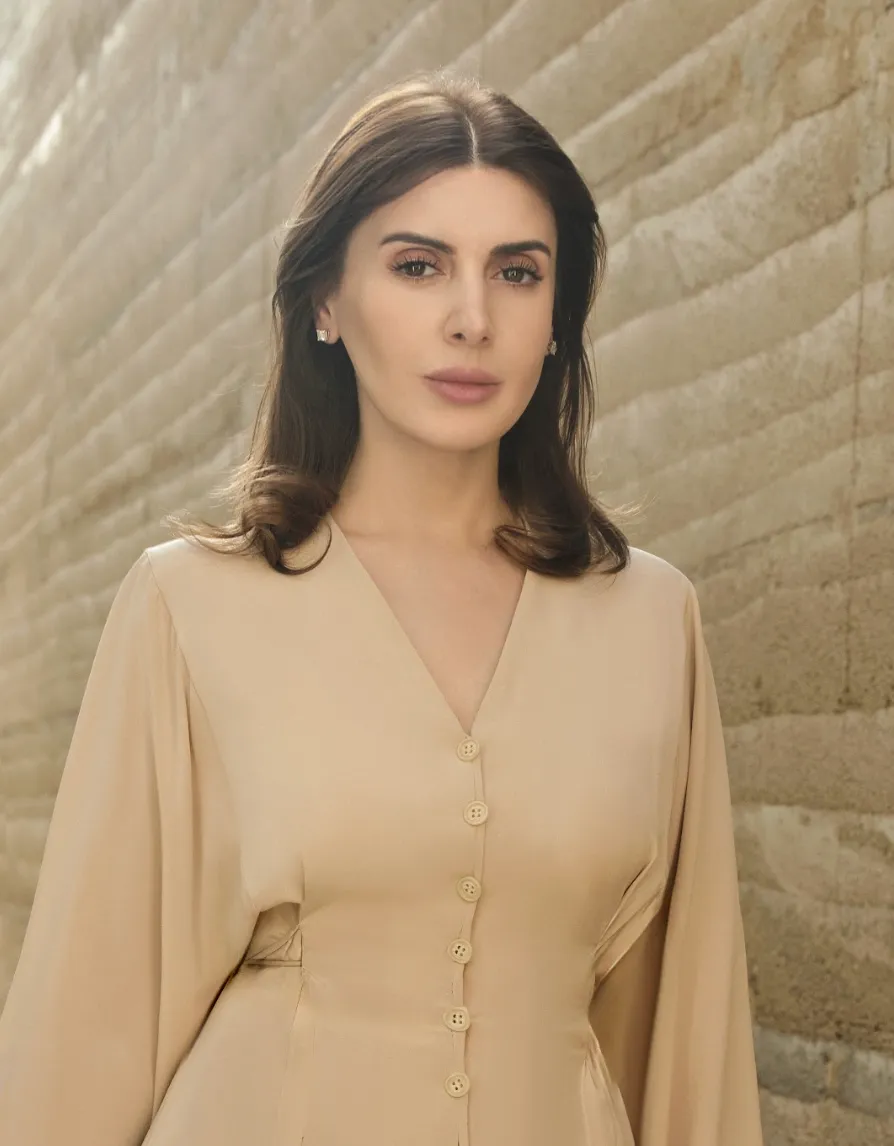
Titled “Recipes for Broken Hearts”, the ten-week exhibition is commissioned by Gayane Umerova, Chair of the Uzbekistan Art and Culture Development Foundation (ACDF), and curated by Diana Campbell, known for her socially engaged curatorial approach.
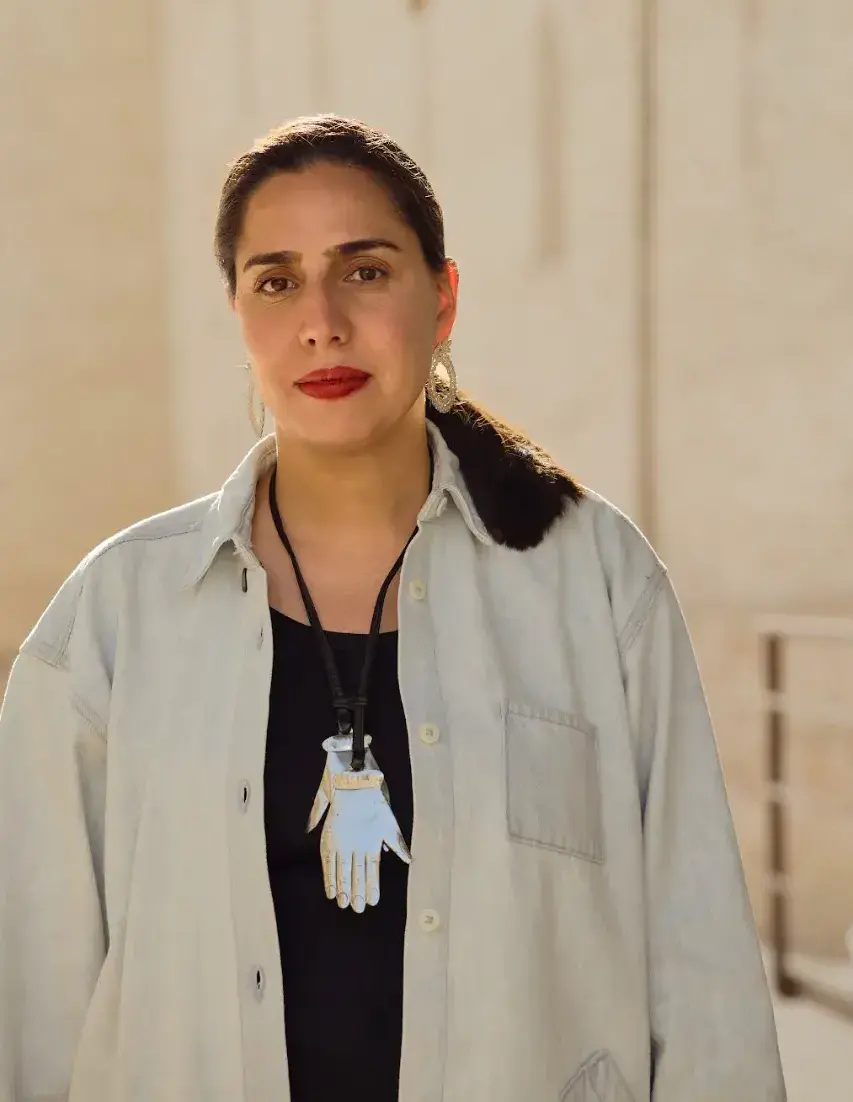
Rather than showcasing ready-made artworks, the biennial emphasizes collaborative creation: Pairing international artists with local masters of embroidery, ceramics, mosaic, textile, wood, and metalwork. Many works were produced entirely in Bukhara, blending contemporary ideas with centuries-old craft traditions.
Set along the ancient Shakhrud Canal, the event activates key landmarks like the Khoja Kalon Mosque, Gavkushon Madrasa, Rashid Madrasa, and four historic caravanserais, forming what will become a permanent Cultural District.
“This is not just an exhibition; it’s a platform for healing, learning, and exchange.” says Commissioner Gayane Umerova. “It places Bukhara on the global cultural map.”
The Bukhara Biennial is a significant legacy-building milestone for the city of Bukhara and Uzbekistan more widely, with the city’s first placement on the global contemporary cultural map and moment to reconnect with the rest of the world. Bringing artists together with local masters was made possible thanks to the foundation’s support of the local craft community, and commitment to protect and nurture a culture-first vision for the country’s development.
The inaugural Bukhara Biennial did that: it unveiled a breathtakingly beautiful ancient region still largely untouched by mass tourism, fostered meaningful exchanges between artists and local craftspeople, and introduced contemporary art to entirely new audiences.
Biennial Highlights
A selection of standout works from across the city, each grounded in Bukhara’s material, emotional, or ecological landscape:
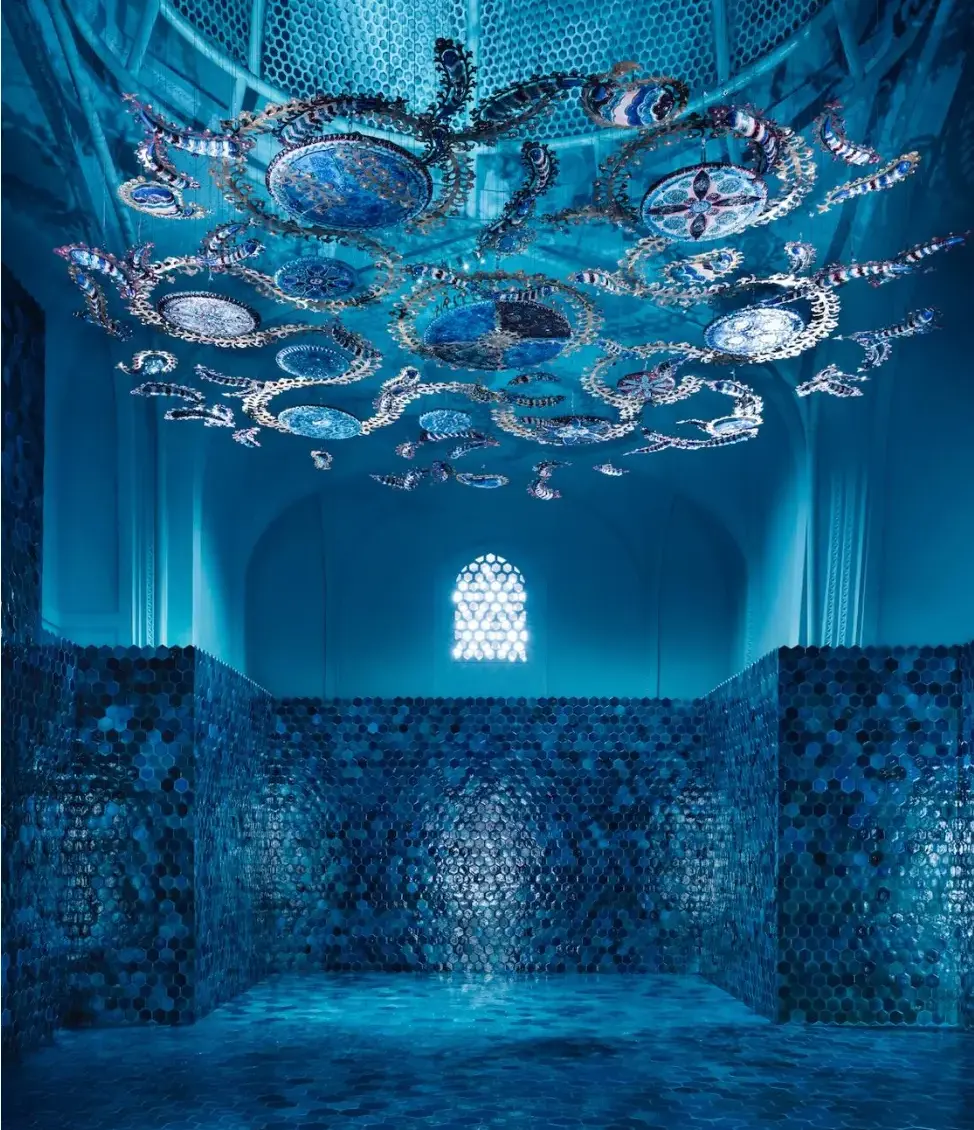
Blue Room
Artist: Abdulvahid Bukhoriy (Uzbekistan)
Collaborator: Jurabek Siddikov (tile master)
Venue: Gavkushon Madrasa
This immersive installation is covered in handcrafted blue tiles and filled with fish-shaped sculptures.It highlights Bukhara blue, the city’s signature hue that’s somewhere between cerulean and turquoise, through a tiled room surrounding a suspended sculpture inspired by the healing ritual where fish absorb human illness. Visually stunning and emotionally resonant, it’s one of the most talked-about works of the biennial.
A Thousand Prayers
Artist: Jazgul Madazimova (Kyrgyzstan)
Collaborators: Women of Bukhara
Venue: Caravanserai
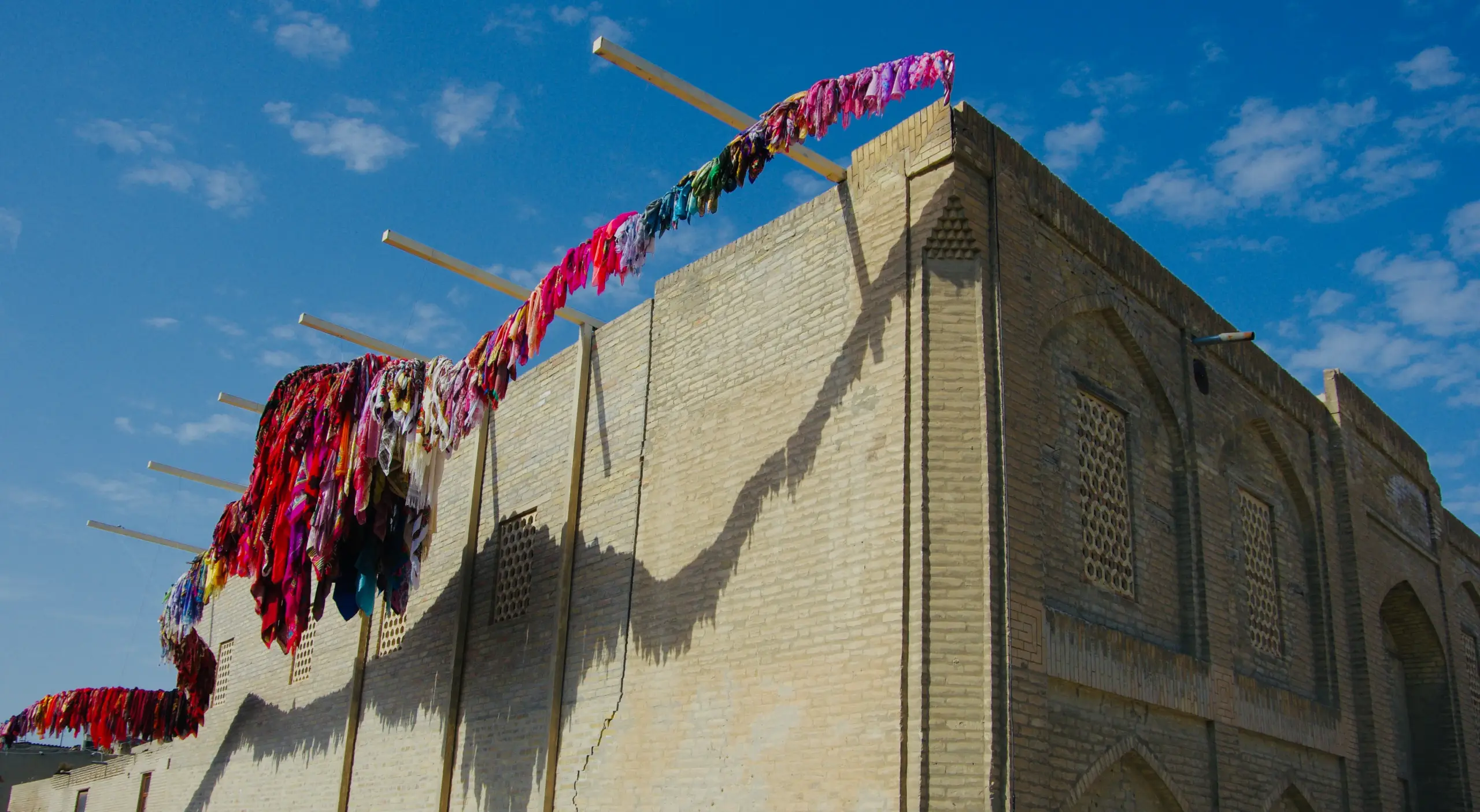
A powerful textile work co-created with local women, this piece honors communal strength, silent endurance, and spiritual resilience. It reflects the often-unseen role of women in cultural and emotional preservation.
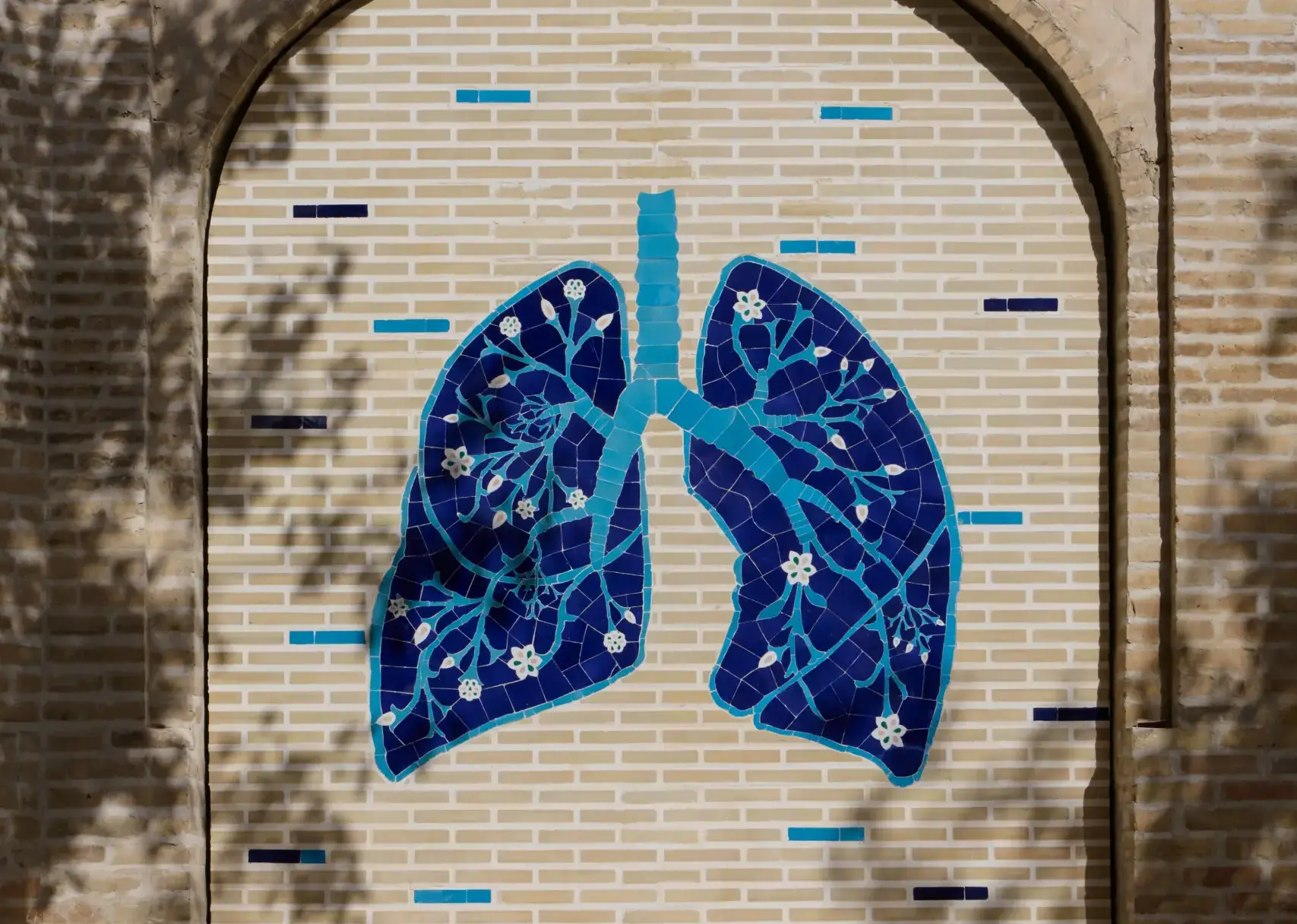
Eight Lives (Mosaic Organs)
Artist: Oyjon Khayrullaeva (Uzbekistan)
Collaborators: Raxmon Toirov and Rauf Taxirov (mosaic masters)
Venues: Across all six biennial sites
Human organs made from mosaic tile are embedded into the walls, referencing traditional healing recipes passed down by the artist’s Bukharian grandmother. The organs appear at every venue, creating a quiet emotional thread across the city.
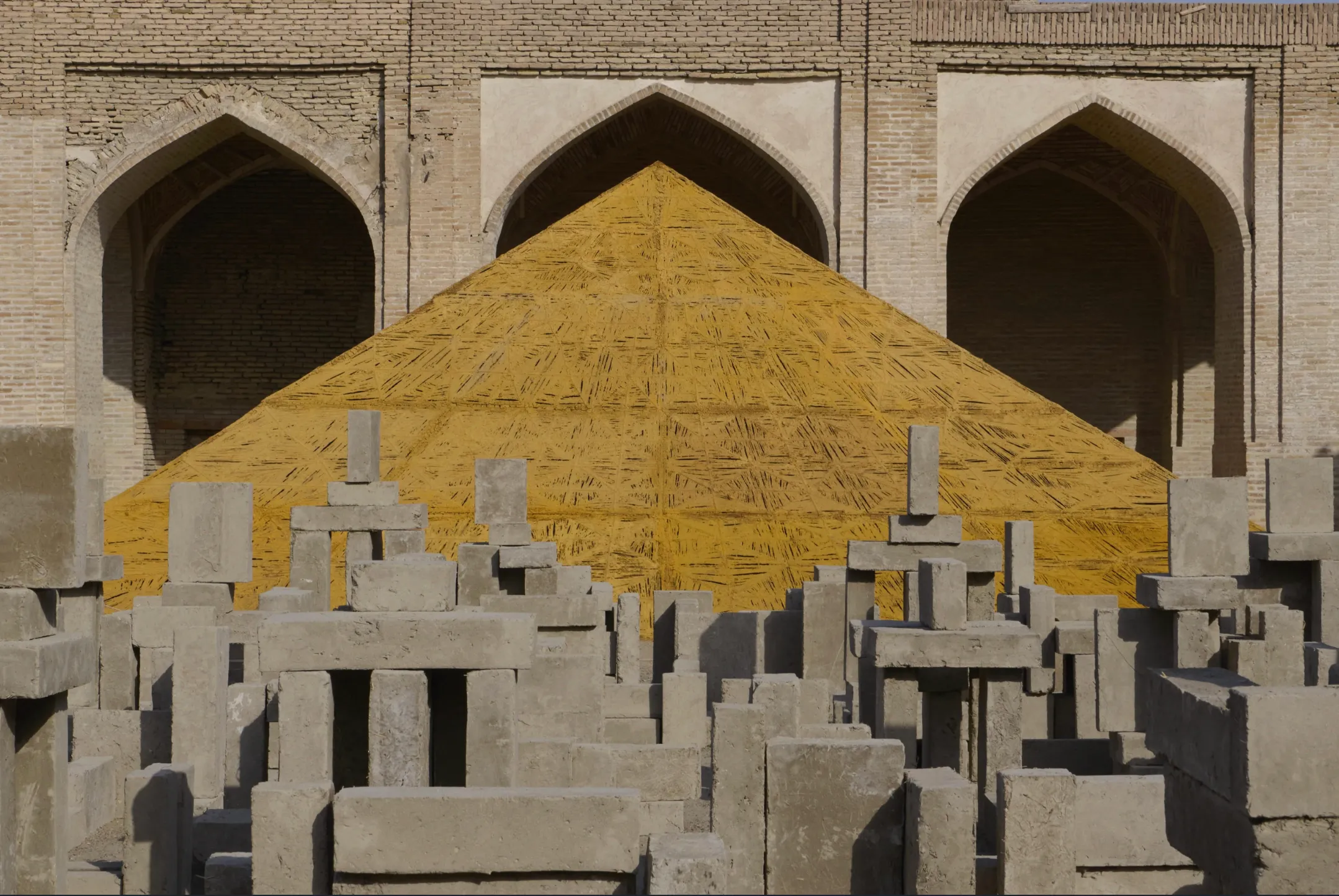
Close (“Labyrinth of Bodies”)
Artist: Antony Gormley (UK)
Collaborator: Temur Jumaev (Uzbekistan)
Venue: Khoja Kalon Mosque
A monumental installation of more than 100 twice life-sized sculptural bodies arranged in a meditative, labyrinthine formation within the ruins of the 16th-century Khoja Kalon Mosque. Crafted from mud bricks using thousand-year-old techniques by local artisans, the work engages with the body as architecture and presence, echoing the sacred and spatial resonance of the mosque.
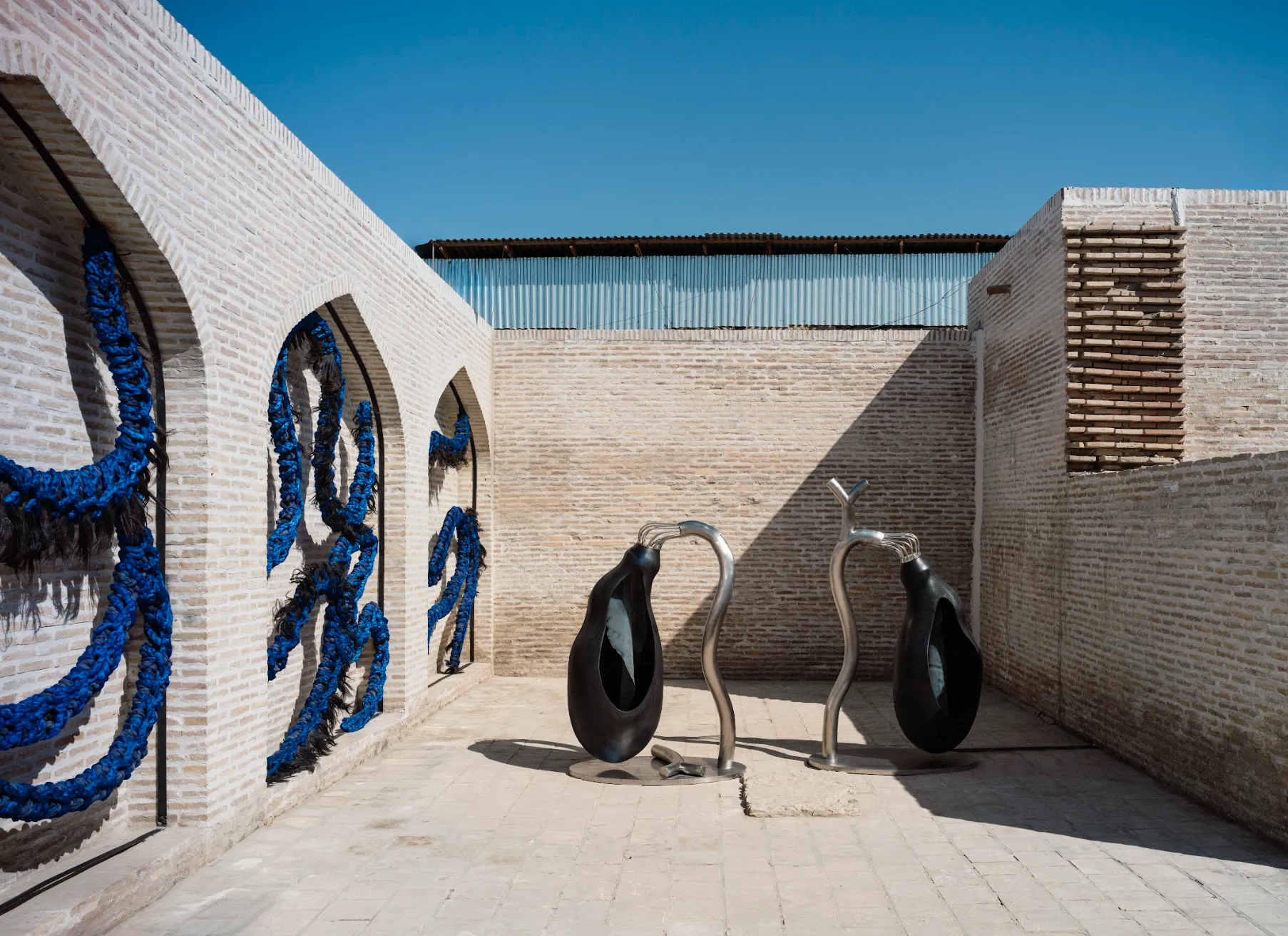
Black Bile
Artists: Pakui Hardware (Lithuania)
Collaborators: Alisher Rakhimov and Shokhrukh Rakhimov, Uzbekistan
Venue: Rashid Madrasa
Inspired by medieval theories of emotion and illness, this sculptural installation explores the connection between the body and melancholy. Blending futuristic materials with organic forms, Black Bile reflects on the fragility of life and the emotional states we carry.
ᠣᠩᠭᠤᠳ (Ongod)
Artist: Nomin Zezegmaa (Germany, Mongolia)
Collaborator: Margilan Crafts Development Centre, Uzbekistan
Venue: Rashid Madrasa
Ongod brings together Mongolian and Uzbek craft traditions, celebrating cultural exchange through textiles and traditional craftsmanship. The collaboration highlights the living heritage shared across Central Asia and Mongolia.
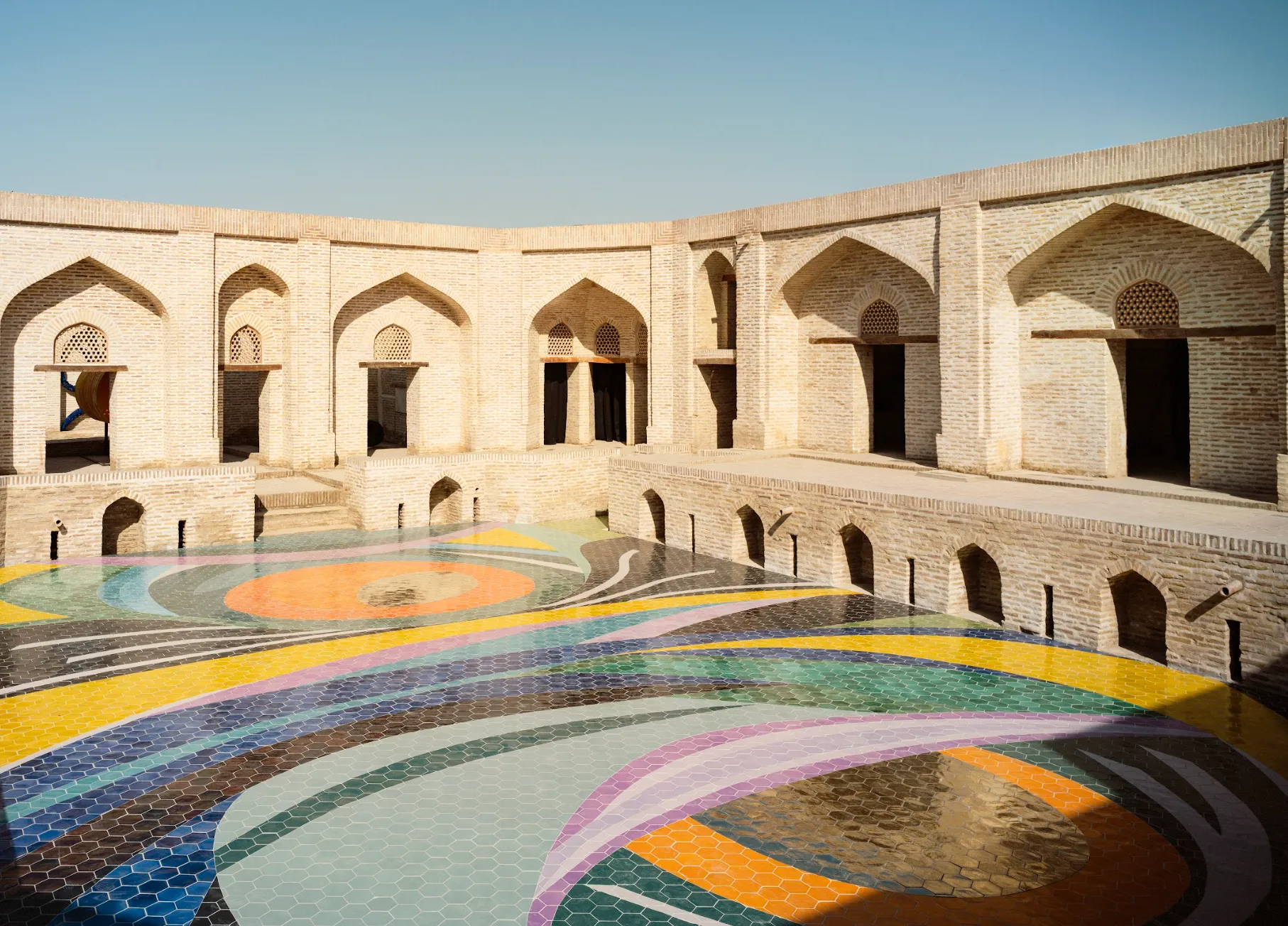
Celestial Mosaic (Untitled)
Artist: Marina Perez Simão (Brazil)
Collaborator: Bakhtiyar Babamuradov (mosaic master)
Venue: Caravanserai
A large-scale floor mosaic inspired by astronomy and Islamic geometric patterns, imagining a spiritual cosmos underfoot.
Ikat Artery & Moon Rituals
Artists: Hylozoic/Desires (Himali Singh Soin & David Soin Tappeser)
Collaborator: Rasuljon Mirzaahmedov (ikat master)
Venues: Multiple
A kilometer-long ikat tapestry with colors drawn from satellite images of the drying Aral Sea. On every full moon during the biennial, live karnay musical rituals call for the return of water.
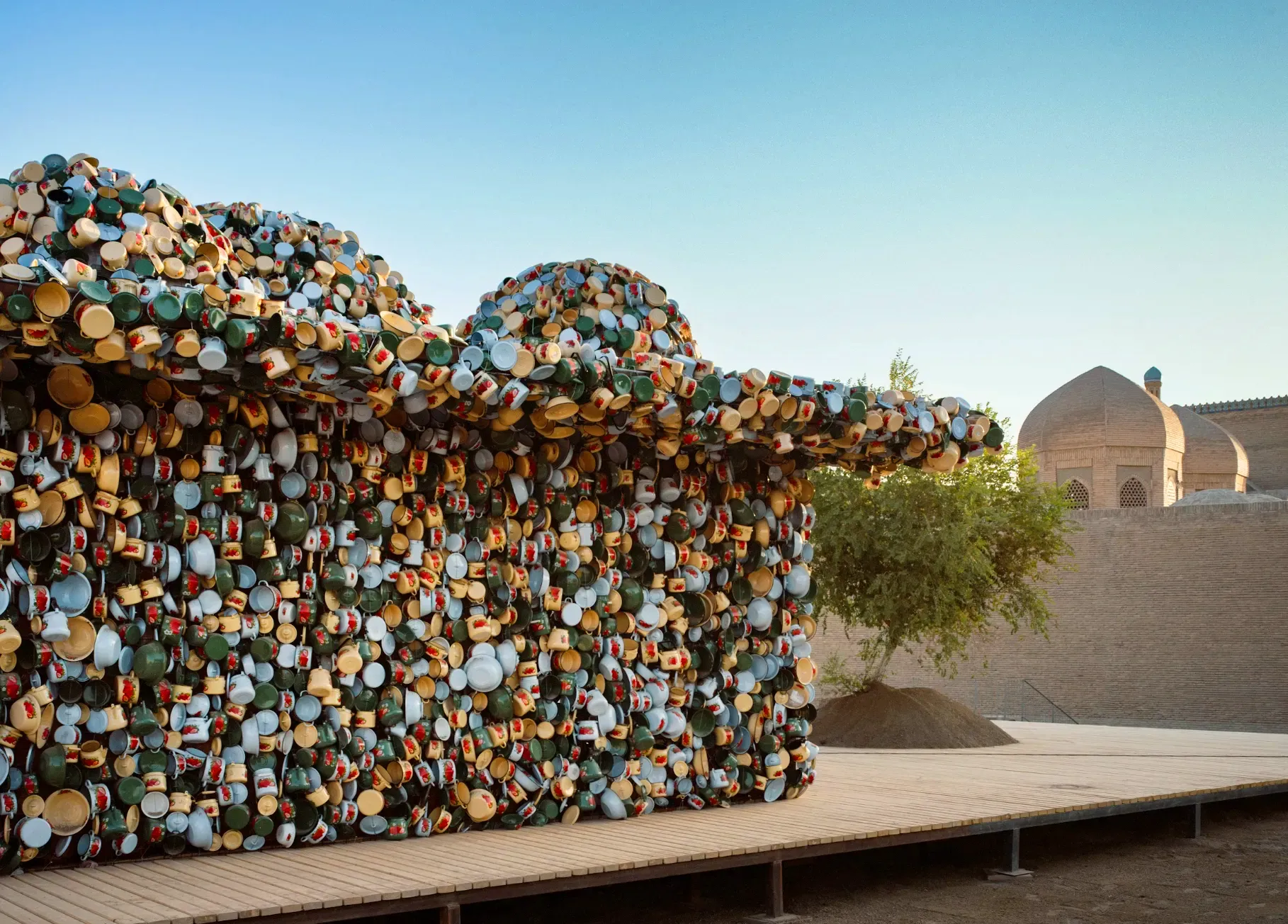
Salt Carried by the Wind (Subodh Gupta)
Artist: Subodh Gupta (India)
Collaborator: Baxtiyor Nazirov Ozbekşstan (metalwork)
Venue: Former spice market dome
A monumental dining structure created from local enamelware. On selected days, Gupta and guest chefs cook and serve food beneath the dome, transforming meals into performances of healing and togetherness.
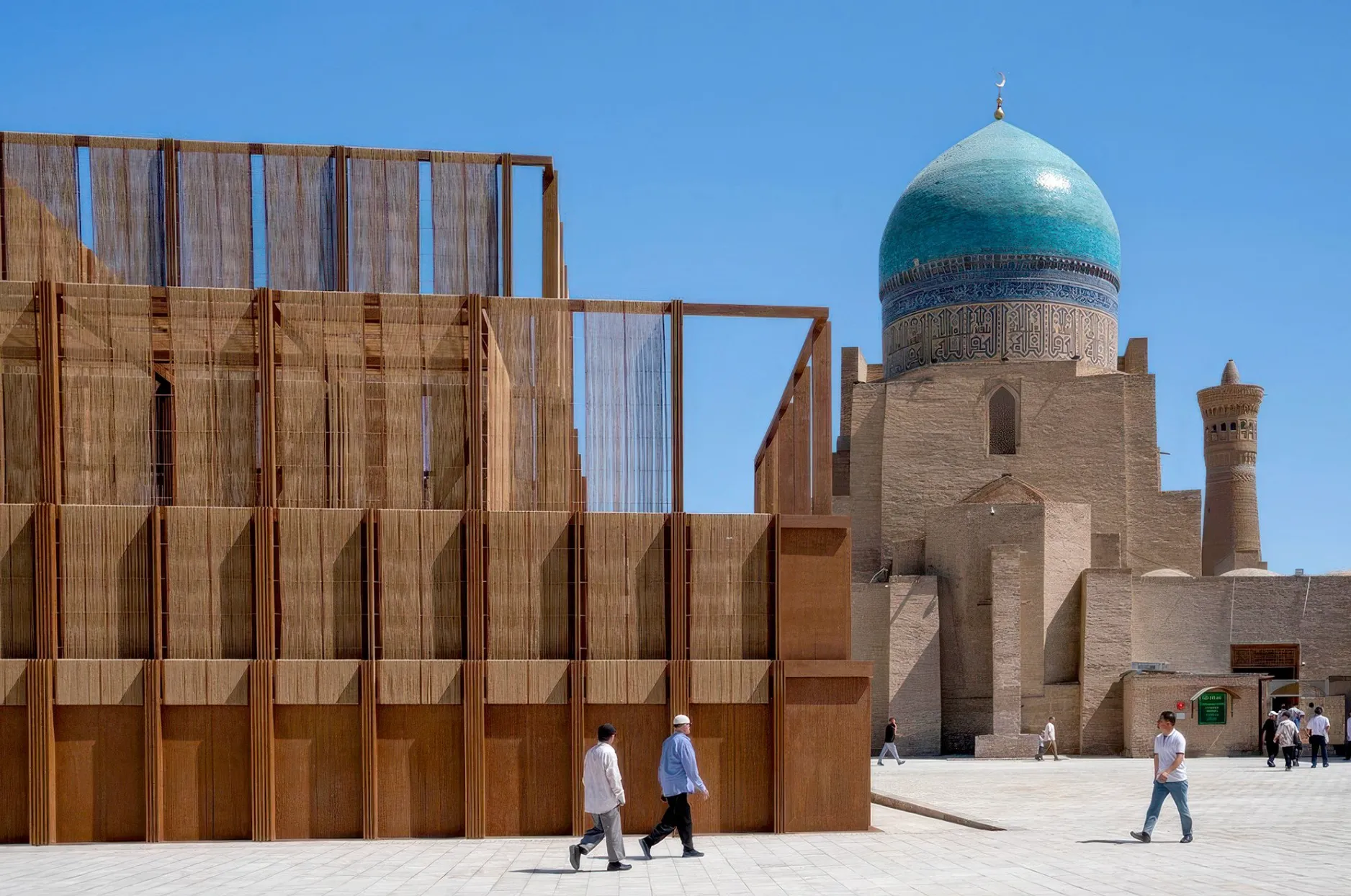
The Bukhara Biennial is also showcasing On Weaving, the winner of the inaugural AlMusalla Prize, first unveiled at Islamic Arts Biennale.
The project transforms weaving into a philosophy of creation, uniting tradition and modernity. Its structure, made of date palm fibers, symbolizes dialogue and a sustainable future. The space is conceived as a universal place for prayer, gatherings, and creativity, open to diverse interpretations.
Food as a Medium
The biennial’s restaurant, Café Oshqozon (meaning “stomach” or “cooking vessel”), serves as a site for culinary expression. Chefs from Uzbekistan and around the world present menus inspired by healing and local ingredients.
Notable moments include:
- Brutalist Bukhara: A seasonal menu created by chefs Bahriddin Chustiy and Pavel Georganov, where each dish uses only one ingredient plus salt and water.
- Jeong Kwan’s meditative fermentation project with the Koryo-saram community.
- Mexican chef Elena Reygadas explores the tomato’s journey from the Americas to Uzbek cuisine.
- Fatmata Binta (Sierra Leone) connects sorghum traditions across Africa and Central Asia.
A New Chapter for Bukhara
“The genius of Bukhara lies in turning function into wonder,” says Wael Al Awar, the biennial’s architectural director. “This is the beginning of a new legacy.”
More than just a temporary exhibition, the Bukhara Biennial revealed a breathtakingly beautiful region still largely untouched by mass tourism and repositioned it as a living centre of creativity and dialogue. It nurtured meaningful exchanges between artists and craftspeople, revived architectural landmarks through new use, and welcomed new audiences into the world of contemporary art. Under the leadership of the Uzbekistan Art and Culture Development Foundation, it demonstrated a clear and ambitious vision: to protect and celebrate the country’s cultural legacy while shaping a forward-looking, culture-first path for its future.
All photos are Courtesy of the Uzbekistan Art and Culture Development Foundation
Cover Image: Salt Carried by the Wind, (interior domed ceiling) 2024–2025 by Subodh Gupta India Photo by Felix Odell