


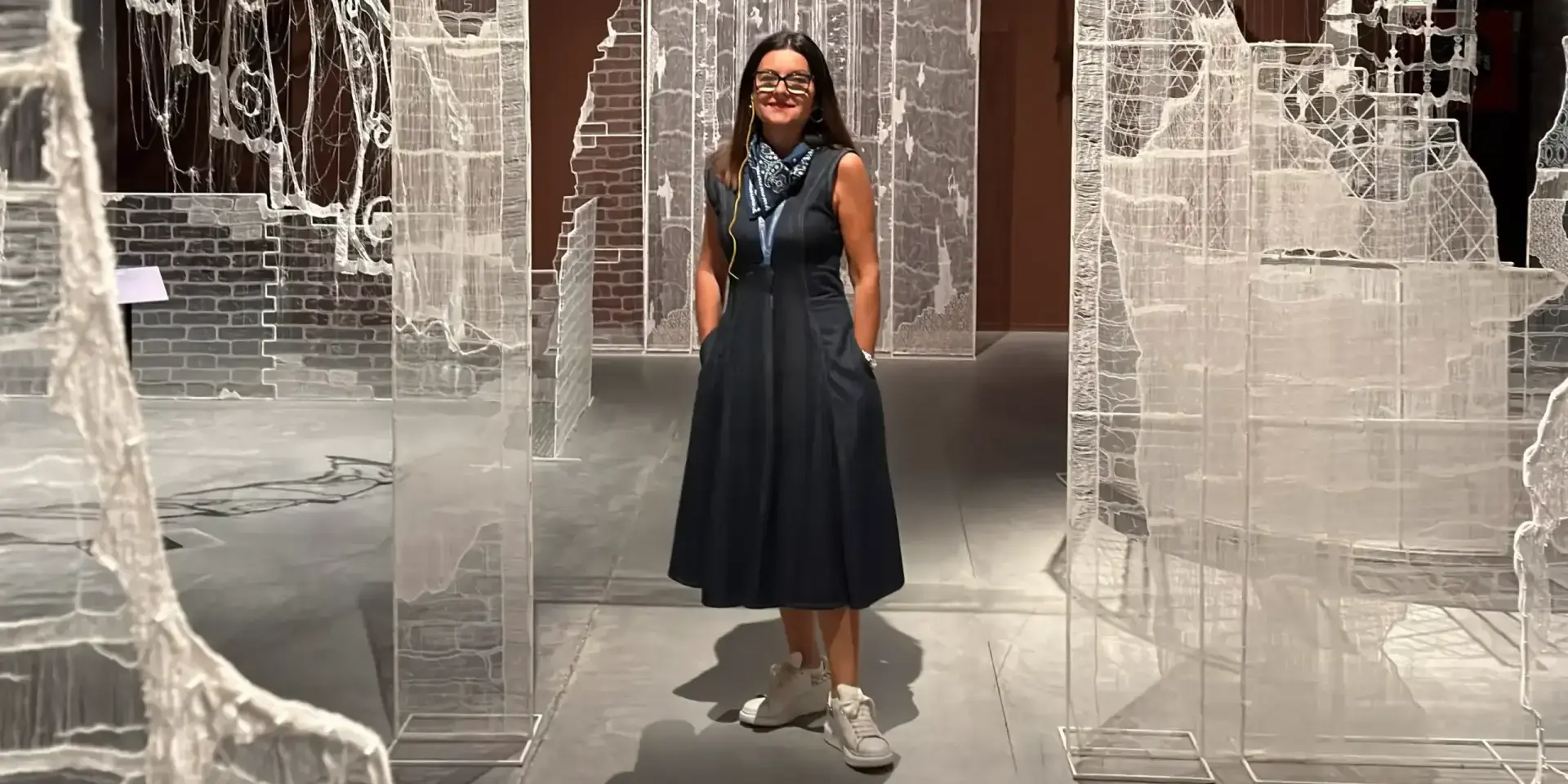
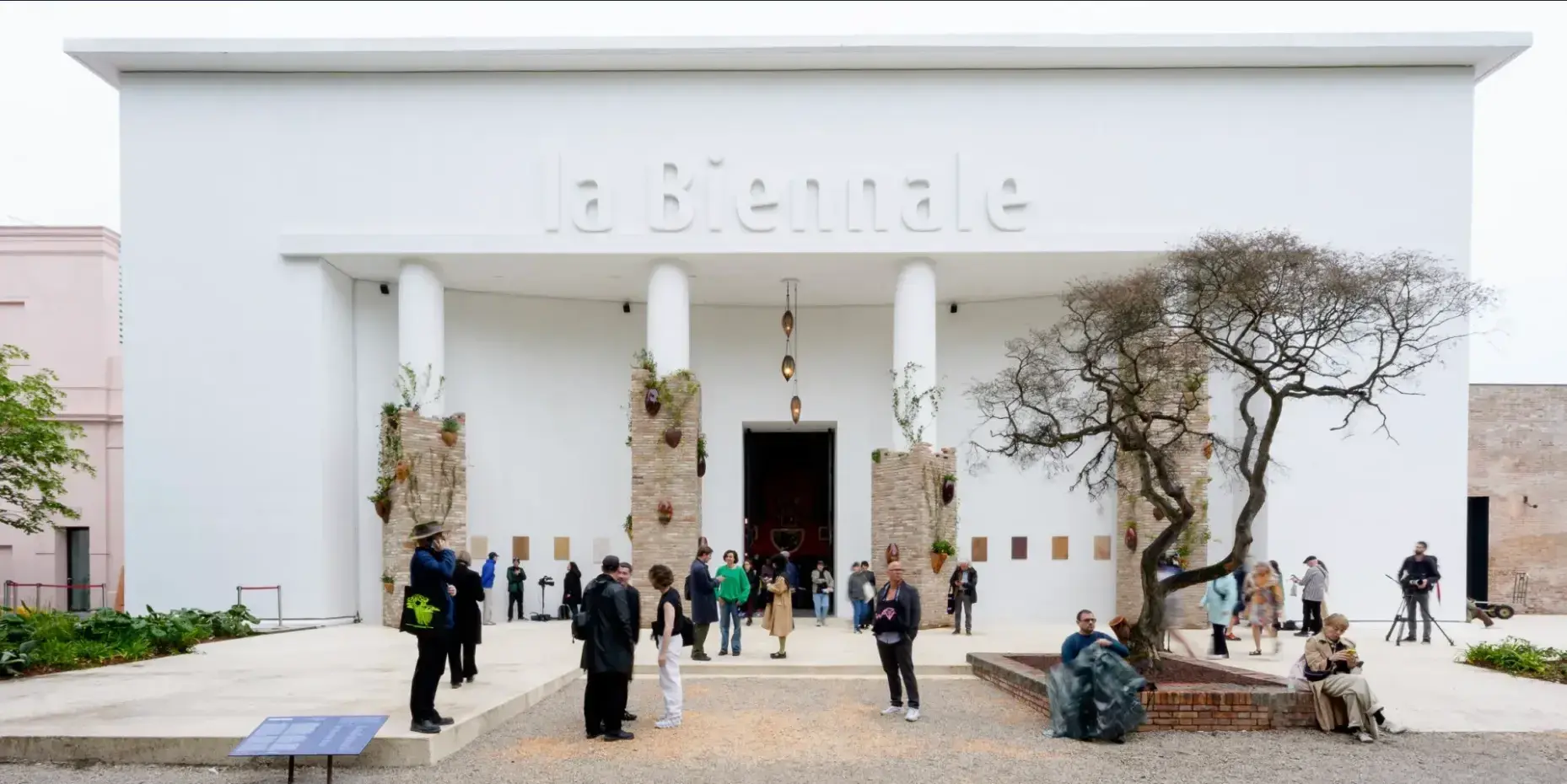
The 61st Venice Biennale was brought to life by curator Koyo Kouoh’s team following her passing in 2025, in accordance with the curatorial vision she had developed. Guided by the framework Kouoh had established for the exhibition, the team brought together 111 artists whose works engage in dialogue across geographies, exploring themes such as memory, the legacies of colonialism, identity, migration, and ecology.
This selection of works I encountered at the Arsenale and the Central Pavilion in the Giardini also holds a personal dimension for me. It was moving to encounter artists whose work I had come to know through time spent in South Africa and other parts of the African continent, through exhibitions I had previously visited, and through artistic practices I had followed, now within the context of the Biennale.
Berni Searle’s dramatic presentation of historical losses associated with the fire at the University of Cape Town; Kemang Wa Lehulere’s monumental installation directly opposite; Billie Zangewa and Kaloki Nyamai, whose work I had encountered at the Norval Foundation in Cape Town; Cauleen Smith’s presentation at the Arsenale, following my discovery of her work at Zeitz MOCAA this year, in her first survey exhibition on the African continent; and Nicholas Hlobo’s new works made with familiar materials were all deeply informative and inspiring encounters. For me, Koyo’s presence resonates throughout these works.
I also found strong connections between Kouoh’s curatorial approach and the works of several artists whose practices I was encountering for the first time.
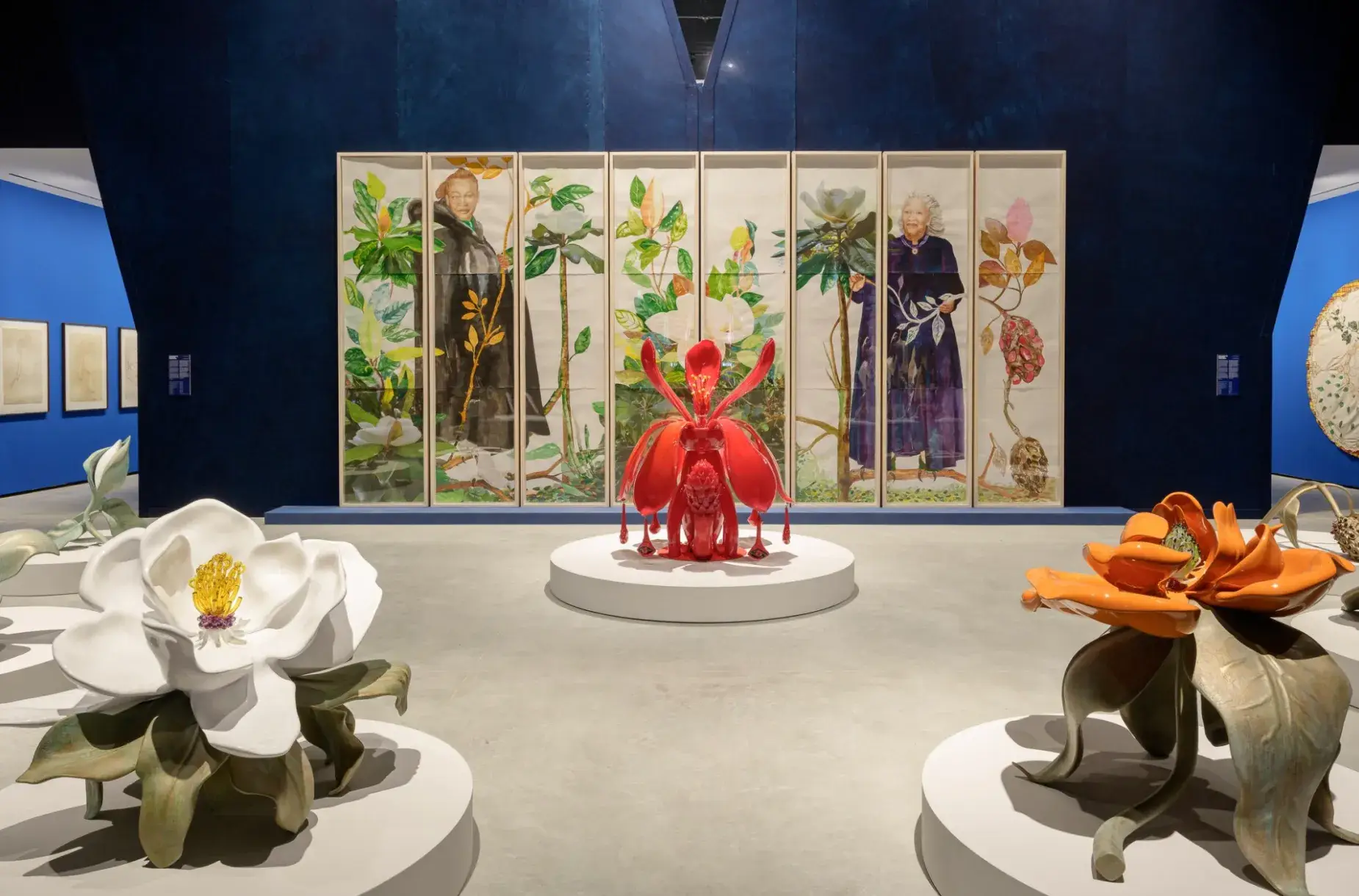
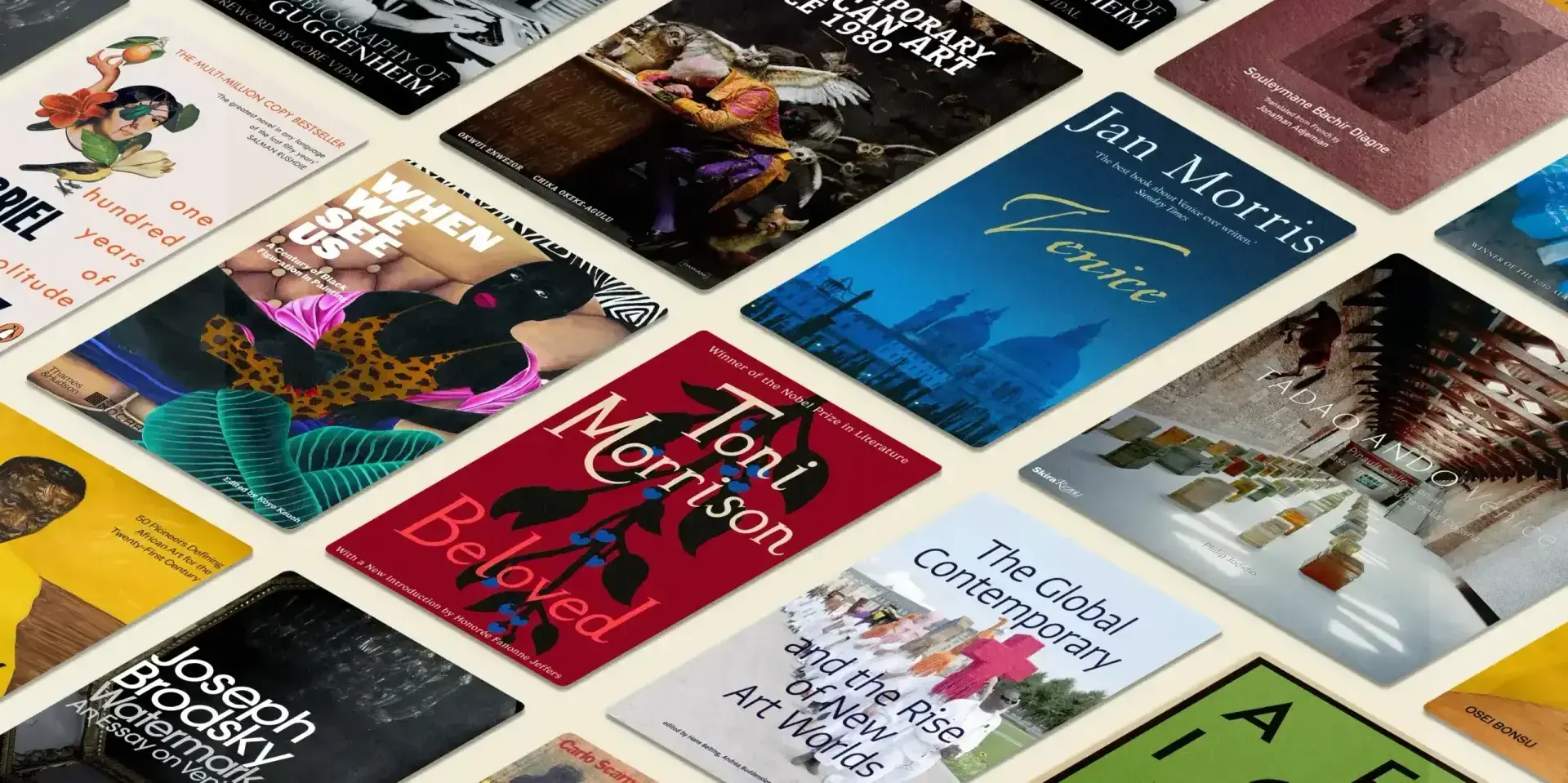
The work Anatomy of the Magnolia Tree for Koyo Kouoh and Toni Morrison by María Magdalena Campos-Pons and Kamaal Malak, in particular, resonated deeply with me at a time when I was reading Toni Morrison’s Beloved.
Nick Cave
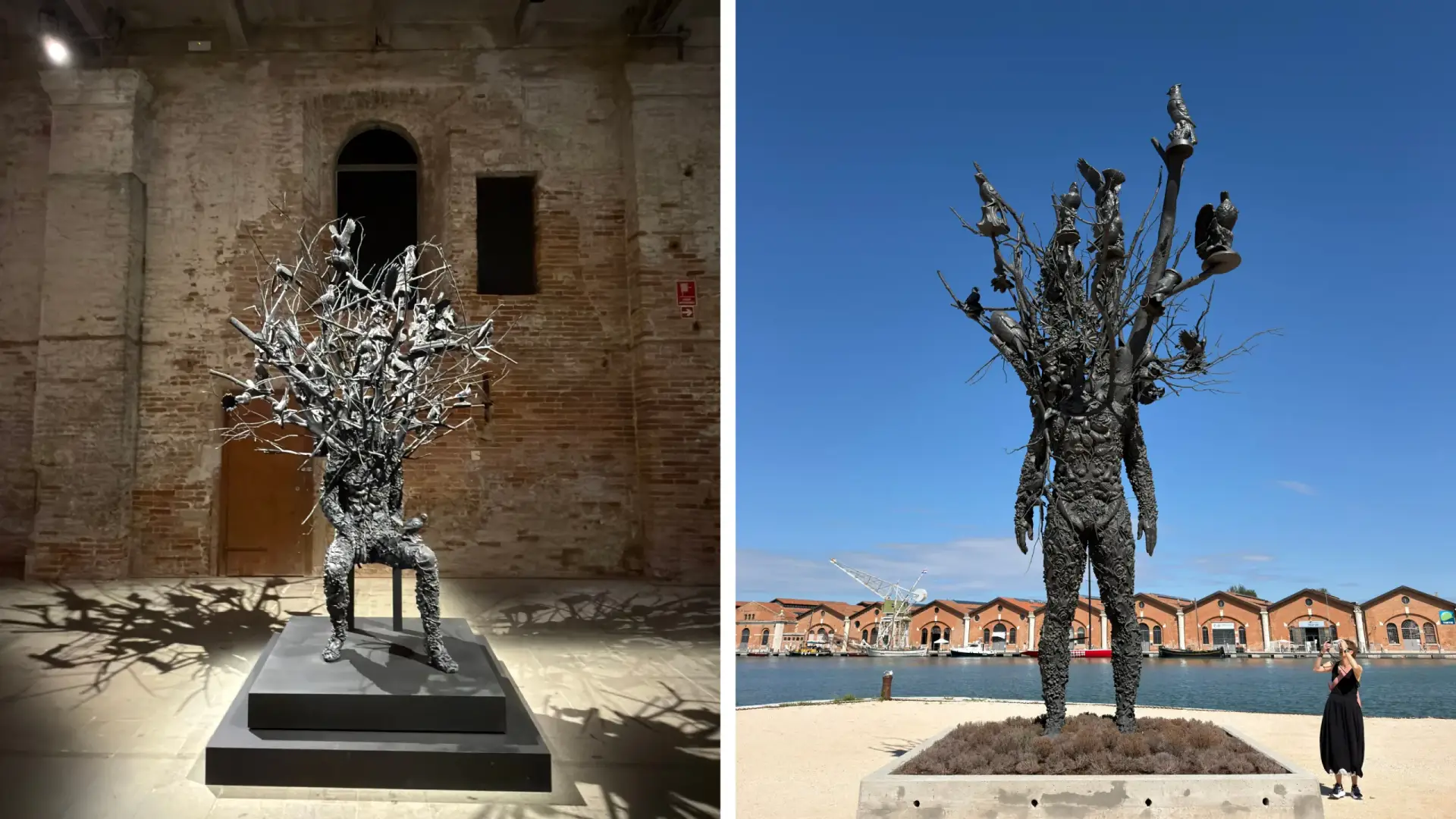
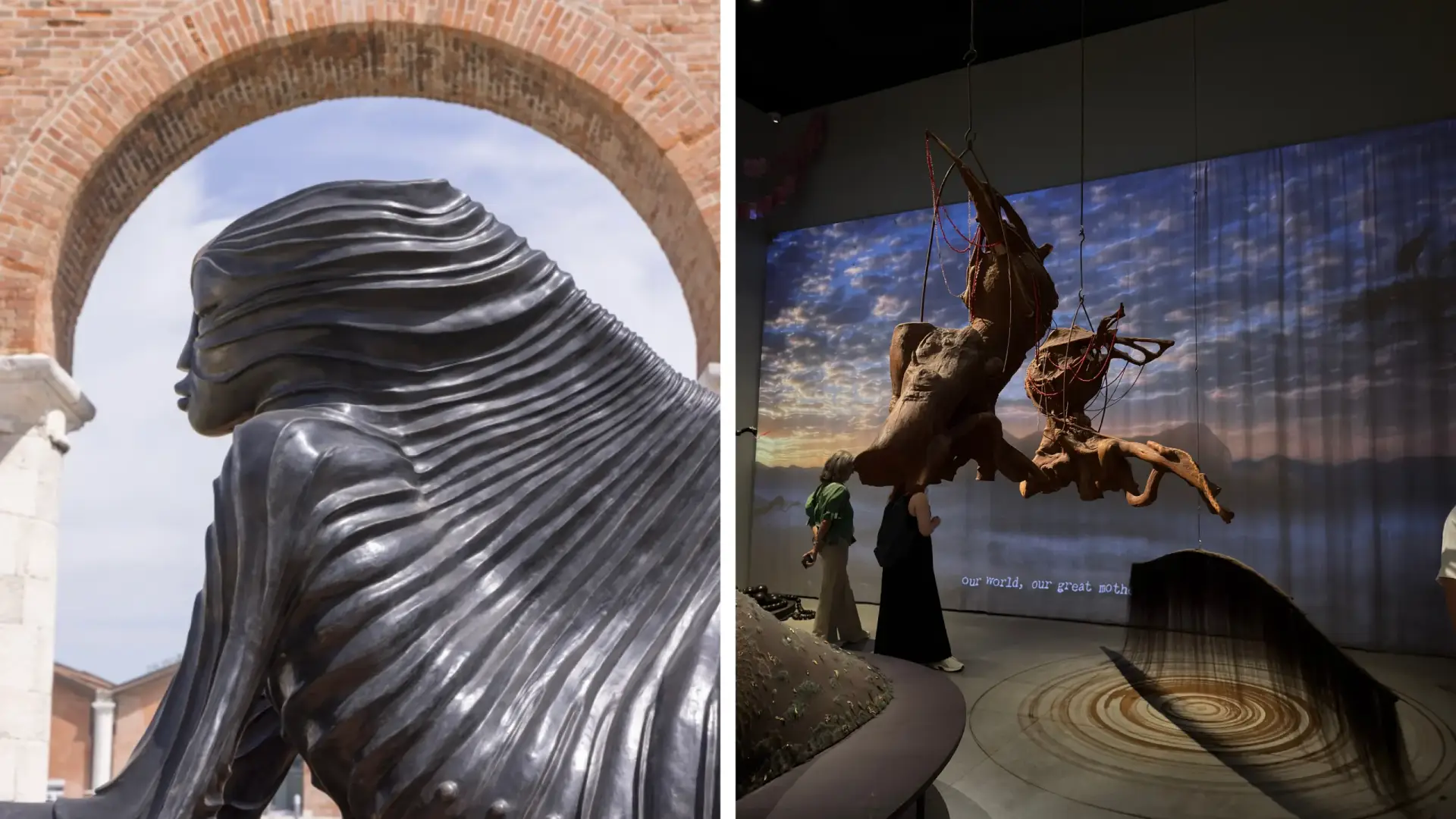
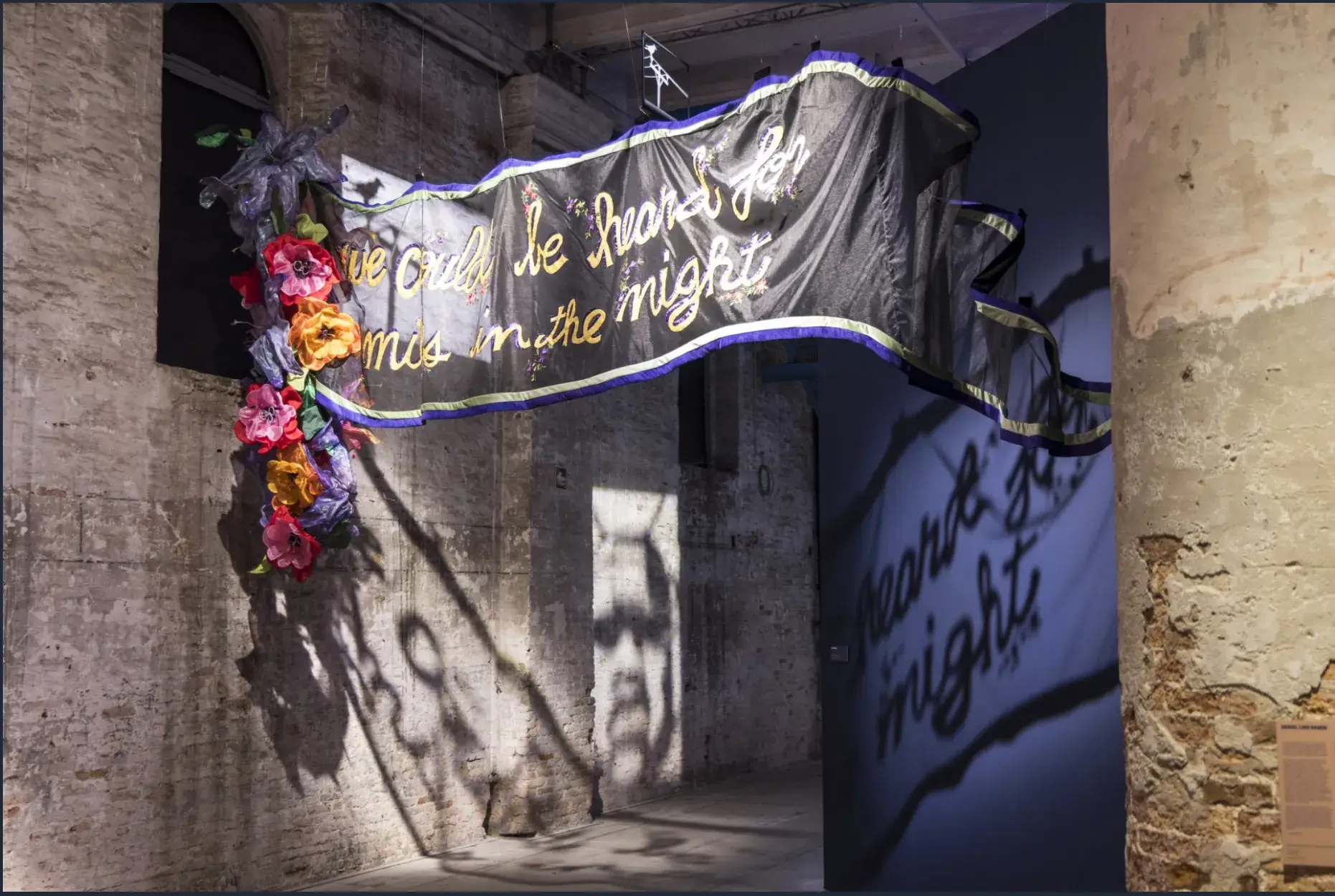
American visual artist Nick Cave explores identity, race, social division, and solidarity through sculpture, textiles, and installation. At the Biennale, his works draw attention both outdoors and indoors, occupying strategic points along the visitor’s route. His presentation, Two Points in Time – At Once, brings together floral motifs, everyday objects, needlework self-portraits, and monumental bronze sculptures. Amalgam (Origin) stands out with its figure crowned by branches, flowers, and birds. Through a range of materials and scales, Cave connects memory, loss, and transformation with the experience of space.
Berni Searle
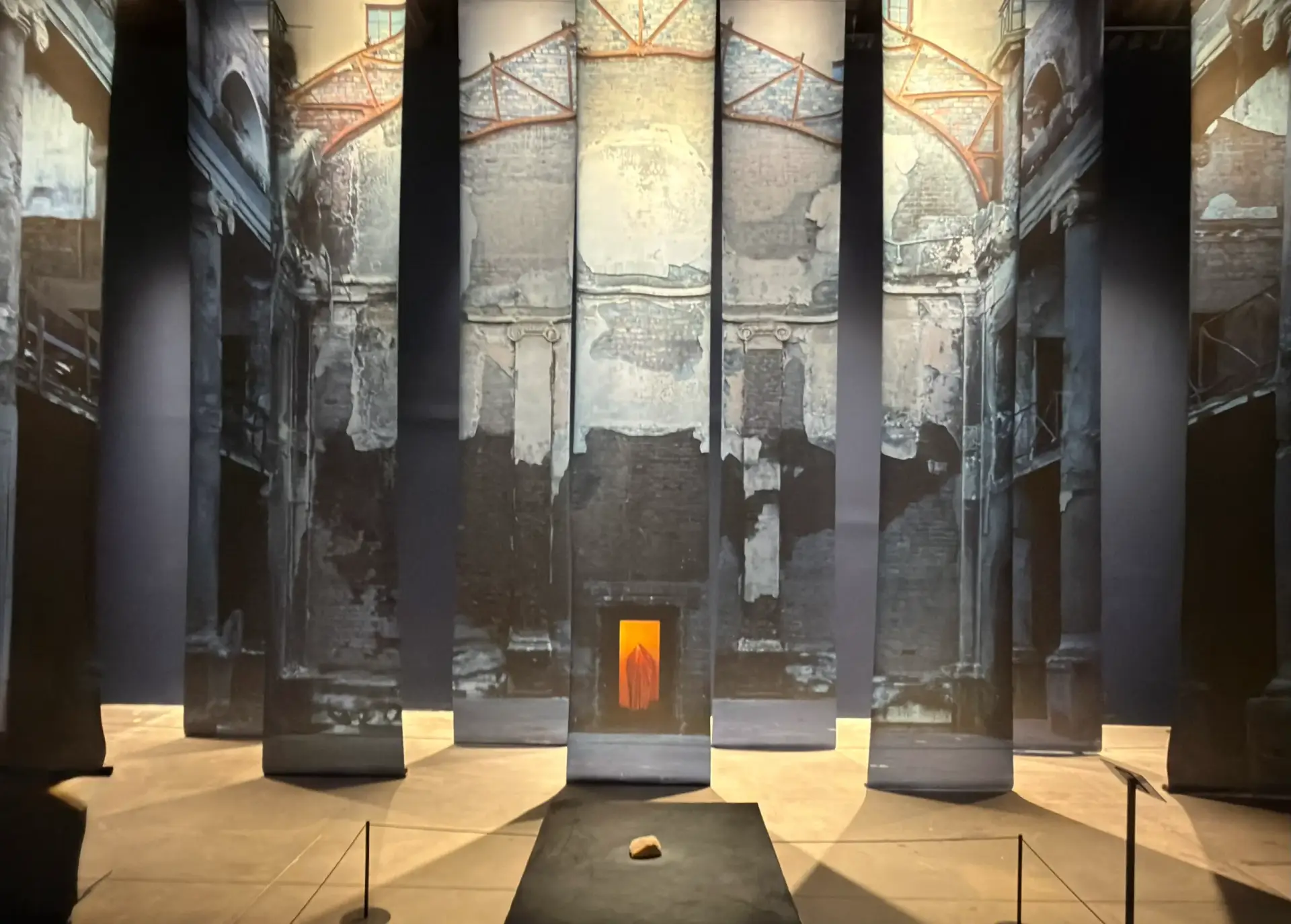
South African artist Berni Searle examines the body, historical memory, and the legacies of colonialism through photography, video, and performance. Her three-channel video work Interlaced (2011) references Belgium’s colonial past in the Congo, using the image of gold to expose the relationship between wealth and violence. Sediment (2023) focuses on the damage caused by a fire at the Jagger Reading Room at the University of Cape Town. Drawing on the fragility of archives and cultural memory, Searle shows how historical loss can also create the conditions for new narratives to emerge through the traces it leaves behind.
Billie Zangewa
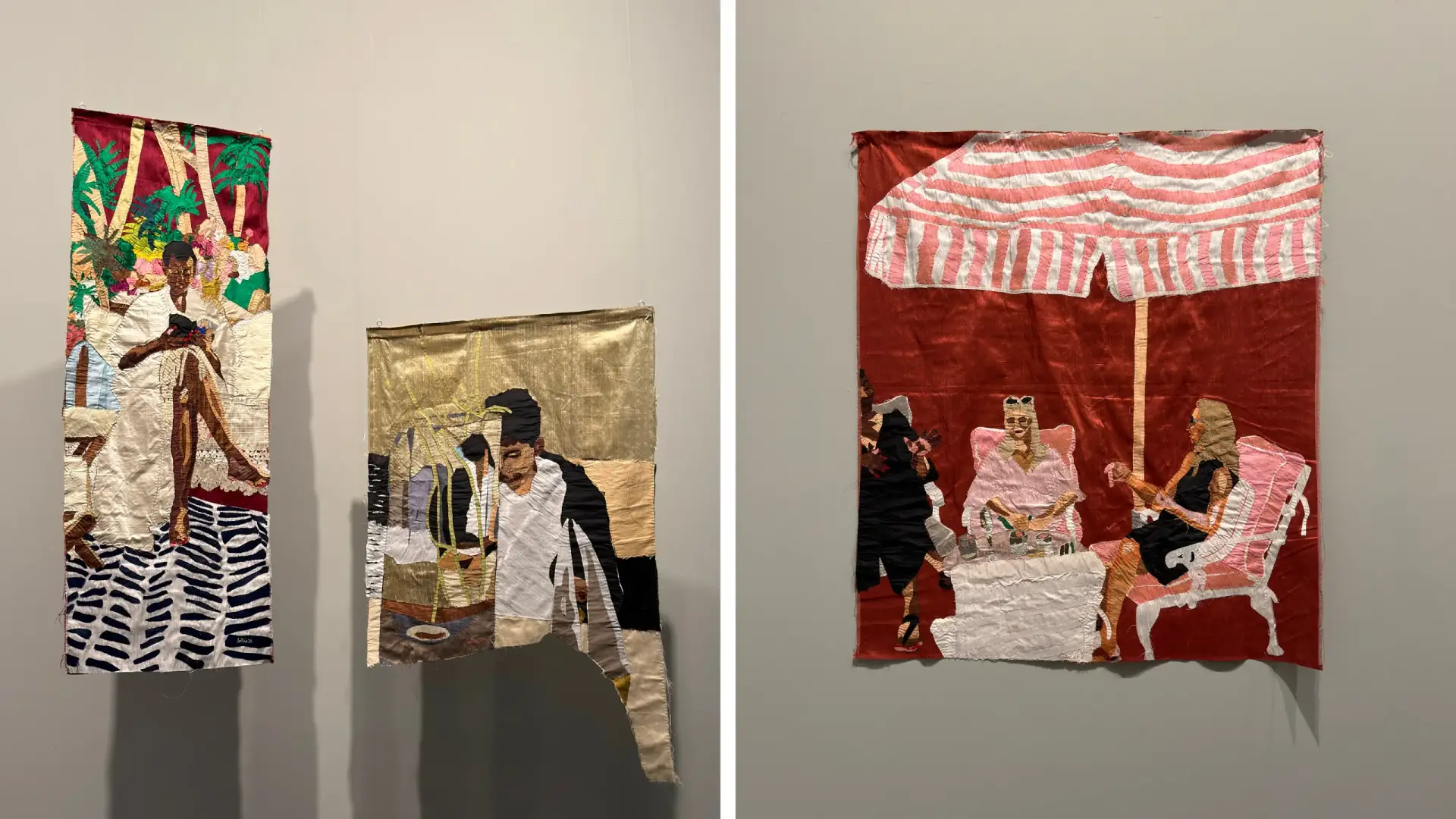
Born in Malawi and based in South Africa, Billie Zangewa creates collages of everyday life by hand-stitching pieces of raw silk together. Domestic labour, motherhood, self-care, and the representation of Black women occupy a central place in her practice. Her seven new works at the Biennale depict ordinary moments such as preparing food, resting, carrying shopping bags, and bathing her son. Zangewa’s approach to “everyday feminism” locates political meaning in the recurring gestures of daily life. The texture and luminosity of silk bring personal experiences into dialogue with broader social concerns.
Wangechi Mutu
Born in Kenya and based in New York, Wangechi Mutu brings together questions of the body, mythology, ecology, and gender through sculpture, collage, video, and installation. Her Biennale presentation, In The End, Where All began, EdEN, draws on Kikuyu creation narratives and relationships with the natural world. Her animated film Mumbi wa Mumbi focuses on the sacred significance of Mount Kenya, while works such as Sweeper and MothersMound blur the boundaries between humans, nature, and mythological beings. Mutu creates space for cosmologies and alternative modes of existence that lie beyond colonial narratives.
Kaloki Nyamai
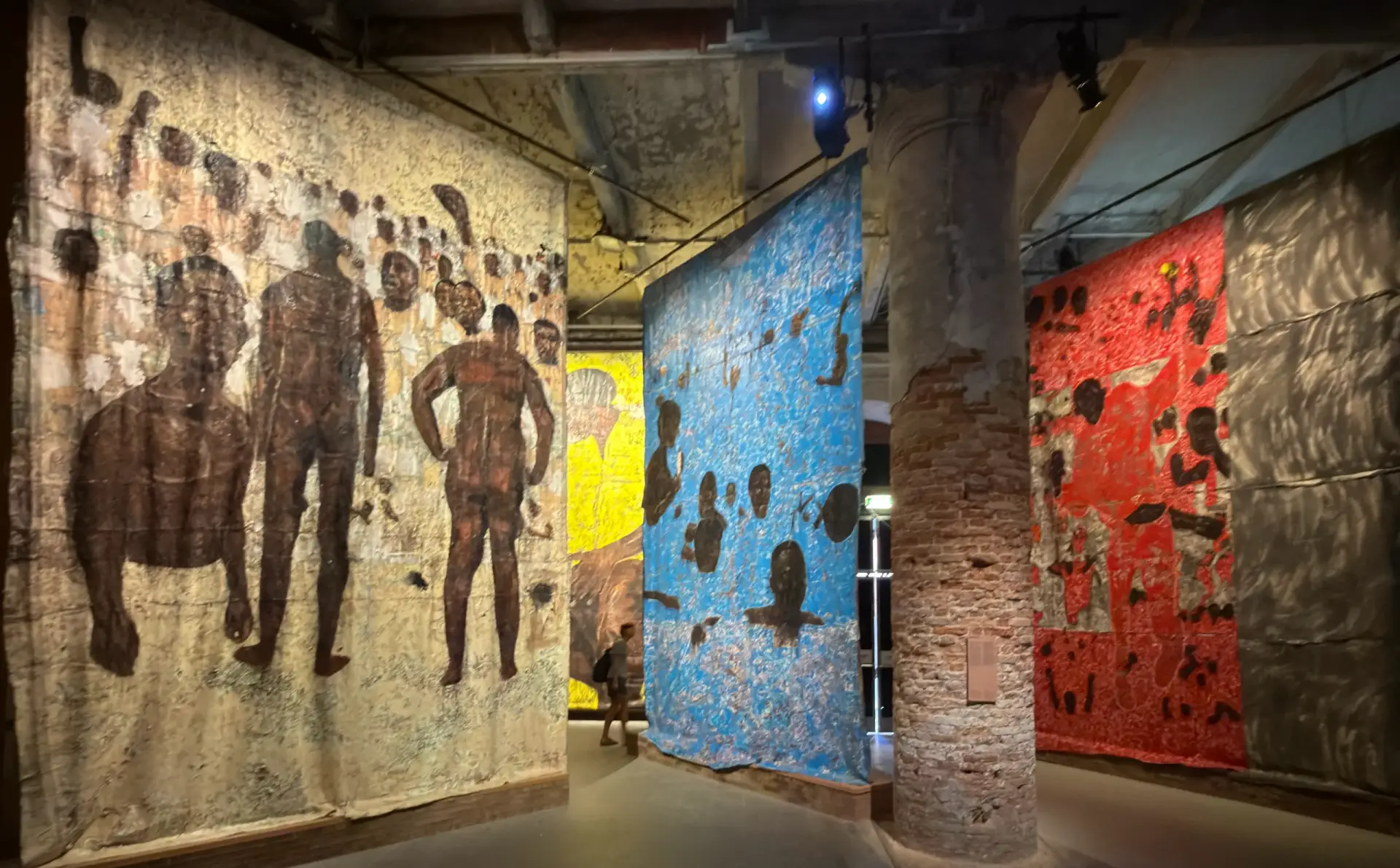
Kenyan artist Kaloki Nyamai creates multilayered paintings informed by Kamba culture, oral storytelling, and personal memory. Bringing together sisal fibre, fabric, newspaper, photographic transfers, and stitching on canvas, he expands the boundaries between painting and textiles. His figures sometimes emerge distinctly, while at other times they disappear into abstract surfaces. Nyamai’s practice engages with the social and political histories of East Africa through themes of memory, loss, violence, and healing. By bringing traditional materials into conversation with a contemporary visual language, he explores the relationship between personal experience and collective history.
María Magdalena Campos-Pons & Kamaal Malak
Cuban artist María Magdalena Campos-Pons explores diaspora, memory, identity, and the historical experiences of women through photography, sculpture, performance, and installation. Her collaboration with Kamaal Malak, Anatomy of the Magnolia Tree for Koyo Kouoh and Toni Morrison (2026), is dedicated to Toni Morrison, the first Black woman to win the Nobel Prize in Literature, and Koyo Kouoh, the first Black woman to curate the Venice Biennale’s International Art Exhibition. Bringing together portrait panels and resin and glass sculptures evoking magnolia blossoms, the installation is accompanied by Malak’s composition of bass guitar and electronic sounds. As in Morrison’s novel Beloved, the work invites reflection on memory, historical trauma, and the ways the past continues to shape the present. It stands as a tribute to the cultural legacy of Black women and to intergenerational solidarity. Morrison’s Beloved was also among the literary references Kouoh drew upon in developing the Biennale’s curatorial framework.
Kemang Wa Lehulere
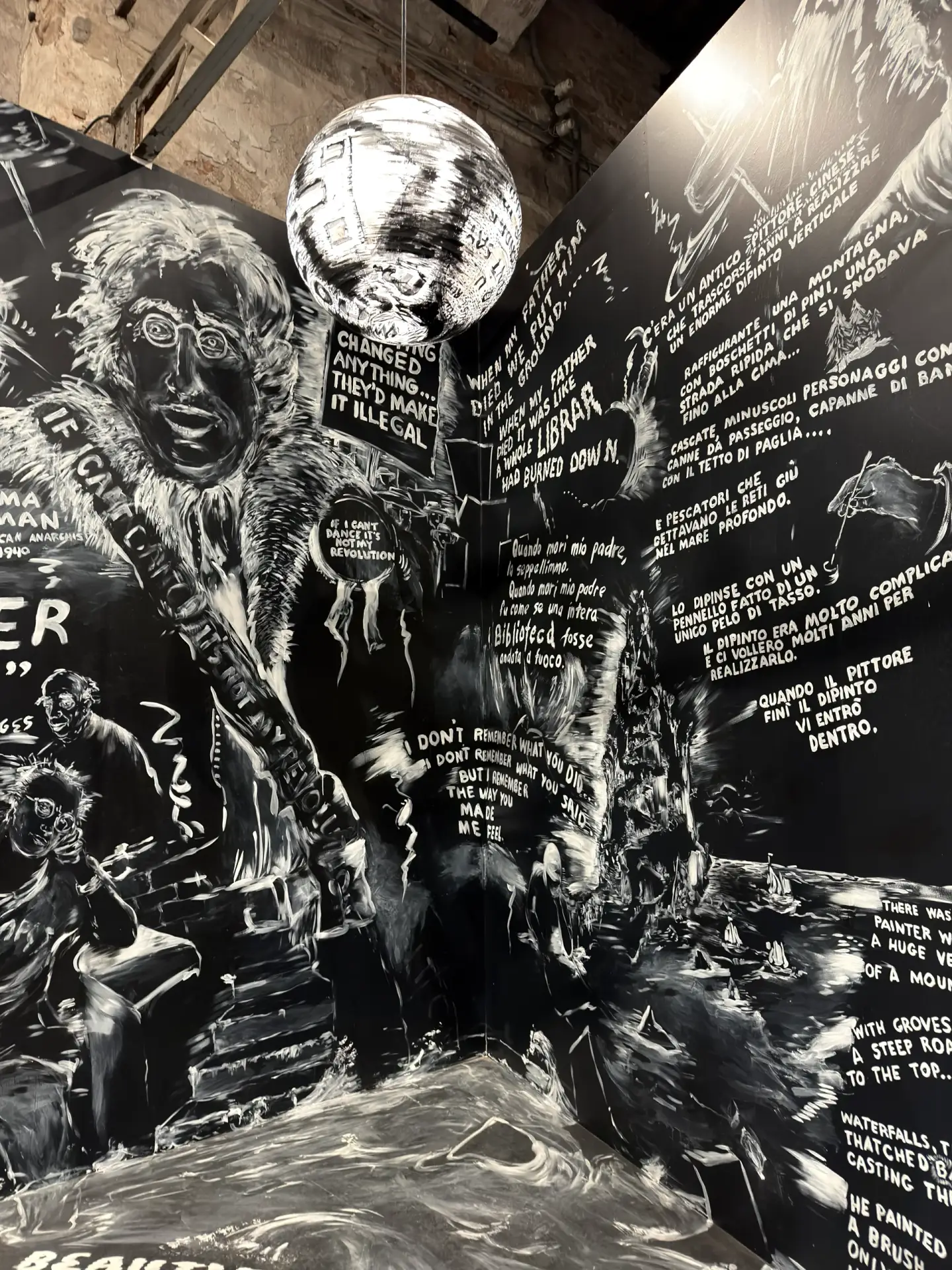
Born in 1984, South African contemporary artist Kemang Wa Lehulere works across painting, performance, video, and installation, addressing historical memory, identity, and the legacy of apartheid. At the 2026 Venice Biennale, his work I Bleach My Words for Your Comfort examines censorship, knowledge production, and historical memory. Named Deutsche Bank Artist of the Year in 2017, Wa Lehulere also participated in the 15th Istanbul Biennial that same year.
Otobong Nkanga
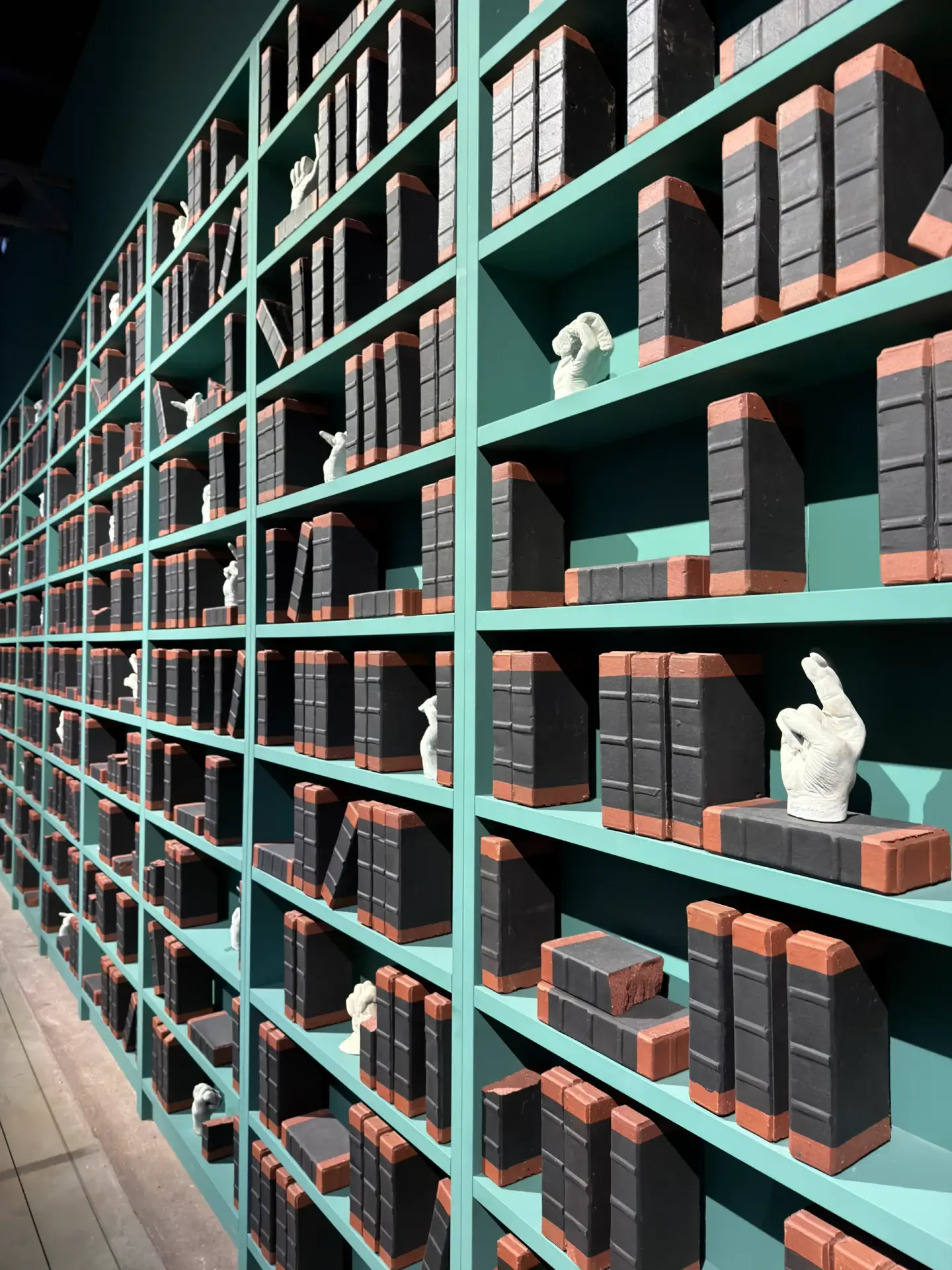
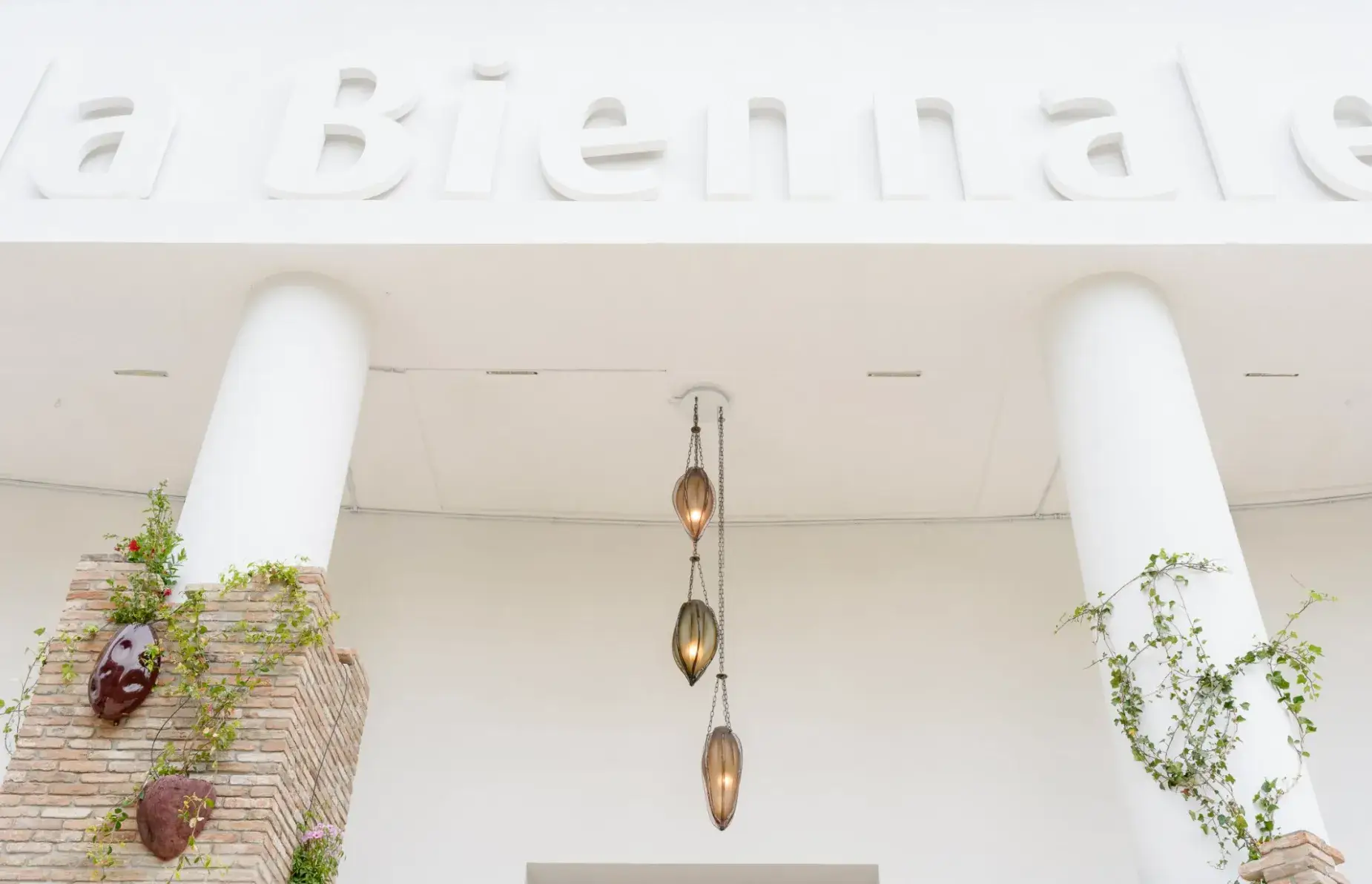
Born in Nigeria and based in Belgium, Otobong Nkanga investigates land, natural resources, labour, and the relationships between humans and the environment. Her Biennale installation brings architectural elements together with plants, bricks, and objects made from Murano glass, questioning the boundaries between natural and built environments. In Nkanga’s practice, materials carry histories of production, exploitation, circulation, and transformation. Moving beyond an anthropocentric perspective, she invites us to consider plants, stones, and other beings as part of their own interconnected networks of relationships.
Alice Maher
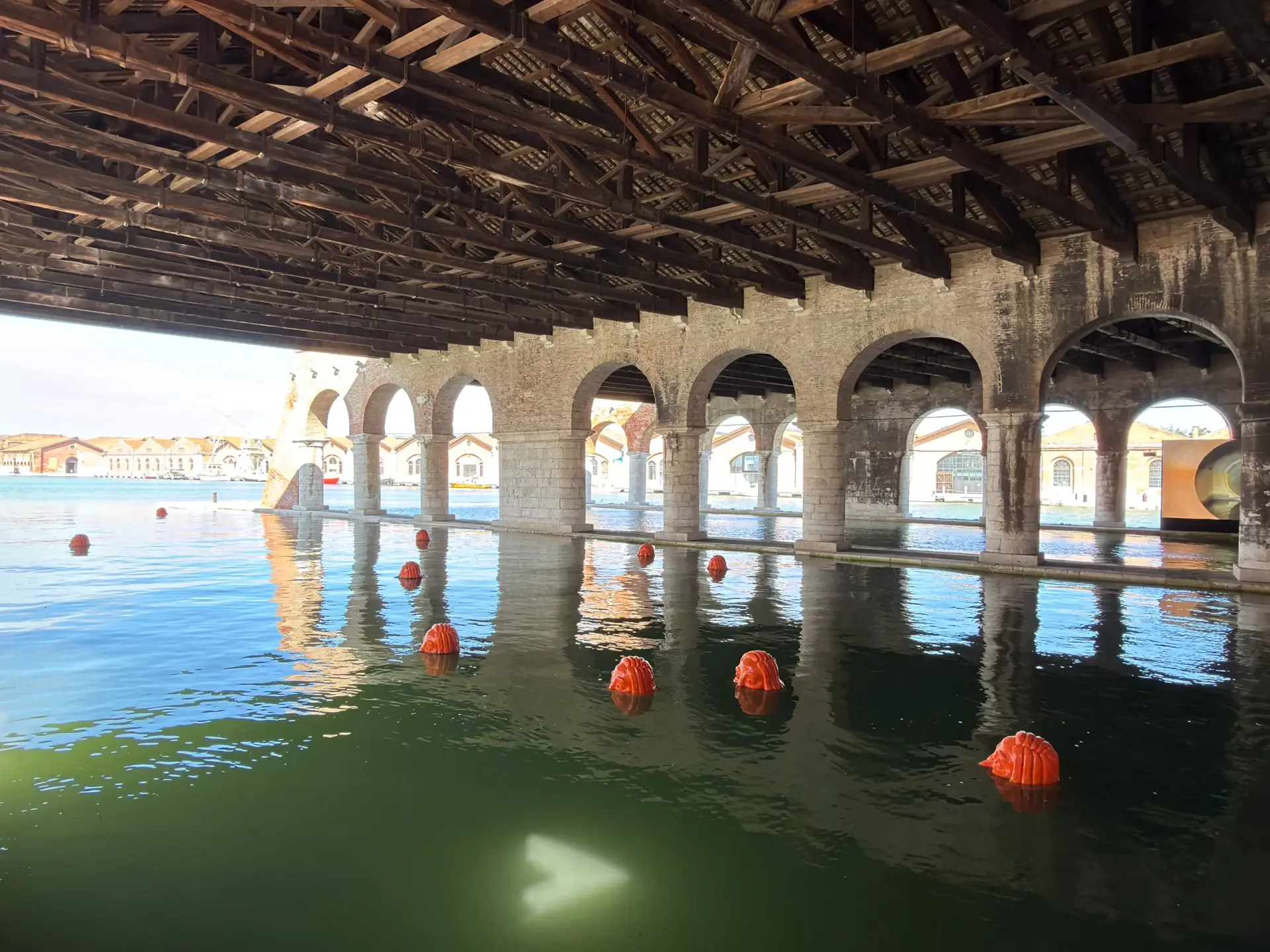
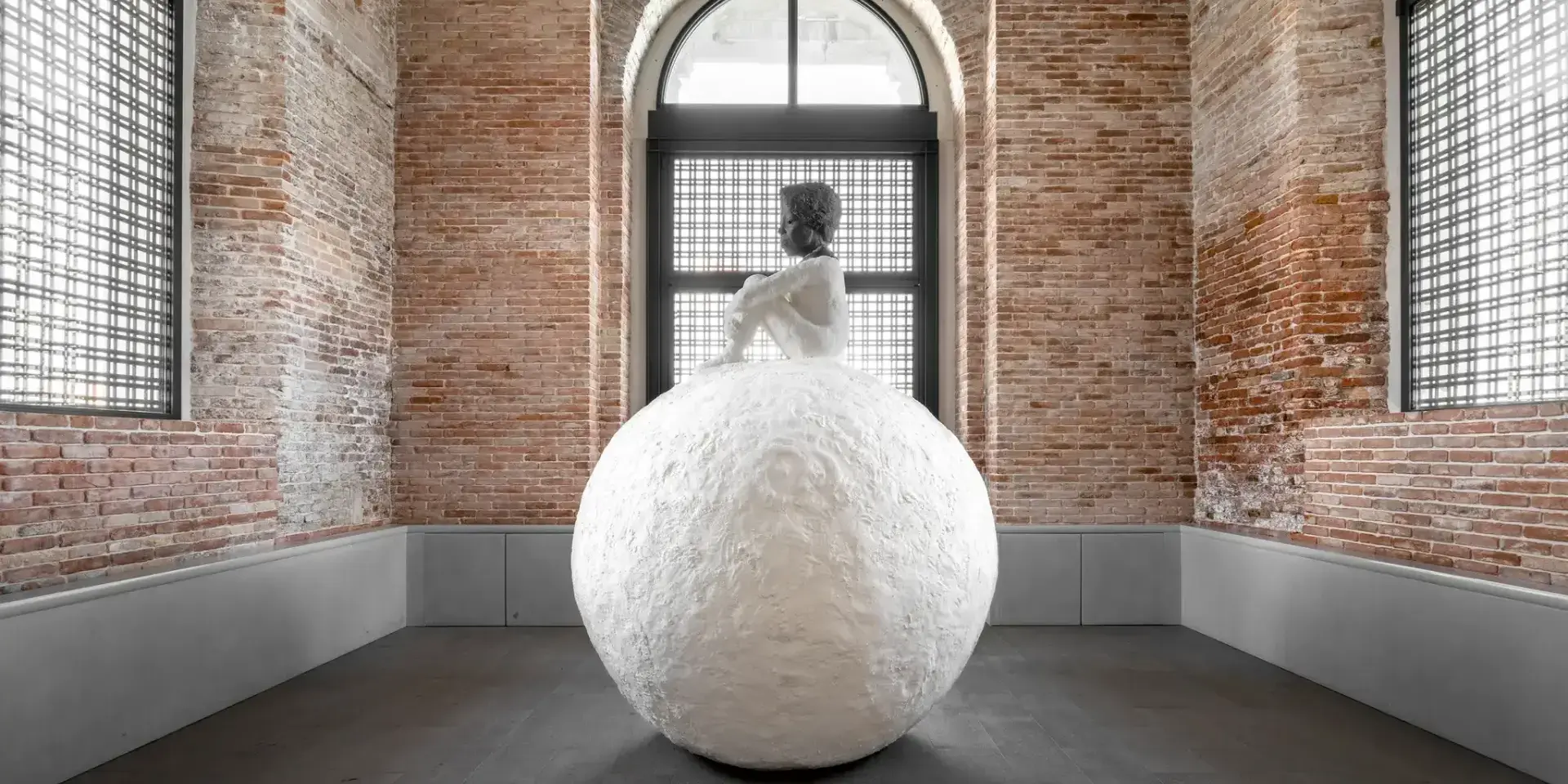
Irish artist Alice Maher reinterprets mythology, folklore, and representations of femininity through sculpture, drawing, and installation. In Les Filles d’Ouranos, crimson heads rising from the water approach creation myths through fragmented imagery. In her The Sibyls series, female figures associated with prophecy intertwine with elaborate hair forms and reflective surfaces. Rather than treating historical and cultural archetypes of femininity as fixed meanings, Maher explores them as shifting structures marked by contradictions, transforming the body into a space where personal and mythological narratives intersect.
Alvaro Barrington
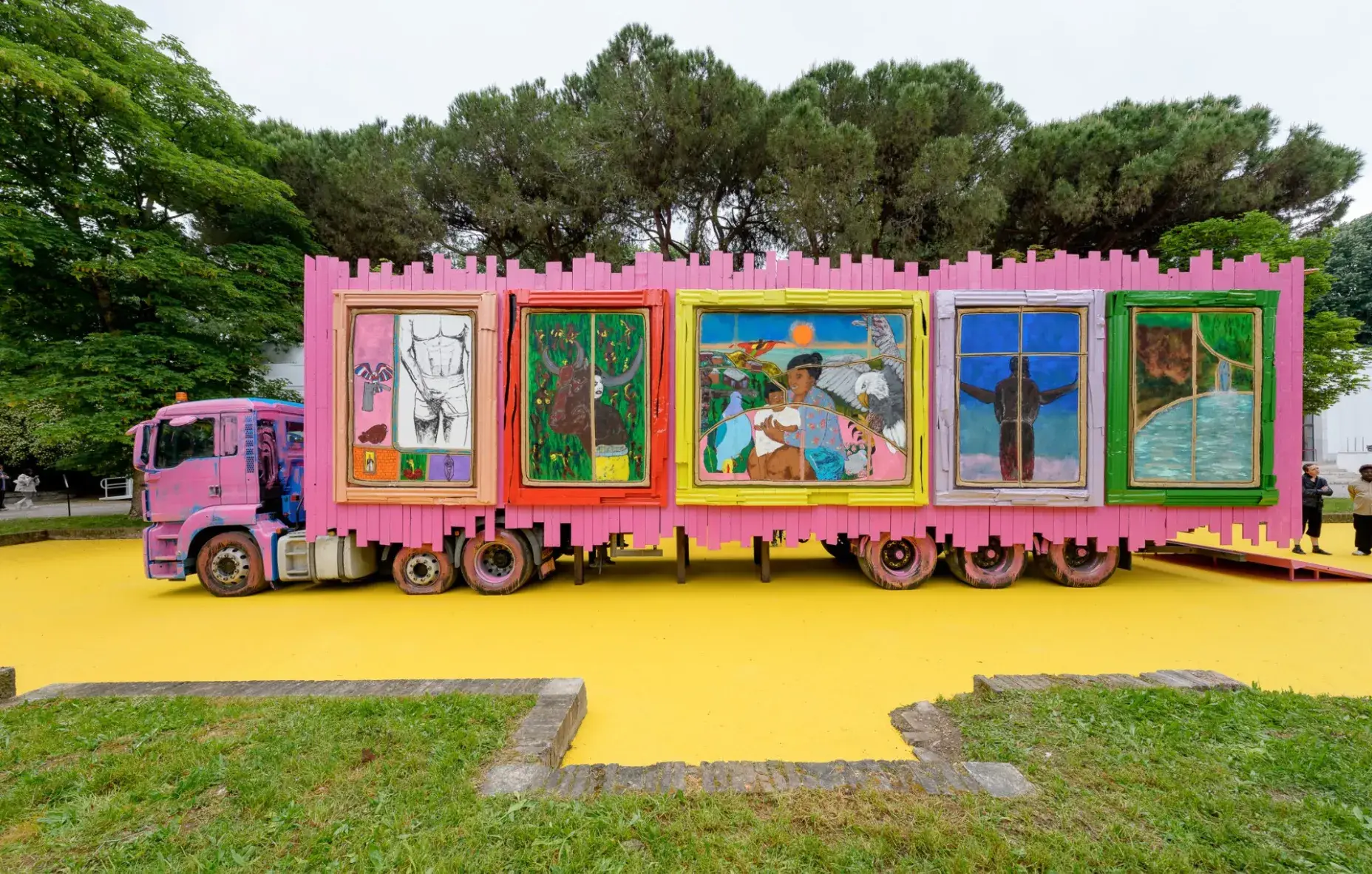
Born in Caracas, Venezuela, and based in London, Alvaro Barrington brings together personal memory, Caribbean culture, and representations of Black identity through painting and installation. His Biennale work Labor Day Parade ’91 draws on his memories of the West Indian Day Parade in Brooklyn. The installation combines a truck covered in painted Kuba textiles with metal figures and a winged rope sculpture, weaving diverse Caribbean traditions together with references to art history. By blending personal experience with popular culture and art history, Barrington constructs a layered narrative around migration, belonging, and cultural hybridity.
Kader Attia
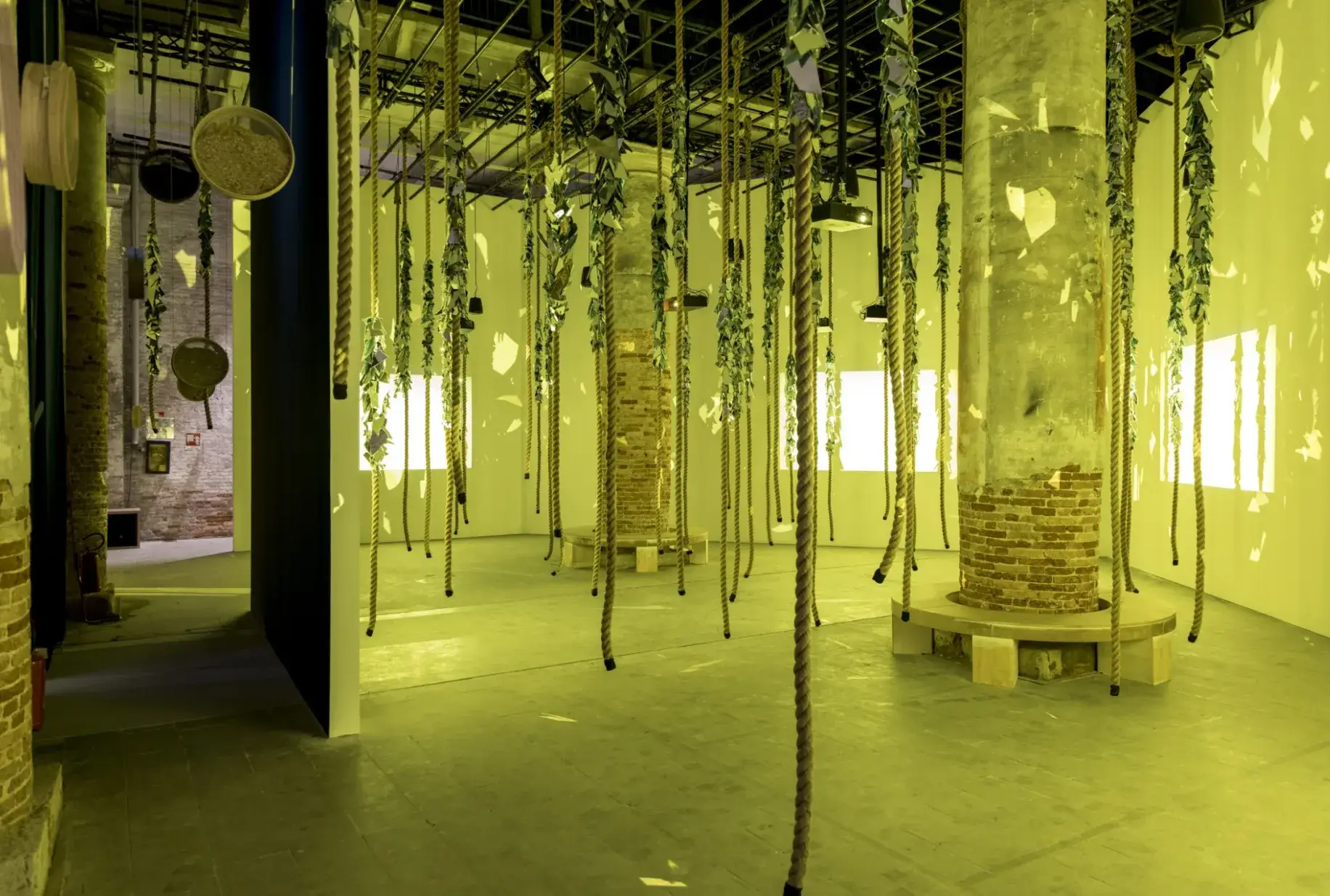
French-Algerian artist Kader Attia explores colonialism, collective memory, and cultural repair through sculpture and installation. His work emphasises that historical violence leaves traces not only in physical structures but also in systems of knowledge and cultural representation. His installation Whisper of Traces questions the relationship between technology and invisible forces. Sculptures, dried plants, ropes, and reflective surfaces form a space in which different systems of knowledge and belief intersect. Attia places the modern world’s emphasis on reason and technology in dialogue with alternative ways of thinking and perceiving.
Cauleen Smith
American artist and filmmaker Cauleen Smith explores Black cultural production, music, and collective memory through experimental cinema, video, and installation. The Wanda Coleman Songbook is a multichannel video installation that approaches Los Angeles through the poetry of Wanda Coleman. Everyday urban scenes and industrial landscapes are brought together with music created by seven Black composers in response to Coleman’s verses. Smith presents the beauty of Los Angeles alongside its social contradictions within the same visual and auditory field. Film, poetry, and music allow the city’s history to be heard anew through alternative narratives.
Guadalupe Maravilla
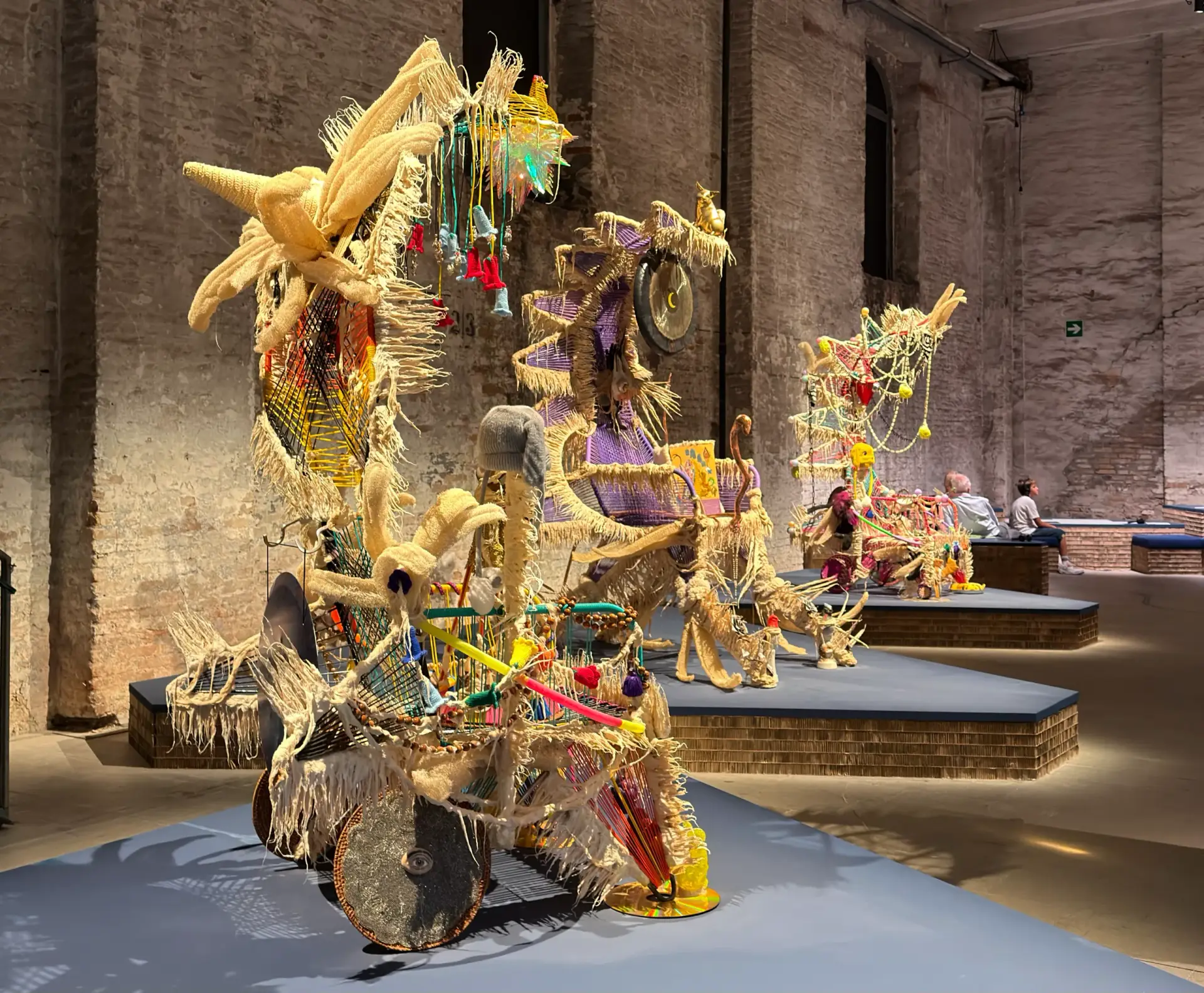
Born in El Salvador and based in the United States, Guadalupe Maravilla explores migration, illness, and processes of healing through sculpture, sound, and performance. In his Disease Throwers series, found objects, handmade elements, and sound-producing components come together to form sculptures reminiscent of ritual objects. His childhood migration and personal experience of illness inform the background of his practice. Drawing on sound baths and collective healing rituals, Maravilla approaches trauma not solely as an individual experience but as a process that can be shared within communities. His works focus on care, solidarity, and the possibilities of reconnecting.
Carrie Schneider
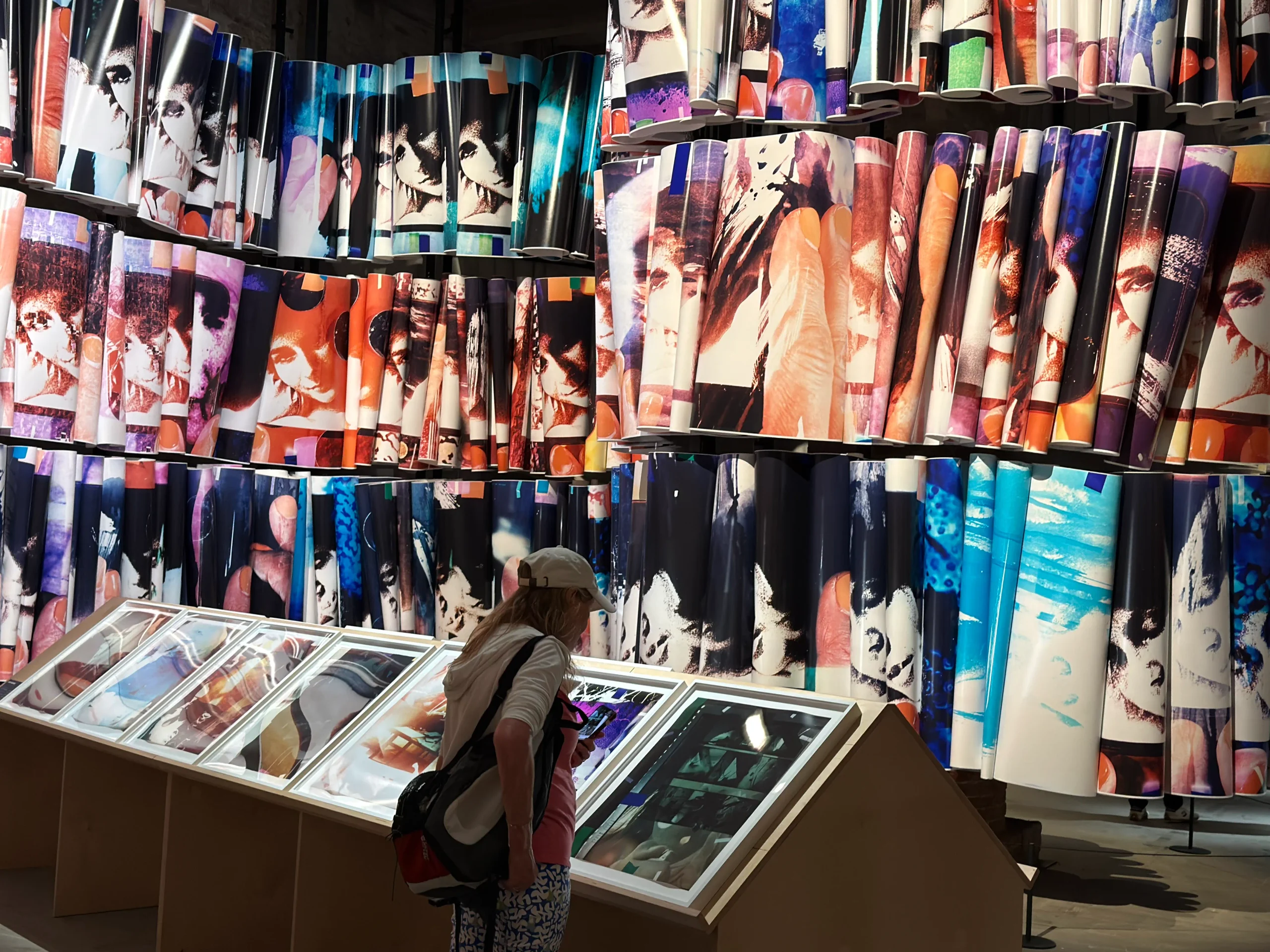
American artist Carrie Schneider investigates representations of women, memory, and the effects of visual culture through photography and moving images. First Living Woman (2026) takes as its starting point a brief scene from Chris Marker’s film La Jetée (1962). Schneider revisits the female figure portrayed by Hélène Châtelain, extending her into a photographic continuity to examine how a single image is perceived over time. This extended work on chromogenic photographic paper invites viewers to spend more time in front of the image. For Schneider, photography becomes a means of questioning the ways we see and remember.
Nicholas Hlobo
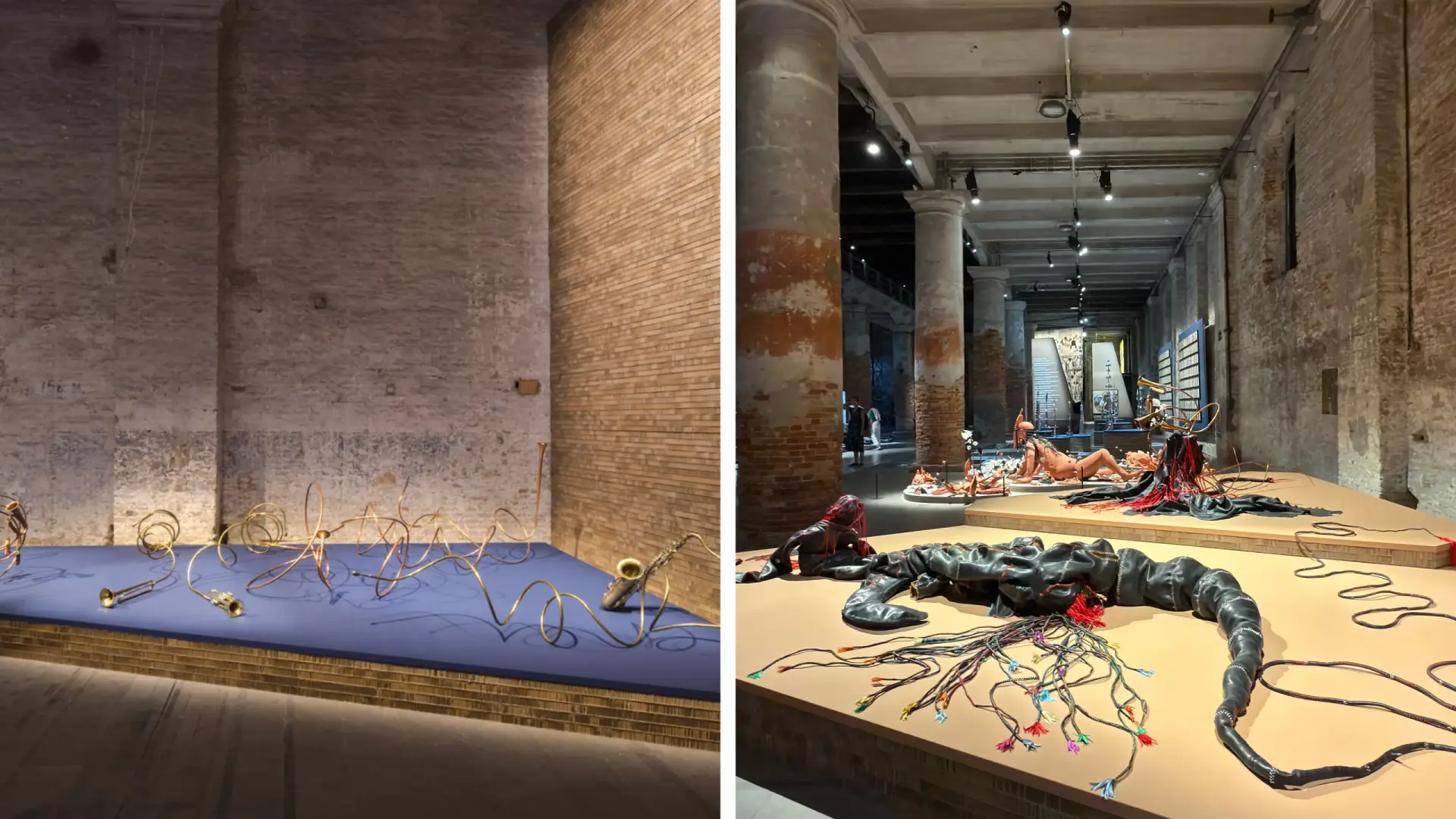
South African artist Nicholas Hlobo works with materials such as leather, rubber, ribbon, and metal to explore identity, gender, and Xhosa culture. In his sculptures, stitching and joining techniques create connections between different materials and worlds of meaning. Umrhubuluzi (2010) blurs the boundaries between human, animal, and mythological being. In his Silent Wind Orchestras series, sculptural forms and brass instruments come together around the possibility of producing sound. Hlobo transforms the physical properties of materials into a means of reflecting on cultural memory and personal identity.
Laurie Anderson
American artist, musician, and performer Laurie Anderson is known for her interdisciplinary practice, which brings together sound, video, technology, and narrative. Her work investigates how language, music, and visual imagery shape memory. Through experimental sound compositions and environments built with technological tools, she invites audiences to experience space through the senses. In Anderson’s practice, personal stories, political observations, and technological experimentation intertwine.
Güliz Özbek Collini
Explore Related Articles
 61st International Art Exhibition of La Biennale di Venezia
In Minor Keys
 Exhibitions Beyond the Biennale in Venice
 Recommended Reading For the 61st Venice Biennale