


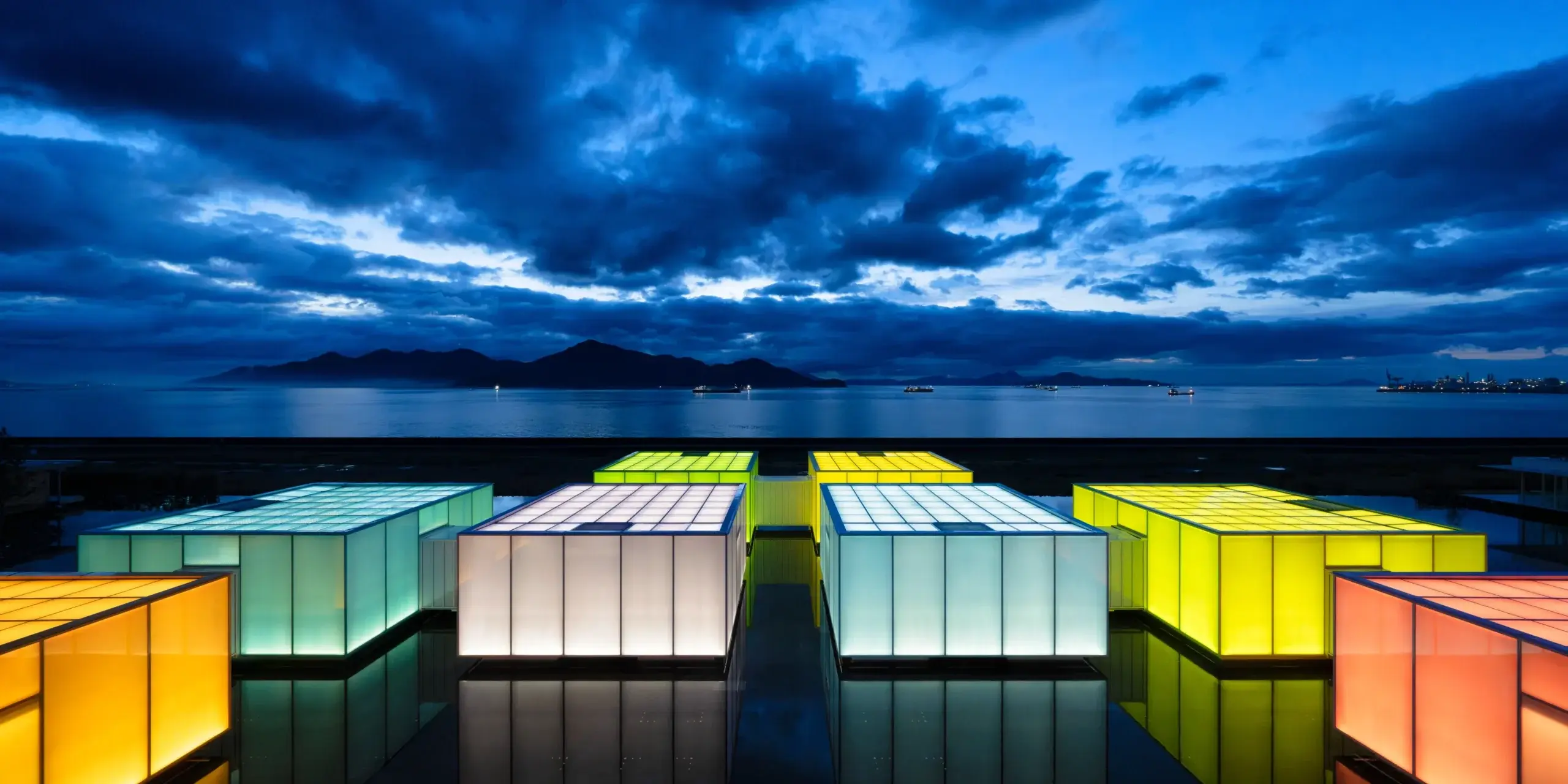
The Simose Art Museum, located in the city of Ōtake in Hiroshima Prefecture, is quickly becoming one of the most talked-about cultural destinations in Japan and even the world. Opened in 2023, this museum brings together contemporary architecture, Japanese and Western art collections, and a unique accommodation experience within a single complex that feels carefully curated from the ground up. Designed by renowned architect Shigeru Ban, the museum has gained international recognition not only for its innovative structure, but also for how it redefines the relationship between art, architecture, and environment.
A Museum Rooted in Personal Legacy
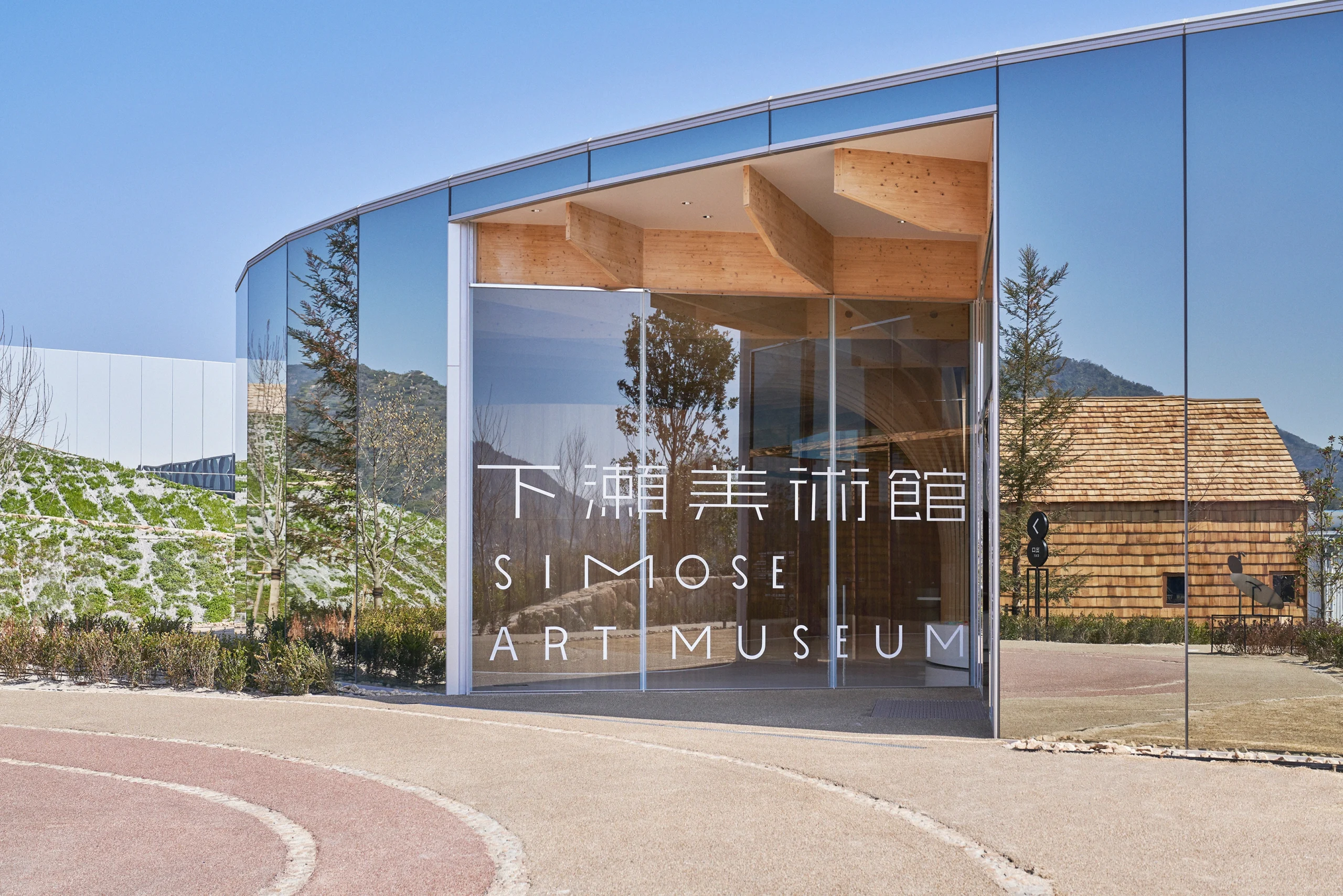
The Simose Art Museum was founded by Yumiko Shimose, president of the Marui Sangyo Corporation, to commemorate the company’s 60th anniversary. The museum also houses a collection that reflects over 50 years of family-led collecting across Japanese and European art, design, and craft. More than a traditional museum, Simose serves as a cultural campus with multiple elements, including exhibition spaces, landscaped gardens, architectural villas, and a fine dining restaurant.
While it is relatively new, the museum has already made a significant impact. In 2024, it was awarded the “World’s Most Beautiful Museum” by the Prix Versailles, an international prize for architecture in cultural and commercial spaces.
Architectural Concept by Shigeru Ban
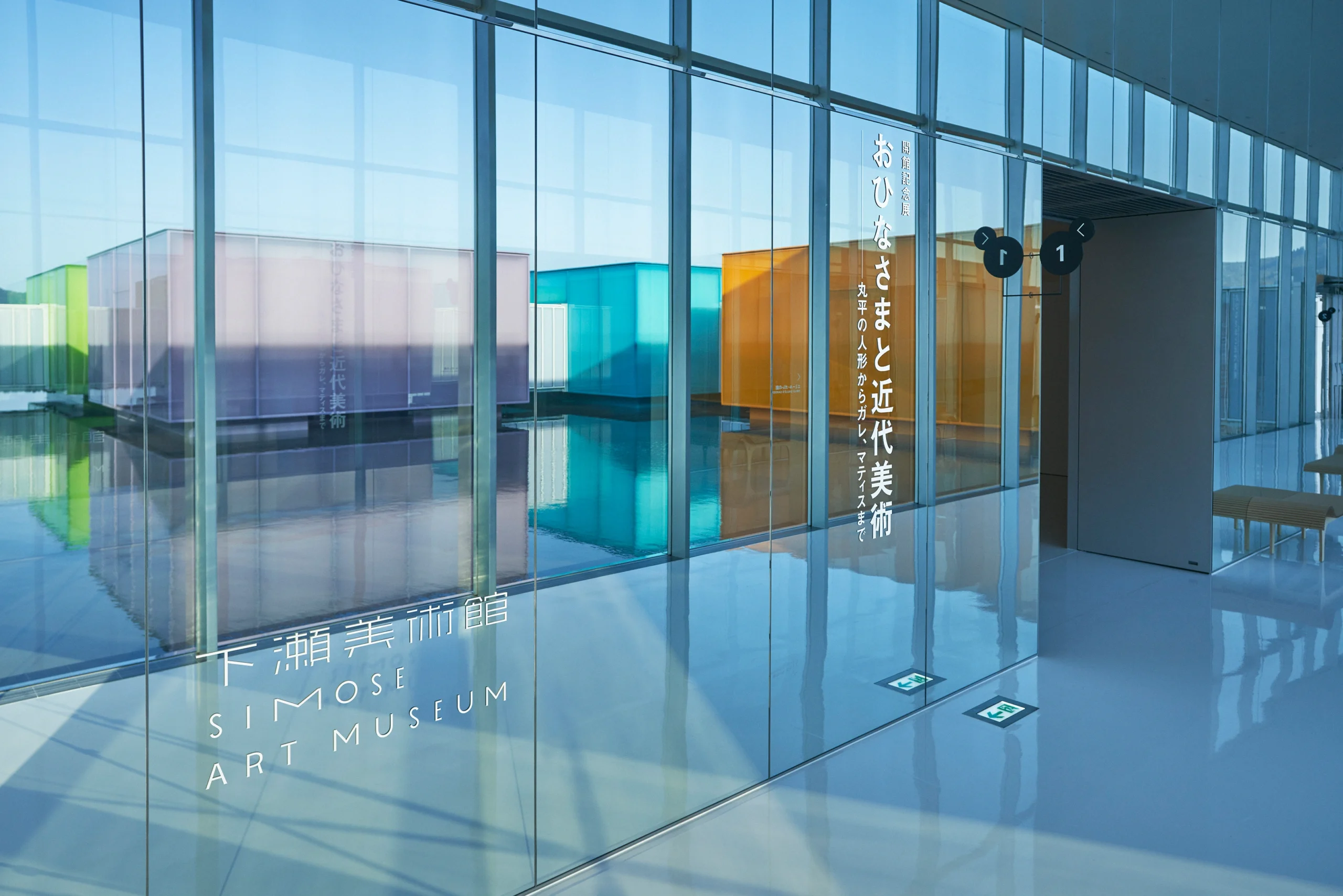
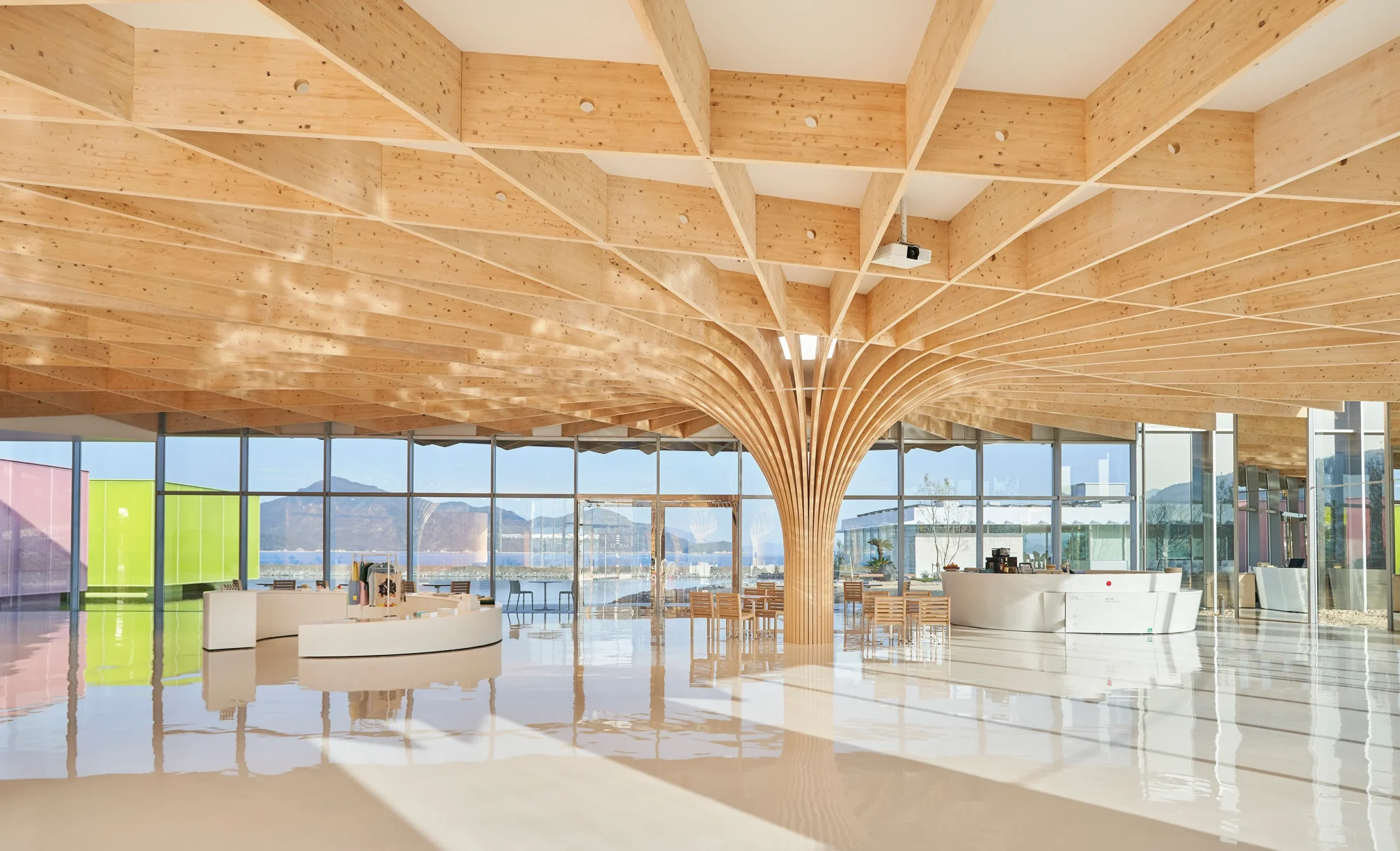
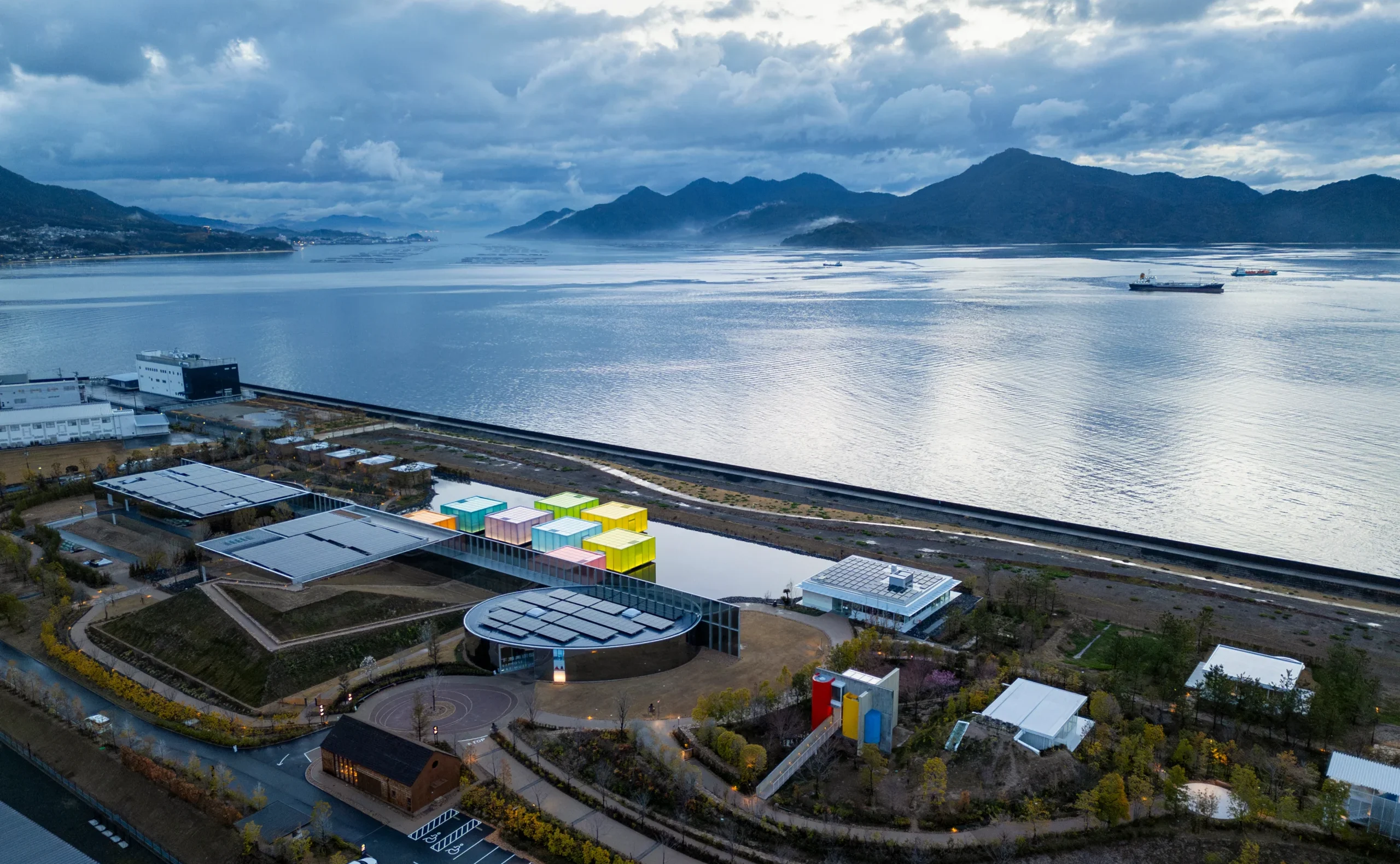
The architectural design is what immediately distinguishes Simose. Shigeru Ban’s masterplan organizes the site along a mirrored corridor that stretches 190 meters and reflects the surrounding sea and sky. The mirror glass cladding isn’t just aesthetic — it visually dissolves the boundary between built space and landscape. From the front approach, the museum almost disappears, integrating with the seascape in a striking and intentional way.
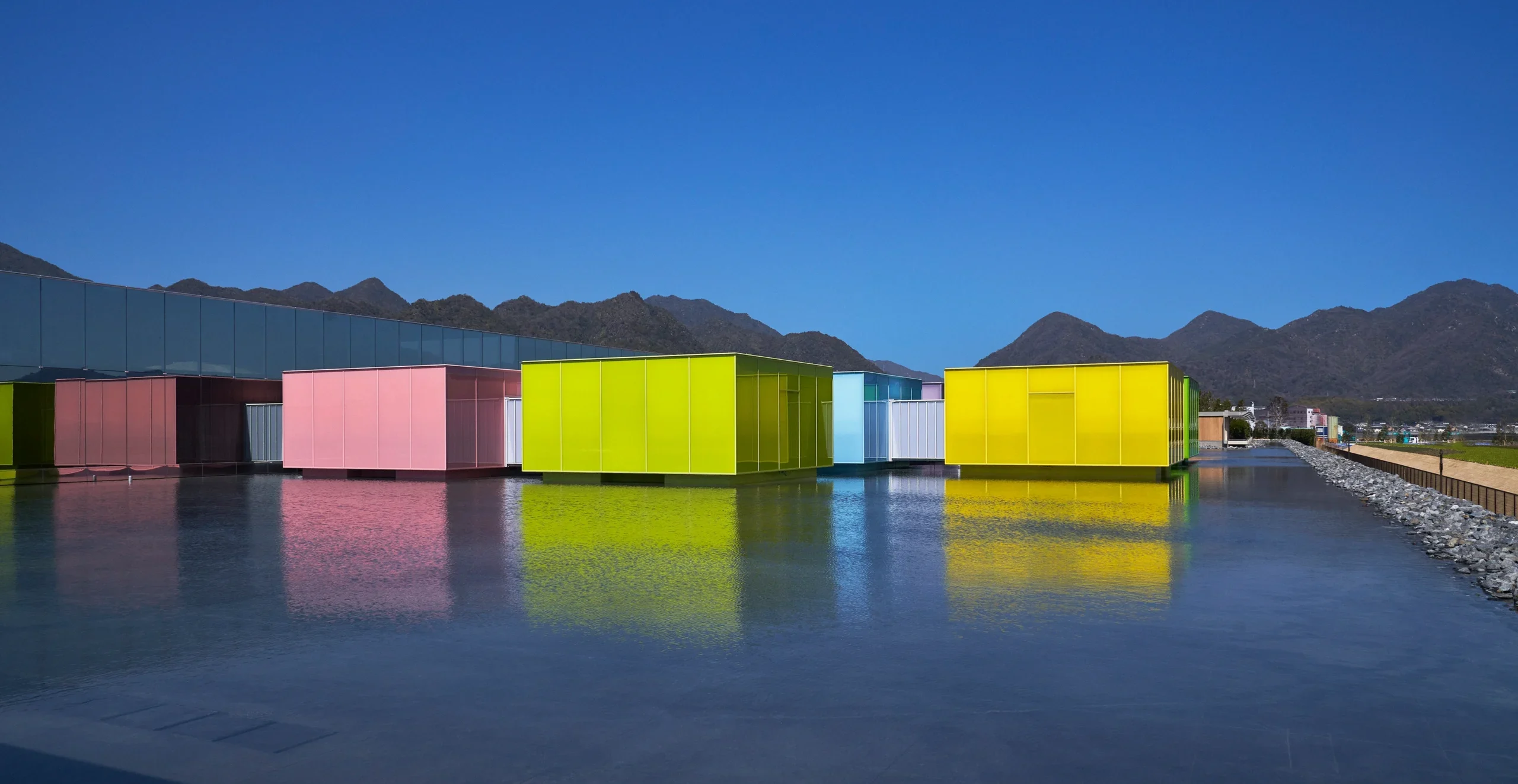
The exhibition hall is composed of eight movable gallery boxes that float on shallow water. These mobile structures are finished in colored glass — red, blue, yellow, green — and can be rearranged depending on curatorial needs. Despite weighing over 40 tons each, they are engineered to be repositioned by just two people. The mobility of the galleries is one of the museum’s most notable architectural innovations, combining flexibility with conceptual clarity.
This moveable gallery concept is inspired by the islands of the Seto Inland Sea, and by traditional Japanese architectural principles such as the fluidity of space and shoji partitions.
Inside the Museum Exhibition Layout and Collection
The museum’s programming rotates through its modular gallery boxes, allowing curators to rethink exhibition layouts over time. This creates a dynamic environment where returning visitors may have a different spatial experience depending on how the galleries are arranged.
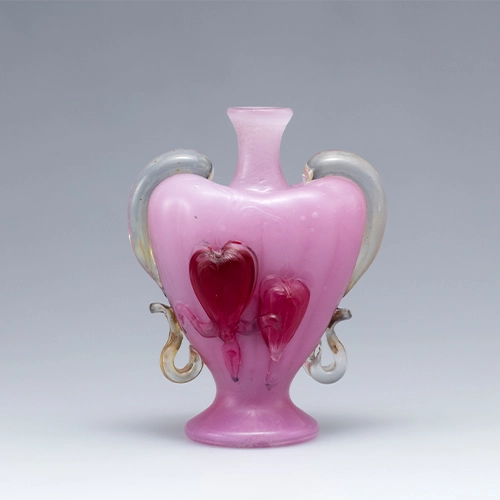
The permanent collection includes both Western and Japanese works, with a focus on modern and contemporary periods. Key pieces include paintings by Henri Matisse and Marc Chagall, glassworks by Émile Gallé, and sculptures and crafts from Meiji to modern Japan. The collection also highlights Japanese artists such as Yokoyama Taikan, Kishida Ryūsei, Foujita, and Kayama Matazō — presenting a cross-cultural conversation that reflects both personal taste and regional identity.
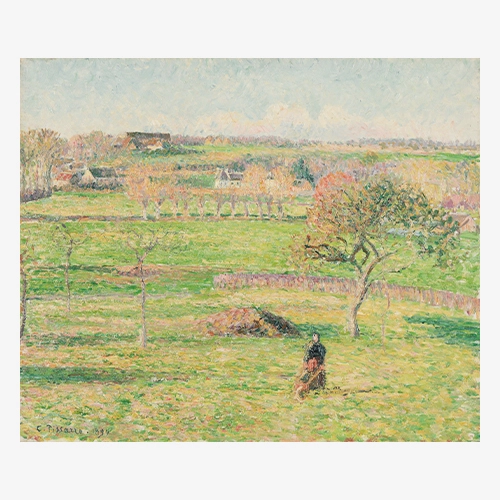
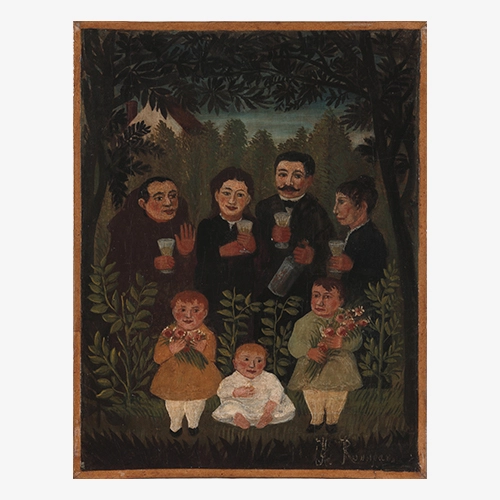
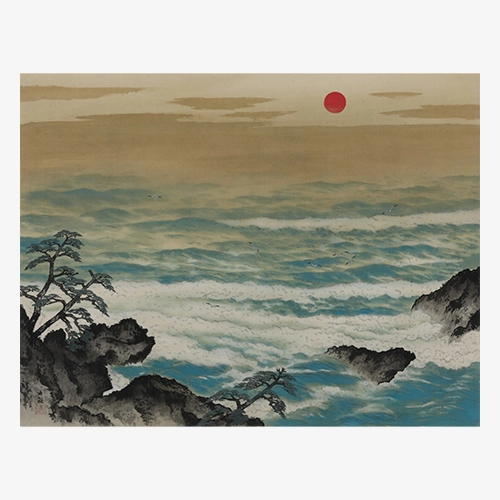
Among the more unique features of the museum is its rooftop, which offers unobstructed views of the Seto Inland Sea. It’s more than a scenic overlook; the rooftop connects the art experience to its geographical and environmental context.
Supporting Spaces: Garden, Shop, and Café
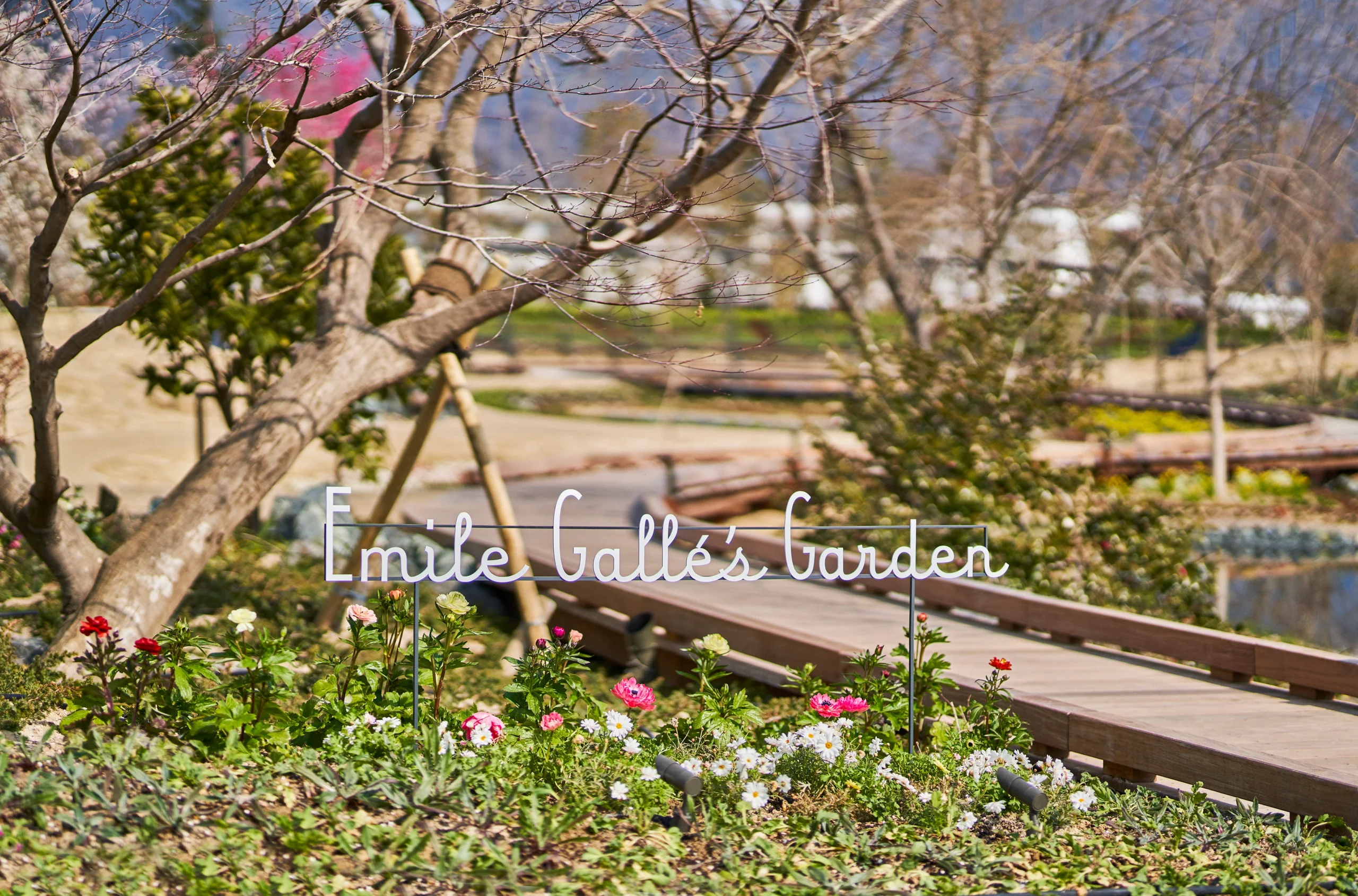
Beyond the gallery spaces, the Emile Gallé Garden features seasonal plantings inspired by the Art Nouveau motifs seen in the collection. The museum shop offers original design goods, prints, and items related to the museum’s architecture, including those made from Shigeru Ban’s iconic paper tubes. The on-site café offers a minimalist space to pause, with views of the sea and a seasonal menu that complements the overall visitor experience.
Simose Art Garden Villas
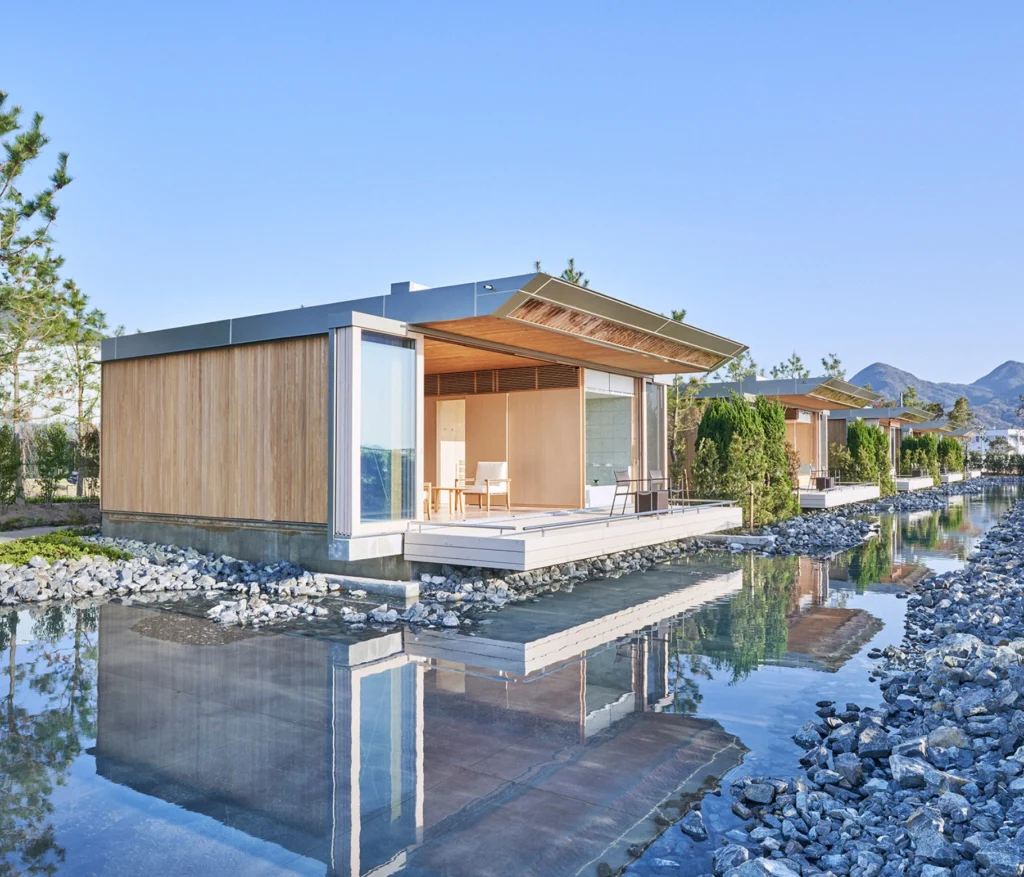
Adjacent to the museum is the Simose Art Garden Villas, which include ten architecturally distinct guest villas. Designed by Shigeru Ban and others, each villa explores different structural concepts — from the Paper Tube House and Wall-less House to CLT-framed Cross Wall House and wide-span Kielsteg villas. The accommodations are minimalist but comfortable, offering guests a chance to stay within a work of architecture.
A reception lounge, small gym, and library round out the facilities, maintaining the same design-forward tone found throughout the complex.
The complex also features a French restaurant that overlooks the Seto Inland Sea. Known for its use of local ingredients and refined presentation, the restaurant is open to both overnight guests and museum visitors with reservations. The view of Itsukushima Island at sunset has become a highlight for many who dine here.
A Complete Experience
The Simose Art Museum is not just a place to view art — it’s a curated environment where architecture, design, and landscape work together to shape a distinctive visitor experience. While the scale of the museum is modest compared to national institutions, its ambition lies in quality, integration, and detail. From its mobile galleries to its architectural villas, the site operates as a living design laboratory that rewards slow observation and quiet exploration.
For those interested in architecture, contemporary museum design, or modern Japanese aesthetics, Simose offers a compelling and memorable experience — one that reflects both personal vision and architectural ingenuity.
Cover Image: ⓒSIMOSE