


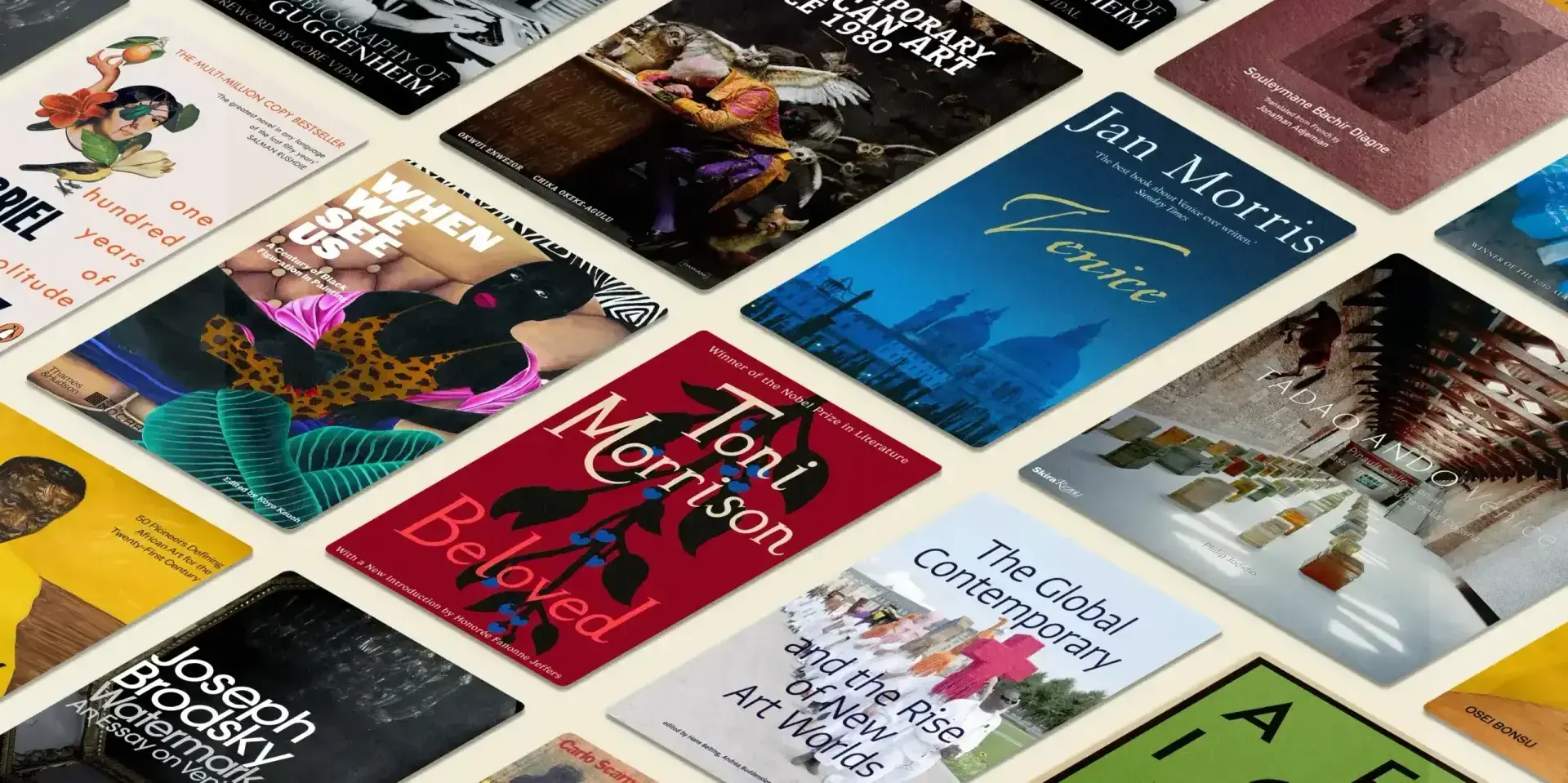
As you prepare for the 61st Venice Biennale, looking at the exhibition program alone does not suffice. The Biennale’s curatorial framework, the global context of contemporary art, and the layered structure of the city offer important clues that enrich the experience.
At a time when many in the art world are planning to travel to Venice for the Biennale, we have put together a selection that moves from curatorial references to contemporary African and diasporic art, and from the city’s distinctive spaces to the lives of collectors closely tied to Venice.
This list is conceived as a thematic guide that can deepen the Biennale experience, depending on visitors’ personal or professional interests, as well as the time they will spend in the city. We hope it will be of interest.
Curatorial References and the Global Art Context
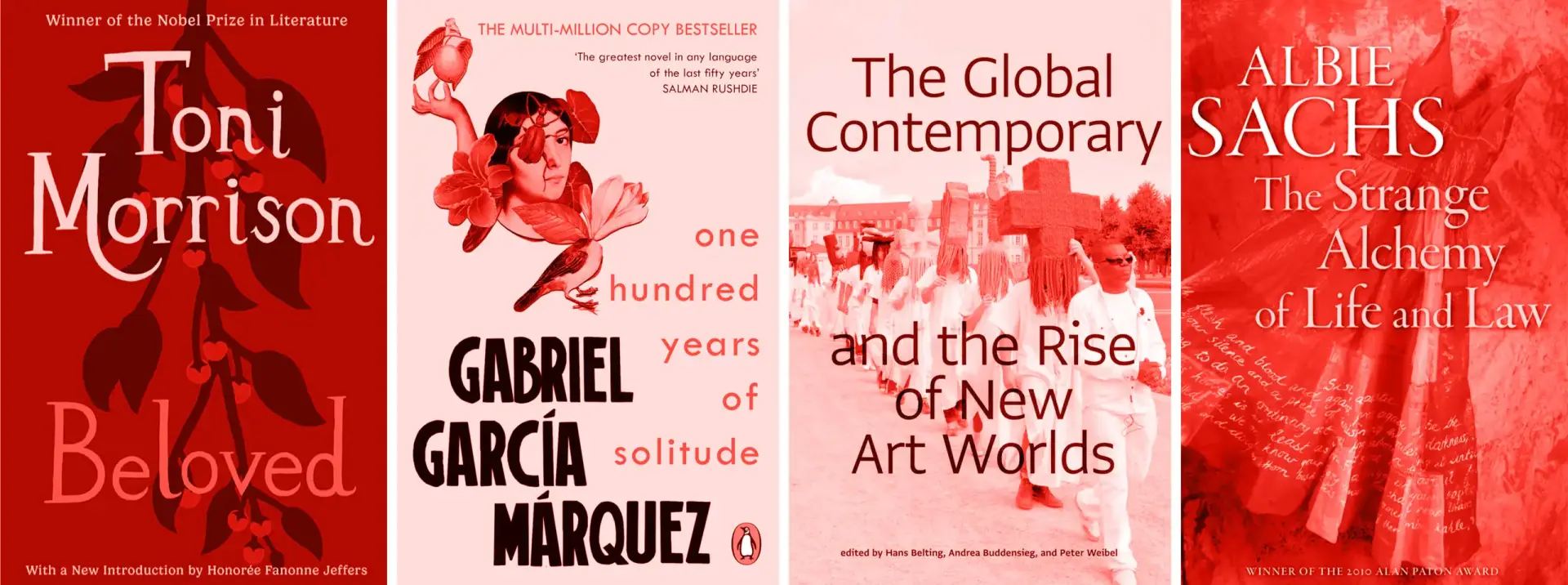
These books, directly referenced by Koyo Kouoh and her team while developing the Biennale’s curatorial text, are key to thinking about time, memory, and multiple layers of reality.
Beloved — Toni Morrison
A narrative shaped by memory, trauma, and collective history. Morrison’s non-linear sense of time, and the way the repressed past enters the present, offers a strong framework for reading the narrative strategies in the exhibition.
One Hundred Years of Solitude — Gabriel García Márquez
Through magical realism, history, myth, and time are woven together. Márquez’s cyclical sense of time and his construction of collective memory are especially useful for understanding how layered narratives are built in the Biennale.
The Global Contemporary and the Rise of New Art Worlds — Hans Belting
This book examines how contemporary art has moved beyond a Western-centered narrative toward a multi-centered structure. By looking at biennials, new institutions, and emerging art geographies, it makes the framework behind today’s exhibition formats more visible.
The Strange Alchemy of Life and Law — Albie Sachs
Focusing on the tension between law, ethics, and personal experience, this text questions the balance between rationality and empathy in decision-making. It offers a strong reference for thinking about the ethical dimension of curatorial practice.
Understanding African and Diasporic Art
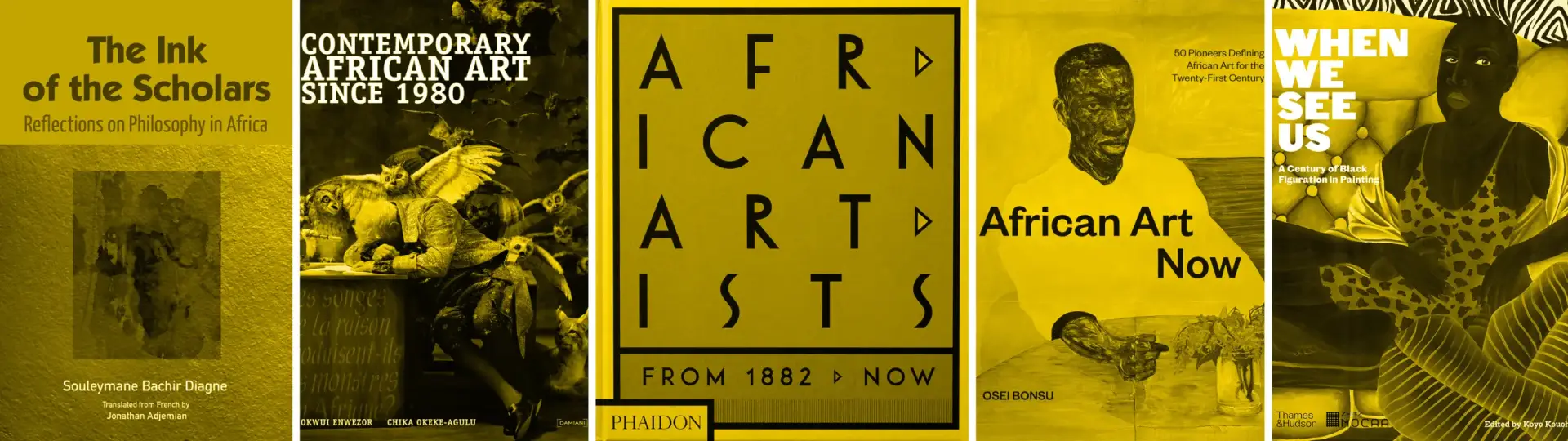
The Ink of the Scholars: Reflections on Philosophy in Africa — Souleymane Bachir Diagne
An introduction to African philosophy and written intellectual traditions; a key reference for understanding African and diasporic art in a global context. In a Financial Times interview in May 2025, Biennale curator Koyo Kouoh—who passed away unexpectedly during the preparation period—described it as “the best book I have read in the past year.”
Contemporary African Art Since 1980 — Okwui Enwezor & Chika Okeke-Agulu
A study of African art after 1980 through conceptual shifts and curatorial practices. By addressing international circulation and exhibition formats, it opens up new ways of thinking about art’s global position.
African Artists: From 1882 to Now — Phaidon
Bringing together artists from different periods and geographies, this book offers a broad view of modern and contemporary African art. It is also an important reference for understanding how artistic canons are formed.
African Art Now — Osei Bonsu
Focusing on recent work, it provides a clear entry point into younger artists’ practices and current directions in contemporary African art.
When We See Us: A Century of Black Figuration in Painting — Edited by Koyo Kouoh
Published alongside the 2022 exhibition at Zeitz MOCAA, this book looks at a century of Black figuration through thematic sections. Instead of a chronological narrative, it brings artists together through visual and conceptual connections, offering a more open way of reading.
Collectors and Museums Closely Associated with the City
To understand Peggy Guggenheim’s collecting practice and her influence on modern art:
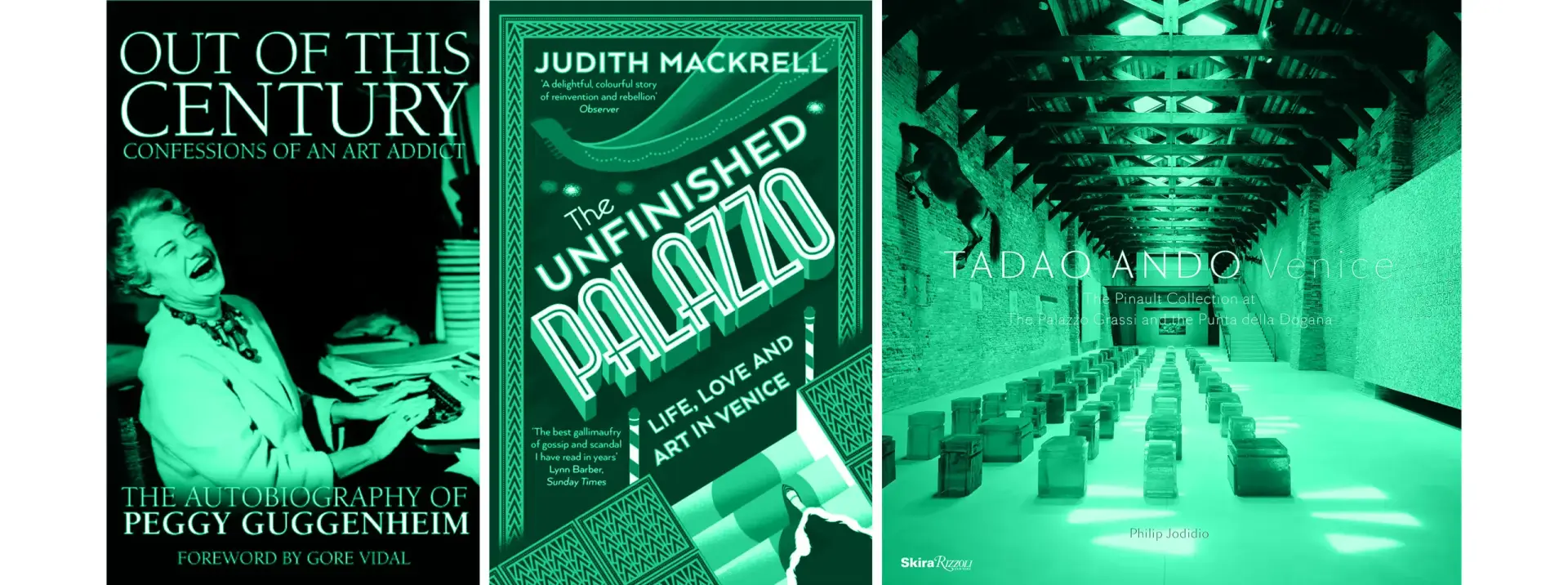
Out of This Century: Confessions of an Art Addict — Peggy Guggenheim
This autobiography approaches collecting through personal relationships, intuition, and risk-taking, offering an insider’s view of how modern art took shape. Her close ties with artists make the artistic environment of the time clearly visible.
The Unfinished Palazzo: Life, Love and Art in Venice — Judith Mackrell
Following Peggy Guggenheim’s life in Venice through the Palazzo Venier dei Leoni, the book also shows her connection to figures who shaped the city’s cultural imagination. Through names like Luisa Casati, it reveals how a collection can turn into a way of living within a space.
To understand François Pinault’s spaces in Venice:
Tadao Ando: Venice – The Pinault Collection at the Palazzo Grassi and the Punta della Dogana — Philip Jodidio
Through Tadao Ando’s interventions, this book explores the relationship between historic buildings and contemporary exhibition practices, showing how space itself becomes part of how meaning is produced.
The Architectural and Artistic World of the Biennale Venues
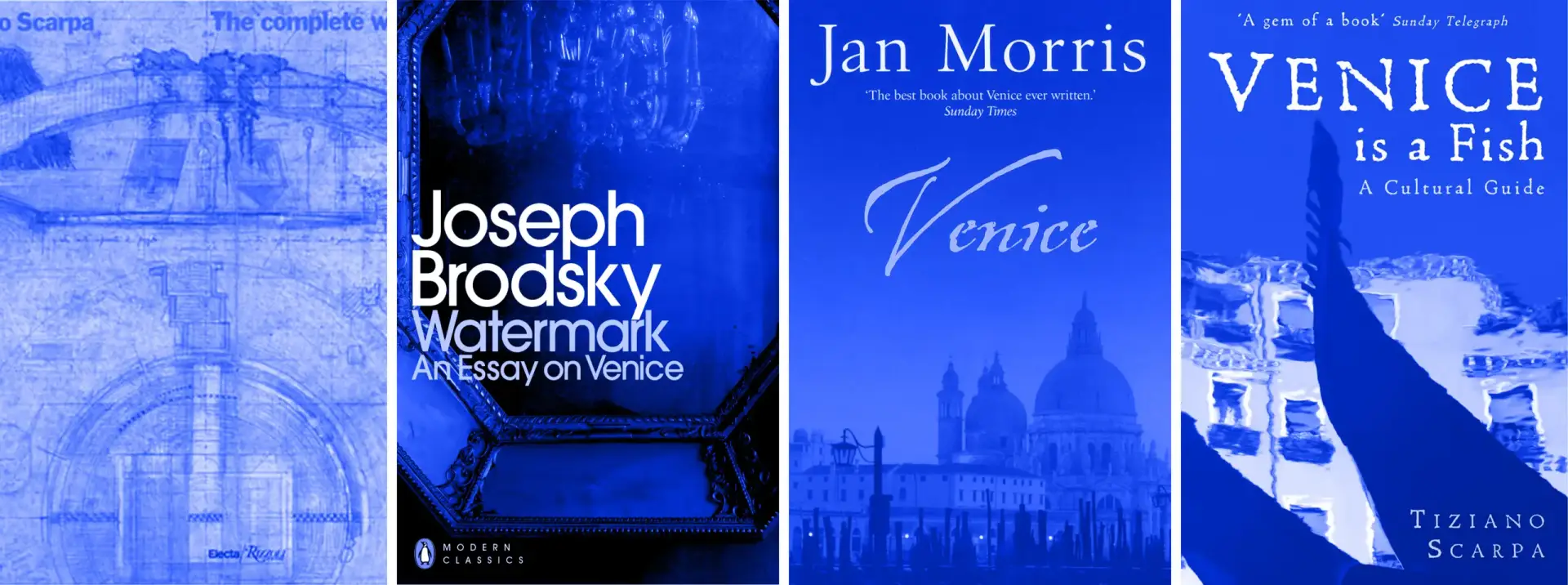
Carlo Scarpa: The Complete Works — Francesco Dal Co & Giuseppe Mazzariol
Scarpa’s precise interventions in Venice’s museums and exhibition spaces—his use of materials and treatment of light—redefine the relationship between space and art. The book shows how he builds a careful balance between object and environment, and how he guides the visitor’s experience.
Understanding Venice
Watermark — Joseph Brodsky
Brodsky’s text reads Venice almost like a poem. Canals, bridges, and squares come together with the city’s historical and cultural layers to create a dense atmosphere. During the intensity of a Biennale visit, it offers a short but deep pause.
Venice — Jan Morris
Morris presents Venice’s political, cultural, and architectural history alongside its artistic context. It is a strong reference for understanding the city’s spatial and social structure, and for better grasping the meaning of its exhibition spaces.
Venice Is a Fish — Tiziano Scarpa
Scarpa invites the reader to explore the city step by step through the senses. Rather than acting as a traditional guide, the text encourages getting lost and forming a direct experience of Venice, supporting a more intuitive engagement with both the Biennale venues and the artworks.