


Egypt Opens the Doors of History Toward the Future
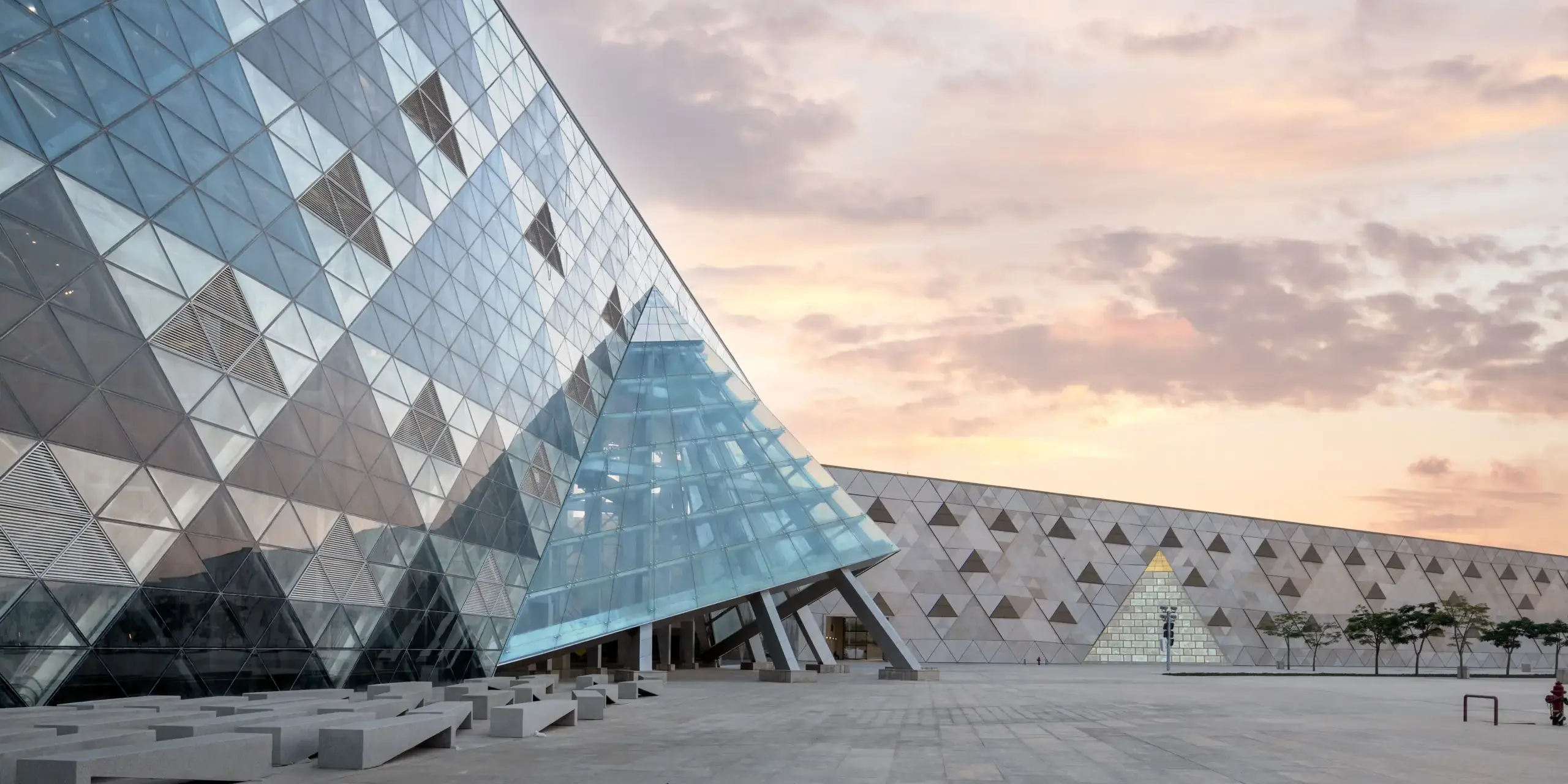
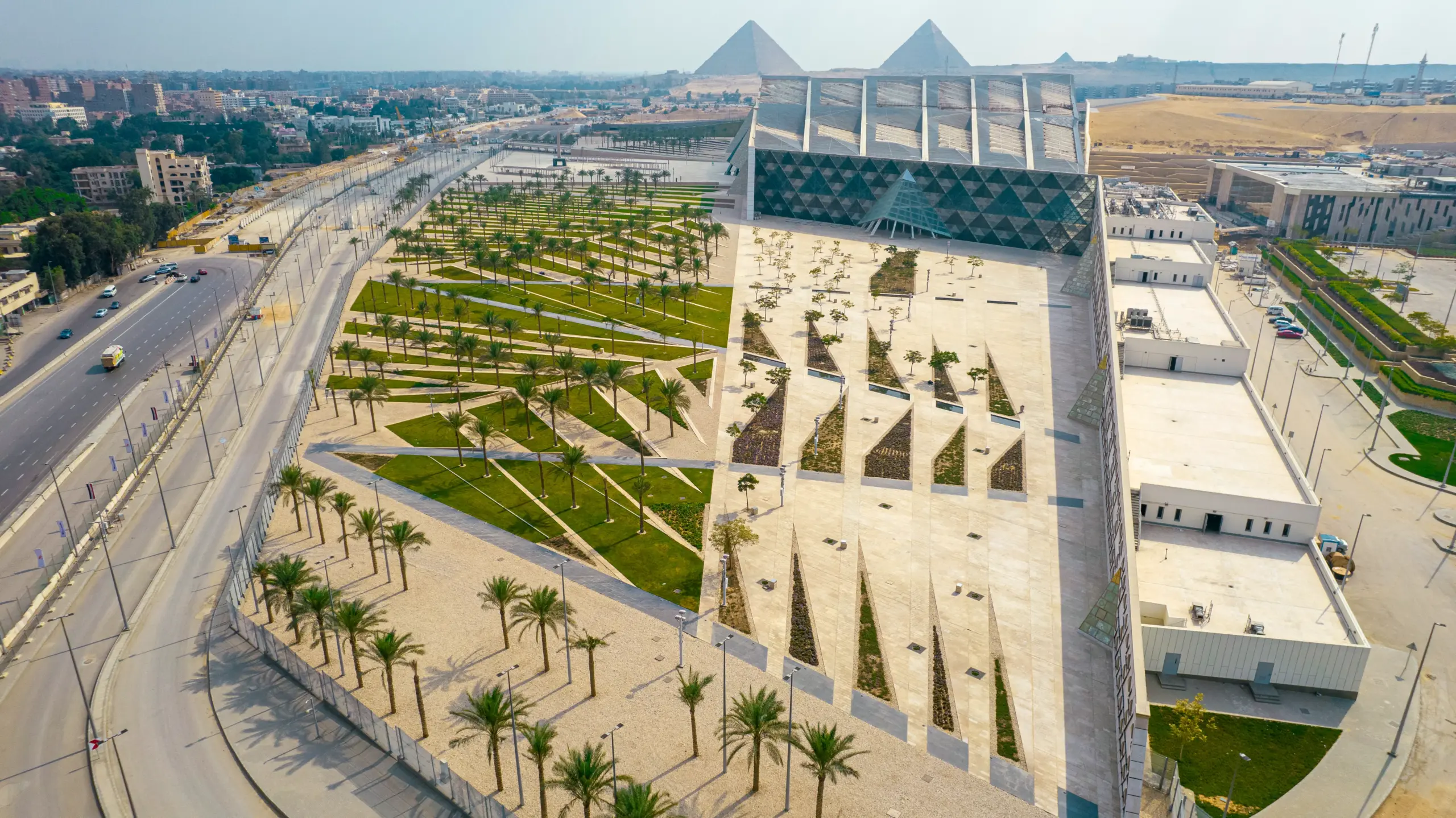
On the edge of the Giza Plateau, facing the eternal silhouettes of the 3 Great Pyramids, Egypt presents one of the most important cultural projects of the modern era: the Grand Egyptian Museum, the largest museum in the world dedicated to a single civilization. It is more than a place for preserving antiquities; it is a national project with an international mission, presenting ancient Egypt through contemporary architecture, advanced technology, and a renewed understanding of identity.
Its location, aligned with the 3 pyramids, creates an architectural dialogue that stretches across more than 4,500 years. The museum has often been described as a modern extension of the ancient monuments, reflecting the Egyptians’ mastery of geometry, symbolism, and harmony between landscape and structure.
A Vision Years in the Making
The concept of the museum began in the late 1990s when the Egyptian Museum in Tahrir Square could no longer accommodate the vast number of artifacts representing thousands of years of history. To protect and present this heritage, Egypt launched an international architectural competition and began construction in 2002.
Despite financial and political challenges, work continued steadily. With strong national commitment and support from Egypt’s leadership, the project became a symbol of confidence in culture as a force for tourism, education, and economic progress.
Today, the Grand Egyptian Museum is not merely a new cultural landmark in Cairo, but a comprehensive platform for human dialogue, a bridge connecting the past, the present, and the future. It stands as a mirror reflecting the story of humanity since the dawn of civilization, documenting humankind’s earliest attempts to understand the universe, build the state, establish law, and give birth to art and science. From the very land that once offered the world its first concepts of justice, astronomy, engineering, and medicine, the modern Egyptian now presents a new gift to humanity: a place where science meets beauty, history meets creativity, and identity meets humanity.
A Cultural Universe Under One Roof
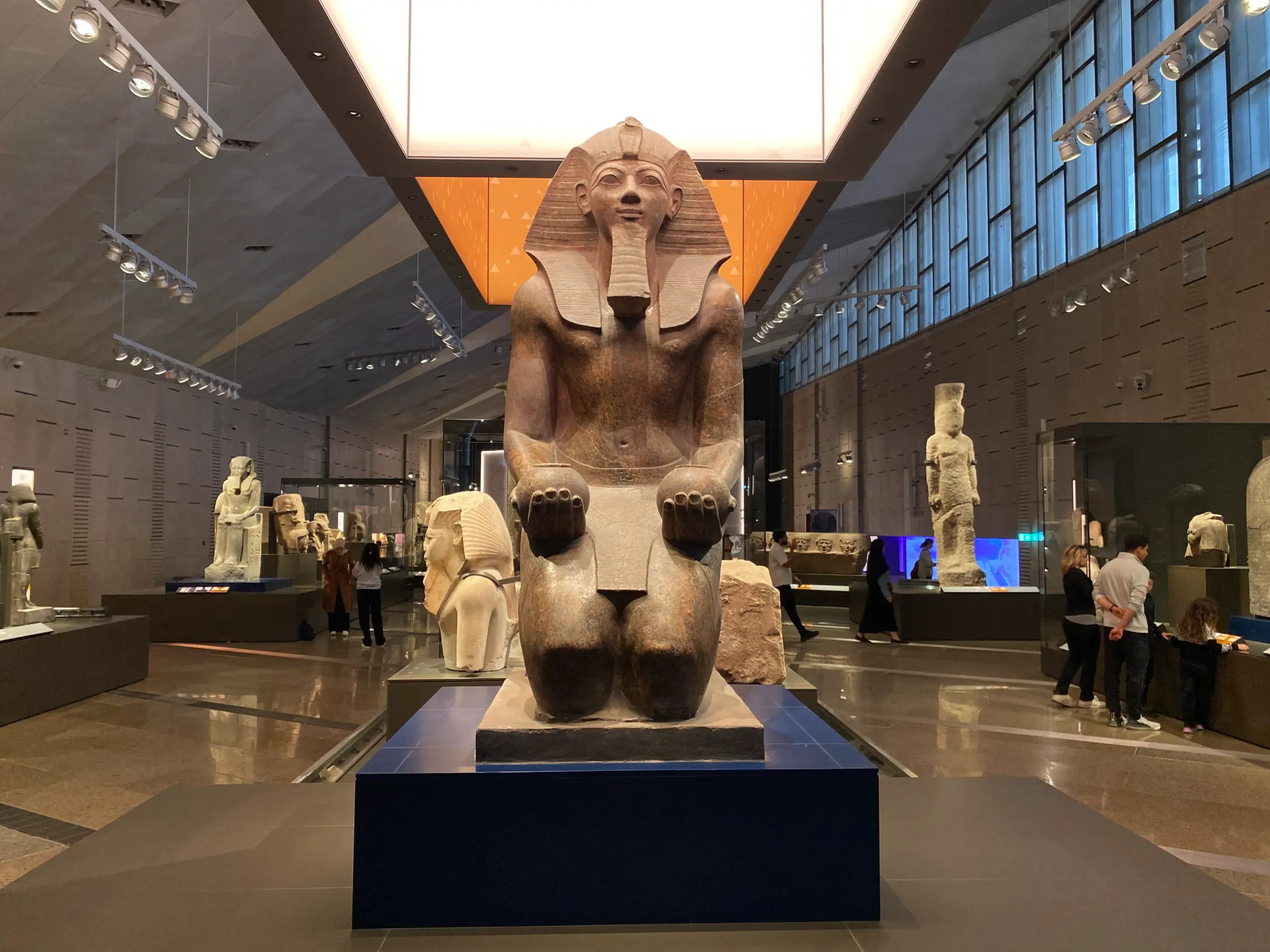
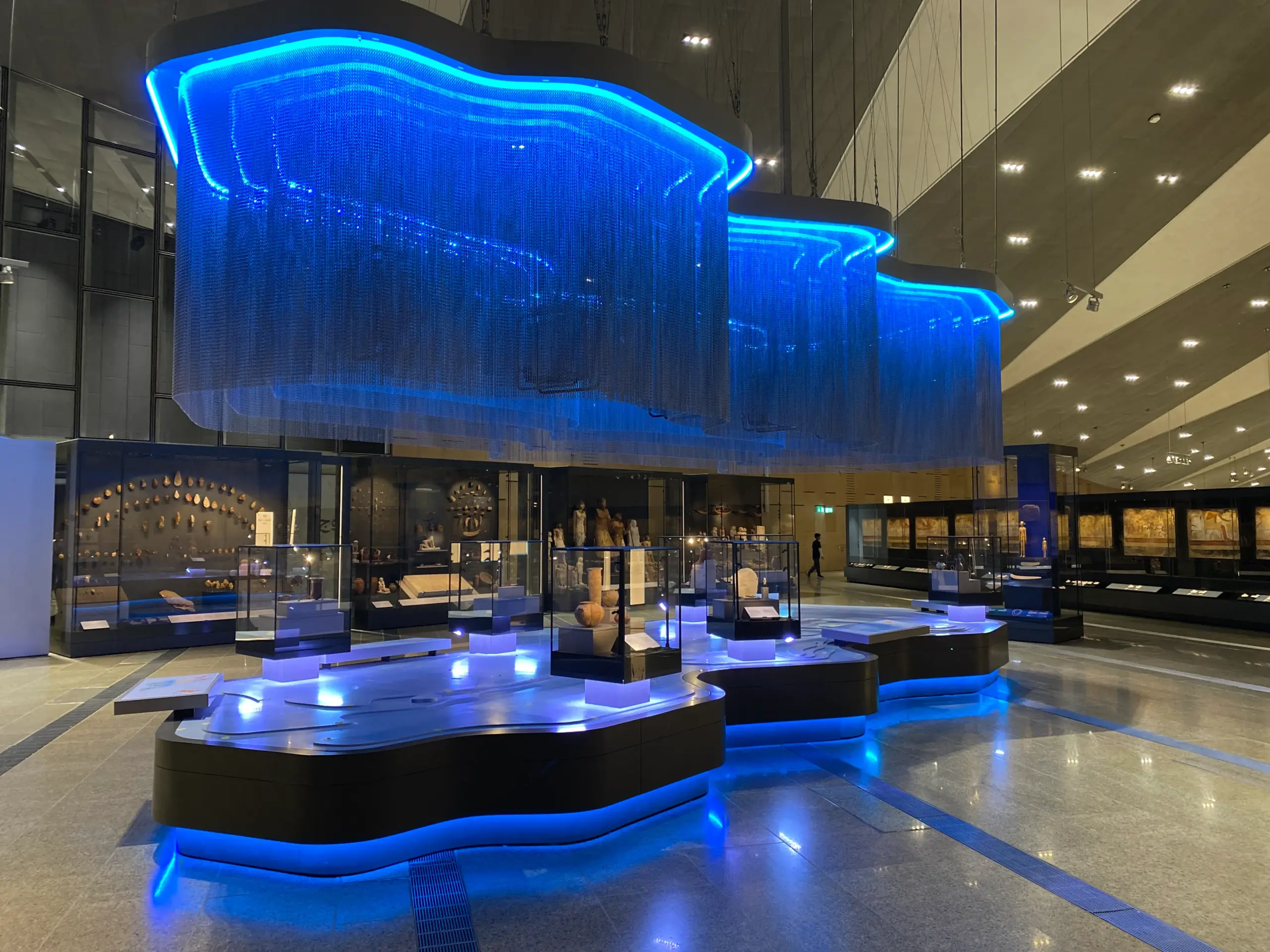
Upon entering the Grand Egyptian Museum, visitors encounter a comprehensive human experience that retells the story of humanity through the eyes of the ancient Egyptians. The museum spans an area of nearly half a million square meters and houses more than 100,000 artifacts in its halls and corridors, representing every era of Egypt’s history, from prehistory, through the Old, Middle, and Modern Kingdoms, all the way to the Greek and Roman periods. This vast collection makes the museum the largest in the world dedicated to a single civilization.
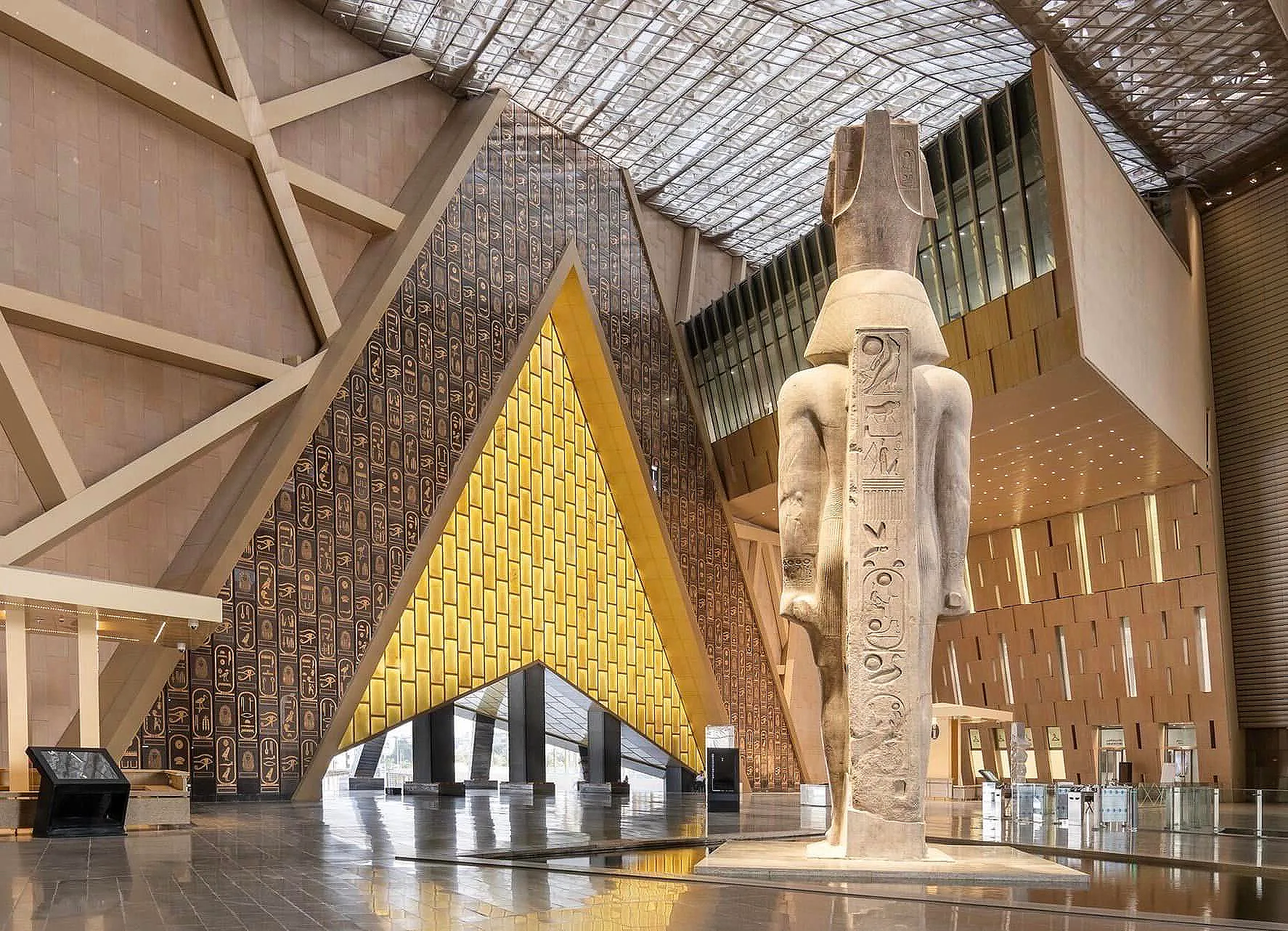
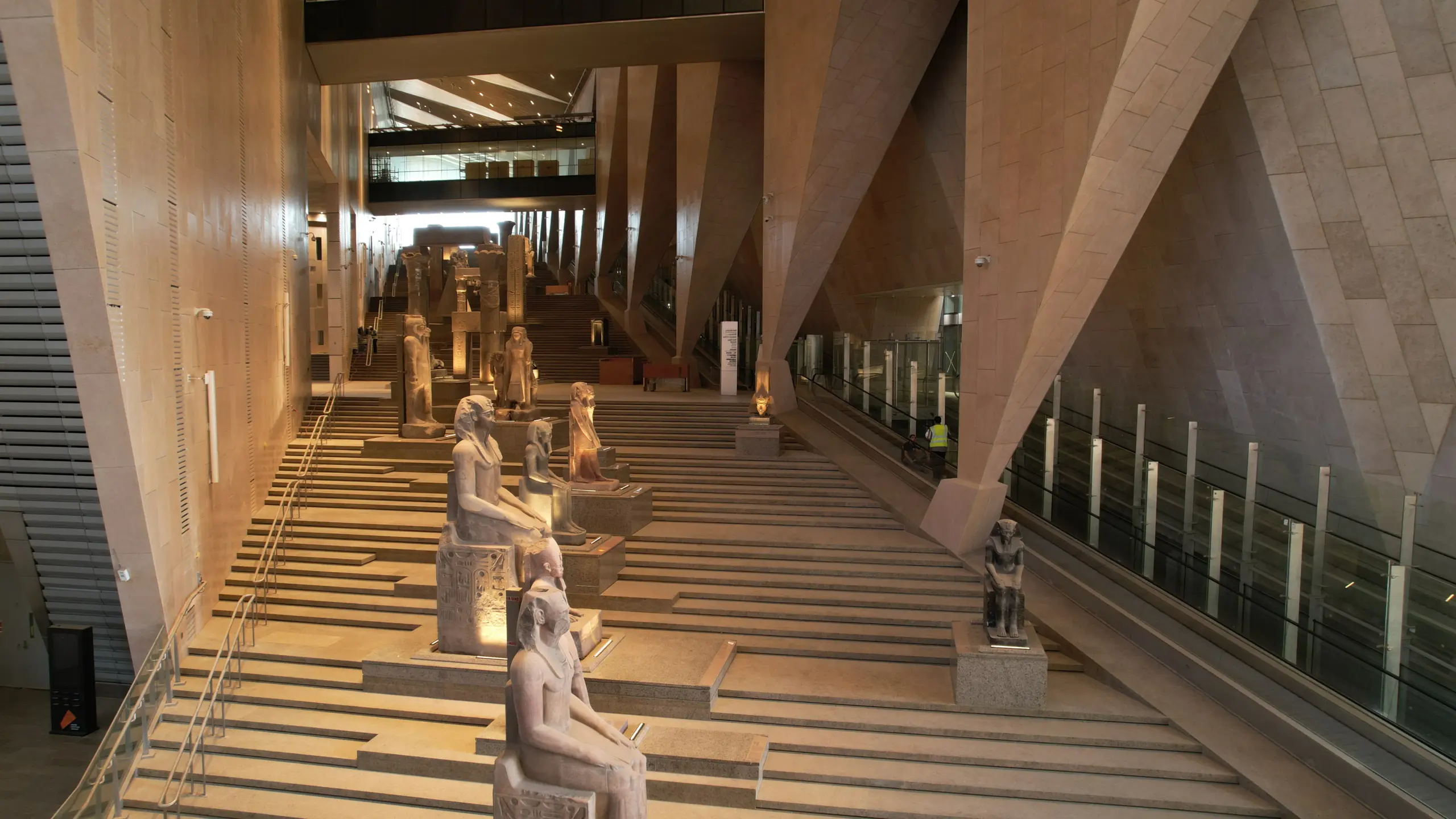
At the grand entrance plaza, visitors are greeted by a massive statue of King Ramses II, one of Egypt’s greatest pharaohs, standing proudly at over 11 meters tall, serving as an iconic symbol of the museum and a gateway into theworld of civilization. In the grand hall, the museum showcases the world’s only suspended obelisk — the obelisk of King Ramses II, weighing 110 tons. It has been elevated using modern engineering techniques, allowing visitors to walkbeneath it and admire its royal inscriptions from every angle.
The Complete Tutankhamun Collection
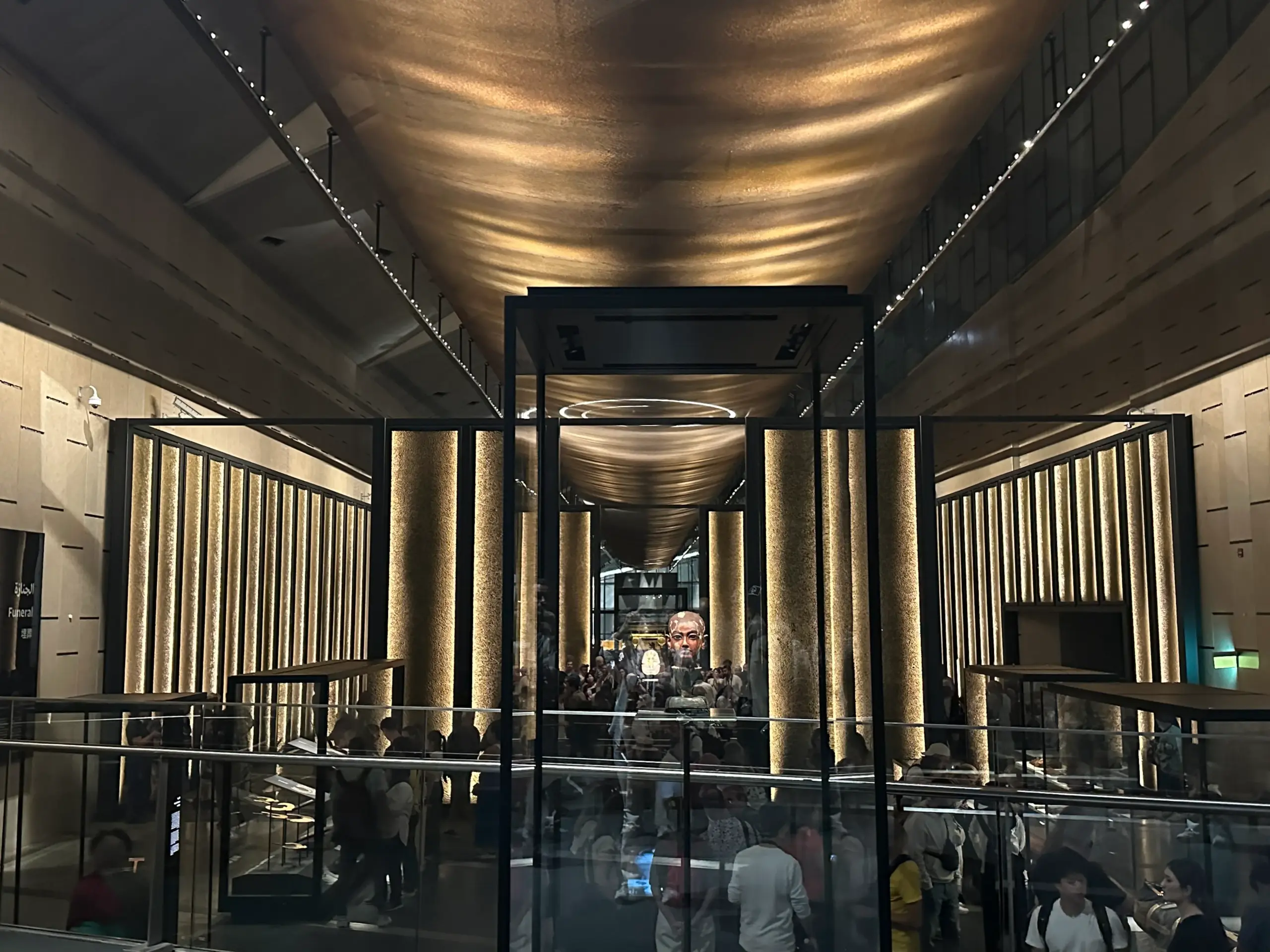
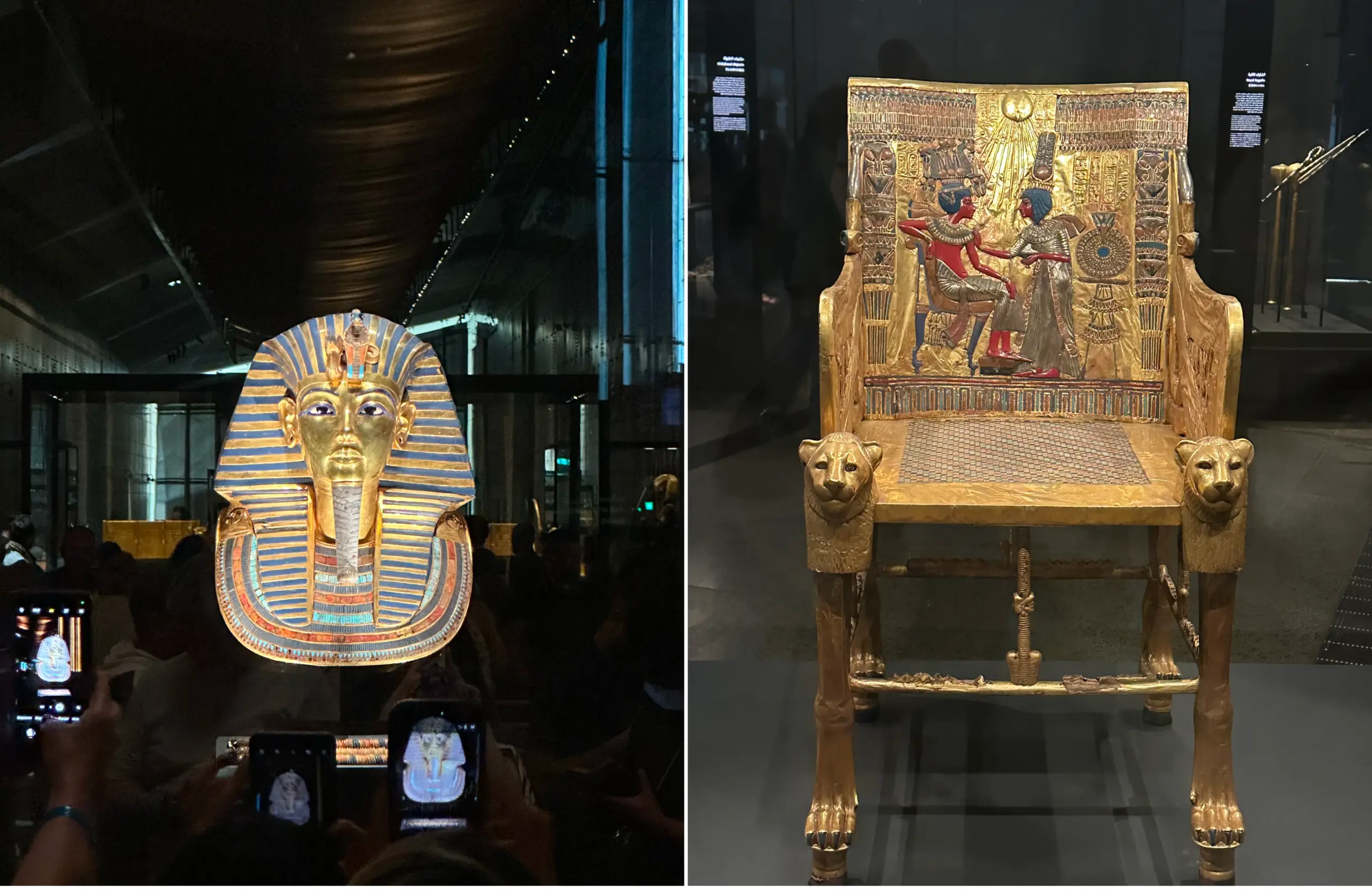
One of the most remarkable features of the museum is that, for the first time in history, it will house all the treasures of King Tutankhamun in one place. Over 5,992 artifacts and royal treasures, including the famous golden mask, chariots, royal furniture, and even a dagger made from a meteorite will be displayed in a visual and narrative experience that places visitors face-to-face with one of the most mysterious and fascinating periods in ancient Egyptian history. This unprecedented assembly of Tutankhamun’s treasures will make the museum a must-visit destination forEgyptology enthusiasts from around the world.
Masterpieces of Ancient Engineering and Art
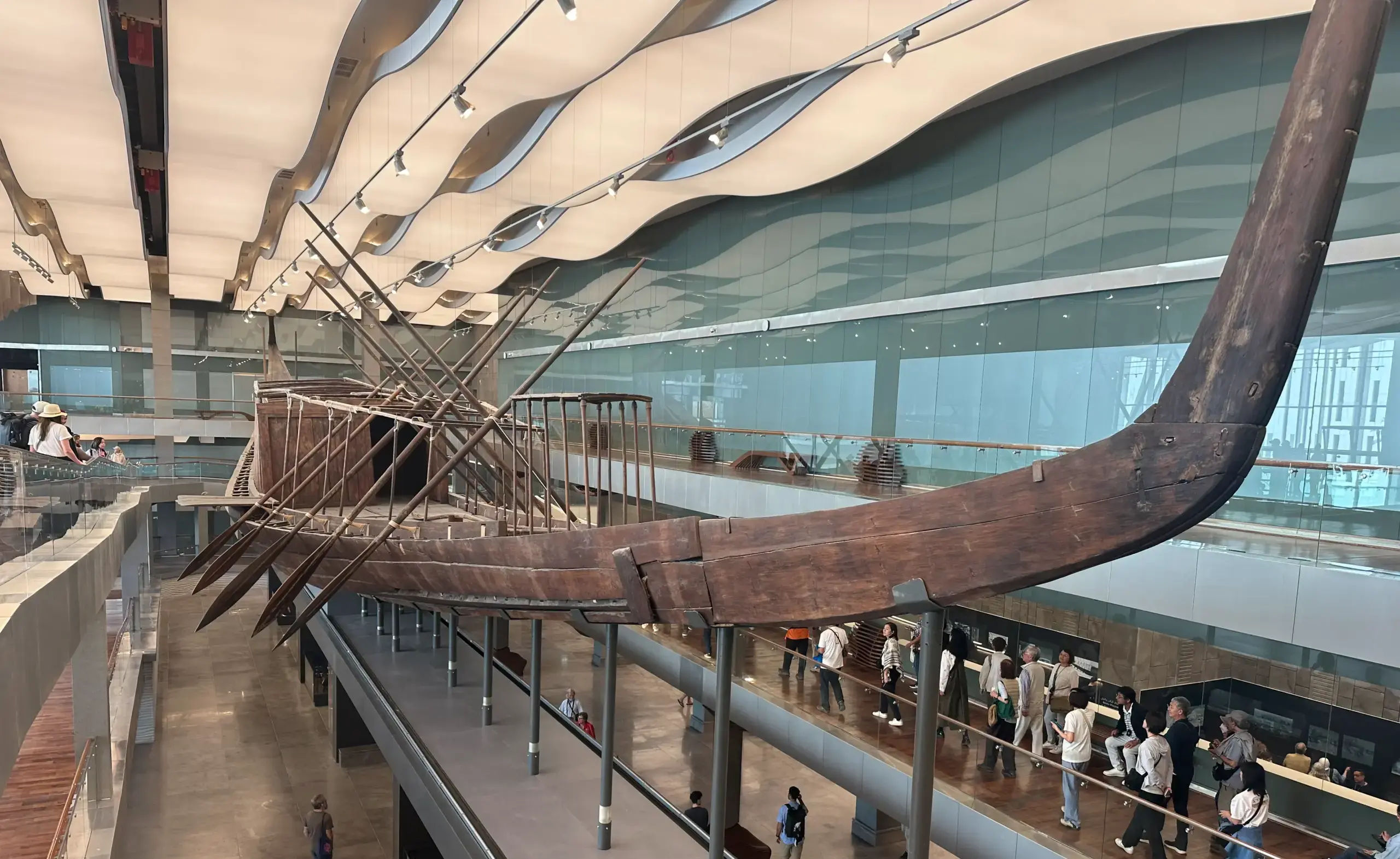
The museum also contains the 2 solar boats of King Khufu, the oldest and largest wooden vessels ever discovered. Each boat was found in more than 1,200 pieces beside the Great Pyramid and was reconstructed using ancient joinery techniques without a single nail. These vessels display the Egyptians’ engineering skill and their deep spiritual beliefs surrounding the journey to the afterlife.
Modern Interpretation and Immersive Technology
The Grand Egyptian Museum fully embraces the modern vision of what a museum should be. Through augmented reality, large-scale projections, and digital reconstructions, visitors can feel as if they are walking through ancient temples, explore the submerged world of ancient Alexandria, and journey along the Nile from its source all the way to the delta. History comes back to life in a way that captures the interest of visitors of all ages.
A Center for Knowledge, Conservation, and Culture
Beyond its galleries, the museum functions as a complete cultural and scientific institution. It includes
- one of the largest conservation and restoration centers in the Middle East
- a specialized research library
- educational spaces for students and scholars
- conference halls and temporary exhibition areas
- restaurants, cafés, and comprehensive visitor facilities
These elements establish the museum as a major platform for cultural exchange and international cooperation.
A Message Across Time
The Grand Egyptian Museum presents ancient Egypt as a living force that continues to inspire the modern world. This civilization, which contributed to the foundations of law, art, astronomy, architecture, medicine, and early concepts of justice, returns in a form designed to educate and inspire new generations.
Visitors encounter the world’s first recorded peace treaty, signed by Ramses II, the ethical principles of Ma’at that guided early human rights and environmental awareness, and the remarkable discoveries that continue to shape our understanding of the ancient world. Every object carries a story, and every gallery offers a message that connects humanity across time.
The museum stands as a declaration that heritage is not only a memory of the past, but a resource for imagination, creativity, and the shaping of the future.
Quick Facts
- Location: Giza Plateau, aligned with the 3 Pyramids
- Area: 500,000 square meters
- Collection: More than 100,000 artifacts
- Tutankhamun Collection: 5,992 objects displayed together for the first time
- King Khufu’s Ships: The oldest and largest wooden ships ever discovered
- Major Exhibits: 11-meter statue of Ramses II and the world’s only suspended obelisk
Güliz Özbek Collini
Cover Image: GEM Glass Pyramid – Copyright GEM