


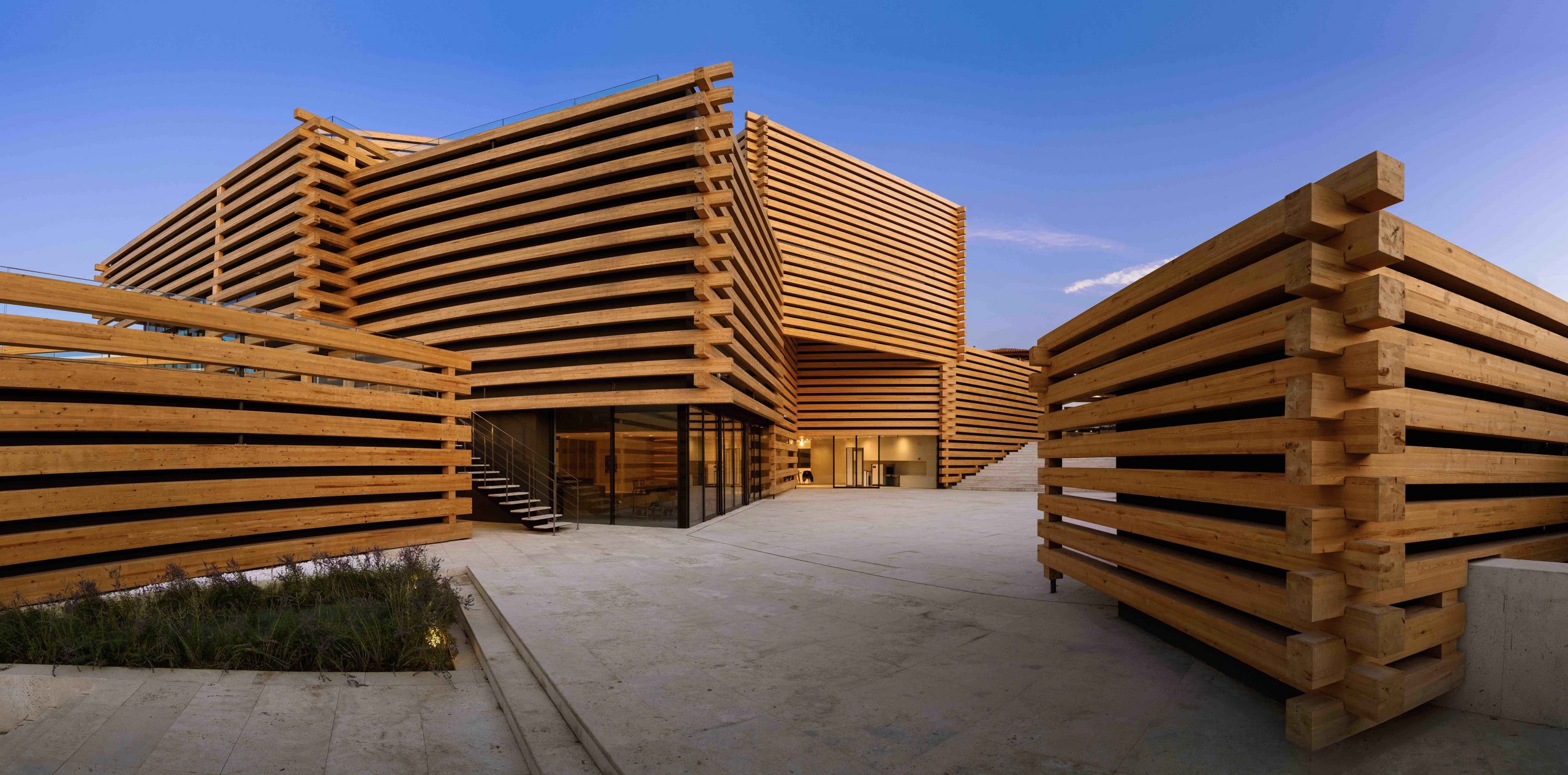
Founded by Polimeks Holding Chairman and art collector Erol Tabanca, the Odunpazarı Modern Museum (OMM) will open in Eskişehir on September 7, 2019. The museum’s inaugural exhibition, curated by Haldun Dostoğlu, will feature a site-specific installation by Tanabe Chikuunsai IV, one of today’s most talented bamboo artists, created exclusively for OMM.
Designed by the world-renowned Japanese architecture firm Kengo Kuma and Associates (KKAA), OMM has already captured attention with its striking and innovative design. Following its opening ceremony on September 7, the museum will open its doors to all art enthusiasts on September 8. With its multidisciplinary approach and cross-cultural focus, OMM aims to open a new chapter in the art world through its innovative exhibition programs and events.
Installation by World-Renowned Bamboo Artist Tanabe Chikuunsai IV, Created Exclusively for OMM
World-renowned Japanese bamboo master Tanabe Chikuunsai IV created his site-specific installation for OMM in Eskişehir. Continuing his family’s long-standing bamboo craftsmanship tradition, Tanabe is celebrated for his mesmerizing works that captivate viewers. He is regarded as one of the most talented bamboo artists of his generation.

Drawing inspiration from Eskişehir, Tanabe Chikuunsai IV began crafting his intricate bamboo installation—woven as delicately as lace—to harmonize with the museum’s architectural texture and mission. Before starting production, he spent time in the city, expressing that he was deeply moved by Eskişehir’s rich history and the way its traditions are passed down through generations, which he found reminiscent of his own culture. Emphasizing the importance of preserving traditions while carrying them into the future, Tanabe noted that he designed his work for OMM with this very idea in mind.
Tanabe stated that he was also inspired by the environmentally conscious practices of both the museum’s architectural team, KKAA, and the founders of OMM. Building on these ideas, he chose the four natural elements—fire, air, water, and earth—along with humanity as the central themes of his work. Tanabe explained: “I perceive the space where the installation stands as a void, and together with the other elements, we humans fill that void. These elements are in a constant state of transformation, intertwining and ascending upward. The fifth theme actually represents the people I met in Eskişehir, my relationships with them, and the interactions they created. I focused on the spread of this interaction and friendship throughout Eskişehir, embracing the city as a whole. Similarly, I imagine that after OMM opens, the life it brings will flow outward and infuse the entire city.”
Having previously created installations for buildings designed by Kengo Kuma, Tanabe expressed that he felt honored to have his works exhibited within the globally acclaimed architect’s nature-inspired structures.
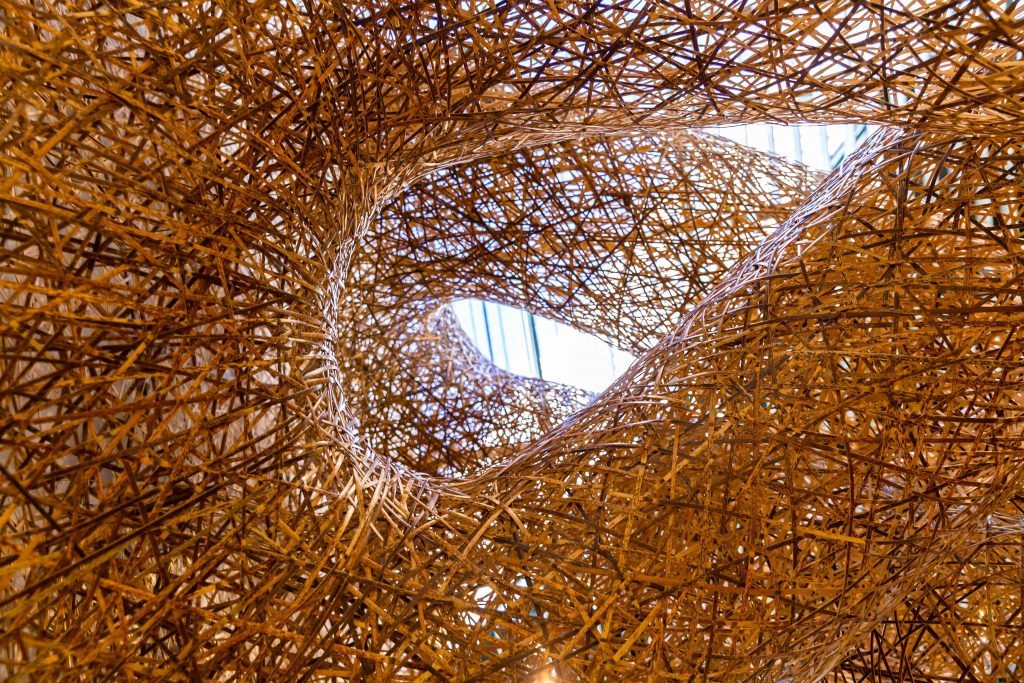
Working with “tiger bamboo,” a material native to Kochi, a village in Japan, Tanabe and his team employed traditional bamboo weaving techniques for this special installation, which integrates seamlessly with the museum’s architecture. The site-specific work, created exclusively for OMM, will be presented to art enthusiasts during the museum’s opening through a live performance featuring the artist’s final touch.
Regarding Tanabe’s work, OMM Chairperson and Creative Director İdil Tabanca stated: “When Kengo Kuma and Associates designed the museum’s architecture, their goal was to create a connection between people and art. In a similar way, Tanabe Chikuunsai IV’s mesmerizing installation focuses on this very connection.”
Opening in 2019, which has been declared the Year of Turkish Culture in Japan, OMM celebrates the long-standing cultural exchange and relationship between the two countries. Commenting on the collaboration with Tanabe, she stated that this project marks the beginning of many exciting partnerships to come in the future.
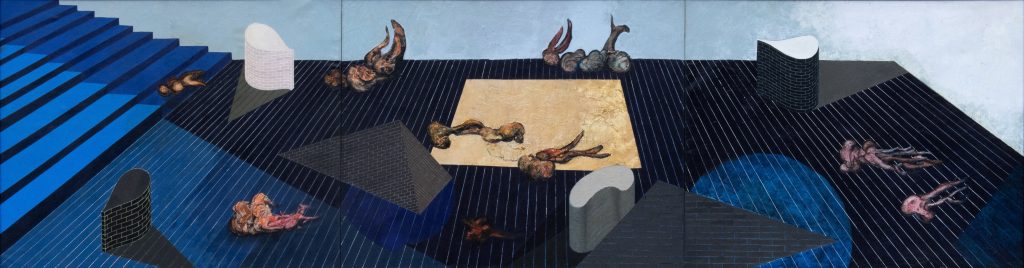
Curated by Haldun Dostoğlu, OMM’s opening exhibition will feature a special selection from the Erol Tabanca Collection, bringing together around 200 works by more than 60 local and international artists from various disciplines, spanning from the 1950s to the present day. The exhibition will include works by artists such as Bedri Rahmi Eyüboğlu, Canan Tolon, Erol Akyavaş, İlhan Koman, Ramazan Bayrakoğlu, Sinan Demirtaş, and Tayfun Erdoğmuş. Speaking about the exhibition, curator Haldun Dostoğlu noted that he was inspired by three scenes of reunion: Eskişehir having its first private modern art museum; Erol Tabanca realizing his long-held dream of sharing with the public the collection he has built with great dedication; and, for the first time, artworks that had only reached a limited audience being opened to everyone. These moments of reunion, he explained, shaped the essence of OMM’s inaugural exhibition.

The inspiring design of Kengo Kuma and Associates in Eskişehir:
Visitors to OMM are welcomed by a 4,500-square-meter contemporary art space designed by the world-renowned Japanese architectural firm Kengo Kuma and Associates (KKAA), whose work is followed with great interest across the globe. Drawing inspiration from Odunpazarı’s civil architecture, Ottoman dome architecture, and elements of traditional Japanese design, the building offers a striking blend of cultural references. In addition to galleries of various sizes, the museum includes a café, museum shop, and workshop areas that reflect its dynamic character. With its wooden structural system that echoes the historical fabric of Odunpazarı and its impressive form, the museum is envisioned to become not only a symbol and focal point of the district but also a vibrant public gathering space, bringing life to the area both day and night. Spanning three floors filled with natural light, OMM aims to offer an inspiring museum experience through its exhibition spaces and communal areas open to visitors. While the spacious ground floor reflects the historical essence of the neighborhood, the gradually narrowing upper floors invite art lovers on an architectural journey of their own.
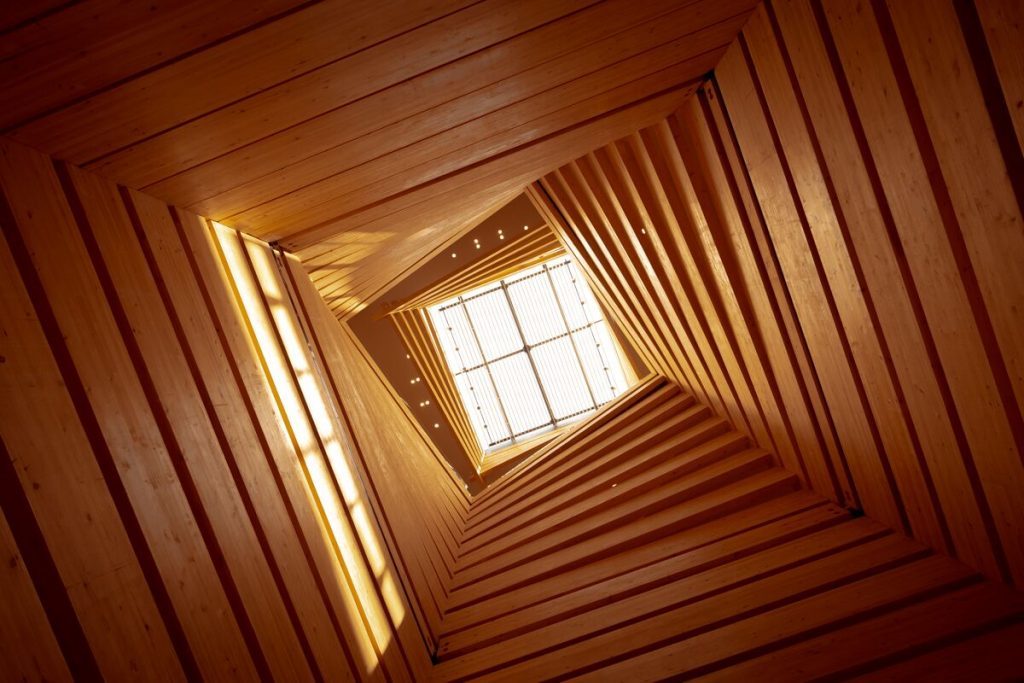
Kengo Kuma, founder of Kengo Kuma and Associates, and his partner Yuki Ikeguchi shared their thoughts on the museum’s architecture: “Creating a connection between people and art was at the heart of the project. We wanted to design a structure that carries the history and memory of the region while reflecting its people and architectural character, and that in itself was a very special experience for us. We are eagerly looking forward to the museum’s meeting with its visitors.”
Among the projects of Kengo Kuma and Associates (KKAA) are the Victoria and Albert Museum Dundee in Scotland, the EPFL Artlab in Switzerland, and the upcoming Hans Christian Andersen Museum in Denmark. The firm is also behind The Darling Exchange, a government building located in Sydney’s Darling Harbour, known for its innovative architectural design.
A New Breath for Eskişehir and the Understanding of Museology with the Odunpazarı Modern Museum
In addition to collection exhibitions, OMM’s temporary exhibition program will feature international contemporary artists from various disciplines, presented through a universal perspective. The museum aims to bring people together through the unifying and inspiring power of art, offering new perspectives to both the city and the understanding of museology. It is envisioned as a space where everyone can spend time with joy and curiosity.
Taking its first step with the mission of preserving and expanding its collection, OMM aims to foster cultural development and strengthen the artistic knowledge of younger generations through its educational programs, seminars, artist talks, workshops, publications, and dynamic exhibition program.
Erol Tabanca’s collection, built over more than 15 years, brings together over 1,000 works by influential figures in modern and contemporary art from Turkey and around the world, spanning from the 1950s to the present day. Focused also on supporting young artists and ensuring the sustainability of art, the collection includes prominent Turkish artists such as Burhan Doğançay, Canan Tolon, Azade Köker, Nejad Melih Devrim, Erol Akyavaş, Haluk Akakçe, Taner Ceylan, İnci Eviner, Gülsün Karamustafa, and Erdağ Aksel, alongside international names including Peter Zimmerman, Jaume Plensa, Marc Quinn, Robert Longo, Aron Demetz, Julian Opie, Sarah Morris, Stephan Kaluza, Hans Op de Beeck, Massimo Giannoni, Seon Ghi Bahk, and Alfred Haberpointner.

“I am delighted that we will be able to open the museum to the public in June,” said OMM founder Erol Tabanca, adding: “It is an honor to share both the collection I have built over the years and the museum itself with visitors. I hope that OMM will become a symbol that unites Eskişehir with its history and contributes not only to the city’s but also to Anatolia’s cultural development.”
Erol Tabanca
Erol Tabanca graduated from the Department of Architecture at the Ankara State Academy of Engineering and Architecture. As Chairman of Polimeks Holding, he brings over 35 years of experience as an architect and contractor, overseeing the company’s top-level management operations while also serving as its chief architect in concept-driven design projects. Having completed 134 significant projects in Turkey and abroad, Polimeks Holding is recognized as one of Turkey’s leading enterprises, with investments in construction, real estate, tourism, and energy. A passionate art enthusiast, Tabanca supports the sustainability of art through his work as a collector. With the establishment of OMM – Odunpazarı Modern Museum, set to open in Eskişehir in 2019, he prepares to share his collection with the public.
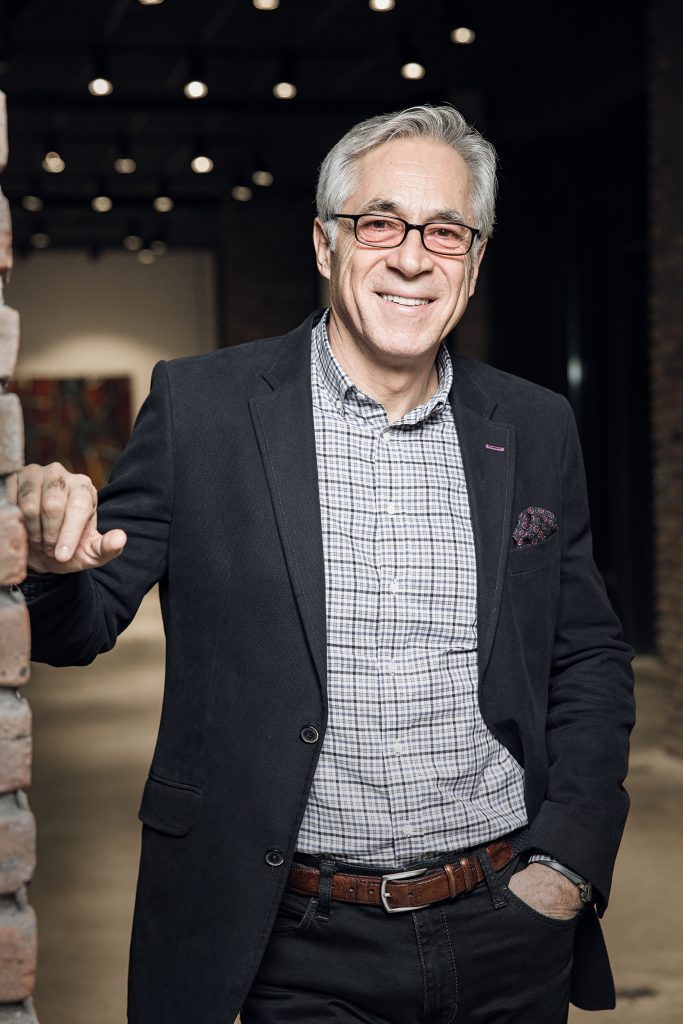
İdil Tabanca
Born in Eskişehir, İdil Tabanca completed her early education in Istanbul and attended boarding school in California during her high school years. Spending much of her youth between Istanbul and San Francisco gave her an education and perspective shaped by the contrast between these two cultures. After graduating from the University of California with a degree in Film and Digital Media, Tabanca worked as an art director, costume supervisor, and set decorator on various Turkish and American feature films, commercials, and music videos. In 2009, she moved to New York and founded BULLETT, a culture magazine focused on fashion, art, and film, where she served as editor-in-chief for eight years. In 2018, she returned to Istanbul to contribute her international experience and cultural insight to the Odunpazarı Modern Museum (OMM), a project established by her family, and she currently serves as the Chairperson of the OMM Foundation and the Creative Director of OMM.
Kengo Kuma and Associates
Founded in Japan in 1990, Kengo Kuma and Associates has offices in Tokyo, and in Paris, which are engaging in a wide range of design disciplines from furniture and product design to Architecture and Urban Planning. The practice has completed several noteworthy projects around the world including the V&A at Dundee in Scotland, EPFL’s Artlab in Switzerland, and is currently developing the Hans Christian Andersen Museum in Denmark and, The Darling Exchange, a civic center in the Sydney’s Darling Harbour.
Tanabe Chikuunsai IV
Tanabe Chikuunsai IV (b. 1973, Sakai City Osaka) was born into one of Japan’s most prestigious bamboo families. One of the most talented and versatile bamboo artists of his generation, he has carried on the Tanabe family tradition in the wake of the death of his father, Tanabe Chikuunsai III (1940–2014). He earned a degree in sculpture from the Tokyo University of the Arts and trained in bamboo crafts at an occupational school in Beppu. He is active in Japan and internationally, exhibiting in the USA, UK, New Zealand, Switzerland, and France. His work is in the collection of the Museum Fine Art of Boston, Philadelphia Museum of Art, the British M useum, Guimet Museum, Quai Branly Museum and th e V&A Museum.
Odunpazarı and Eskişehir
Odunpazarı, which has preserved Anatolia’s rich cultural heritage and is listed on UNESCO’s Tentative World Heritage List, is known as the first settlement area of Eskişehir. Home to numerous museums, boutique hotels, and handicraft shops, Odunpazarı is also a popular tourist destination with its houses designed in the Ottoman civil architectural style, positioned in harmony with the region’s topography.
Located in Turkey’s Central Anatolia Region, Eskişehir is known as a university city, home to Anadolu, Eskişehir, and Osmangazi Universities. Throughout history, the city has held an important commercial, economic, and strategic position. Today, with its museums, parks, cultural events, festivals, and vibrant student population, Eskişehir stands out as one of Turkey’s most dynamic cities. With its rich cultural heritage, Eskişehir is recognized as one of Anatolia’s cultural centers and was named the Culture Capital of the Turkic World in 2013.