


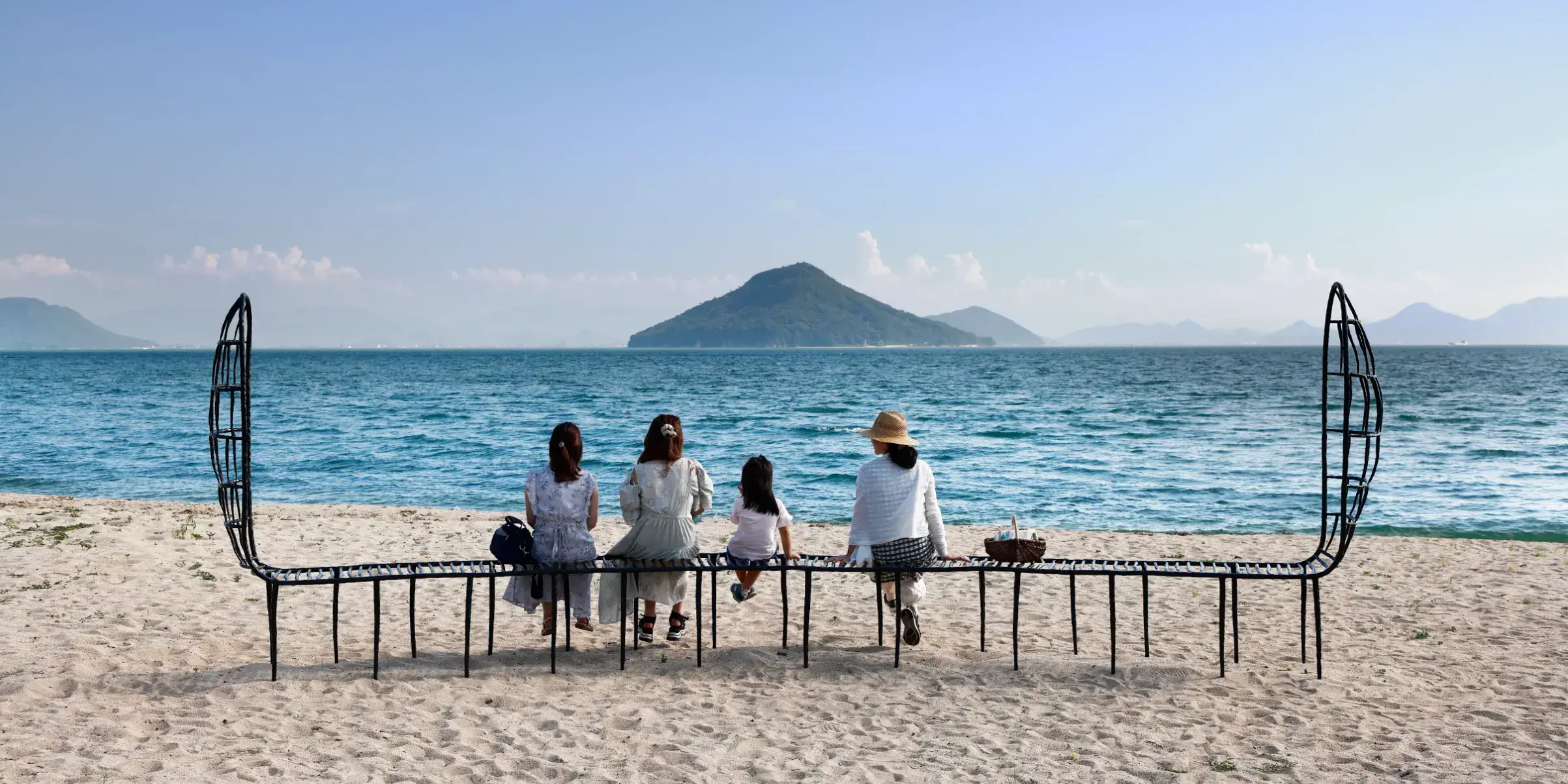
In recent years, a new tendency has emerged in the art world: Art is increasingly being redefined through its relationship with place and local culture. This approach is particularly prominent in biennials, removing the viewer from gallery spaces and immersing them in historical fabrics, cities, and natural environments. It can be observed in the canals of the Venice Biennale, the historic architecture of Sharjah, the Mesopotamia views in Mardin , and the traditional urban fabric of Bukhara.
Among the most compelling examples of this approach is the Setouchi Triennale, held across Japan’s Seto Inland Sea. Instead of major cities, its stages are set on small fishing islands with populations of only a few hundred, in abandoned villages and quiet harbors. Here, art is not simply exhibited — it is experienced through the interplay of light, sea, and silence.
First launched in 2010, the festival unfolds every three years over three separate seasons, totaling 100 days of exhibitions and performances:
- Spring: April 18 – May 25, 2025
- Summer: August 1 – 31, 2025
- Autumn: October 3 – November 9, 2025
These periods invite visitors to experience how the islands and artworks transform with the rhythm of the seasons of the nature.
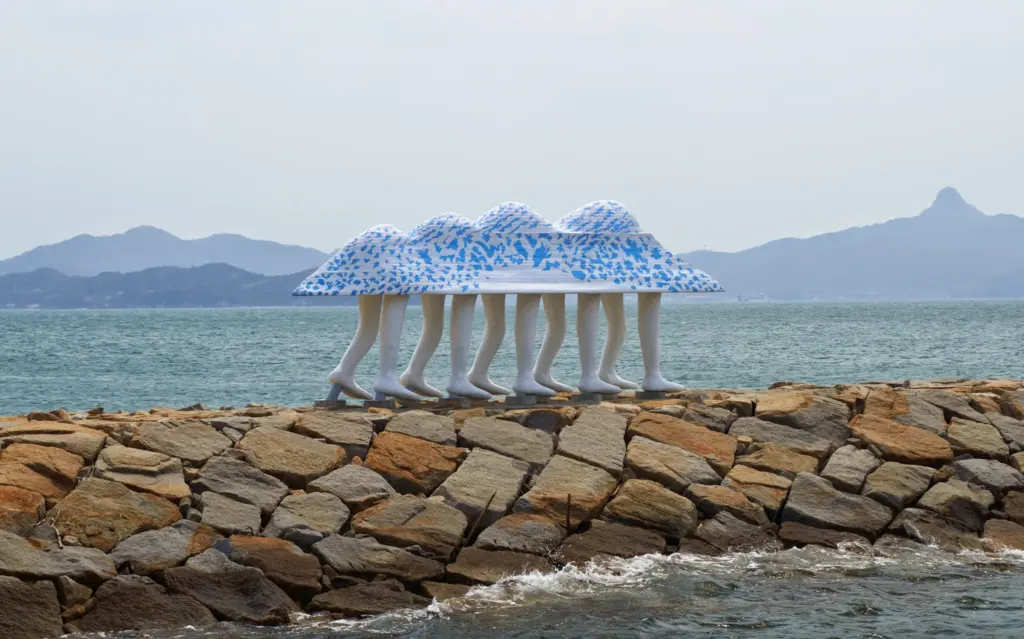
The Setouchi Triennale seeks not only to present contemporary art but also to revitalize depopulated villages, preserve local culture, and connect island residents with artists from around the world. Events take place across 12 islands and 2 ports, each offering a unique encounter:
Naoshima, Teshima, Inujima, Shodoshima, Oshima, Shamijima, Honjima, Takamijima, Awashima, Ibukijima, Megijima, Ogijima, as well as Uno Port and Takamatsu Port on the mainland.
While each site offers its own character, Naoshima and Teshima remain the central hubs for museums, installations, and permanent works.
Naoshima – Japan’s “Art Island”
Naoshima is the undisputed heart of the Triennale. Known for Tadao Ando’s architecture, the Benesse Art Site projects, and installations by internationally acclaimed artists, the island blends art seamlessly into everyday life — across galleries, streets, and the natural landscape.
Must-See Places
Museums and Key Art Sites
- • Benesse House Museum – Tadao Ando: Combines museum and hotel; art and nature coexist.
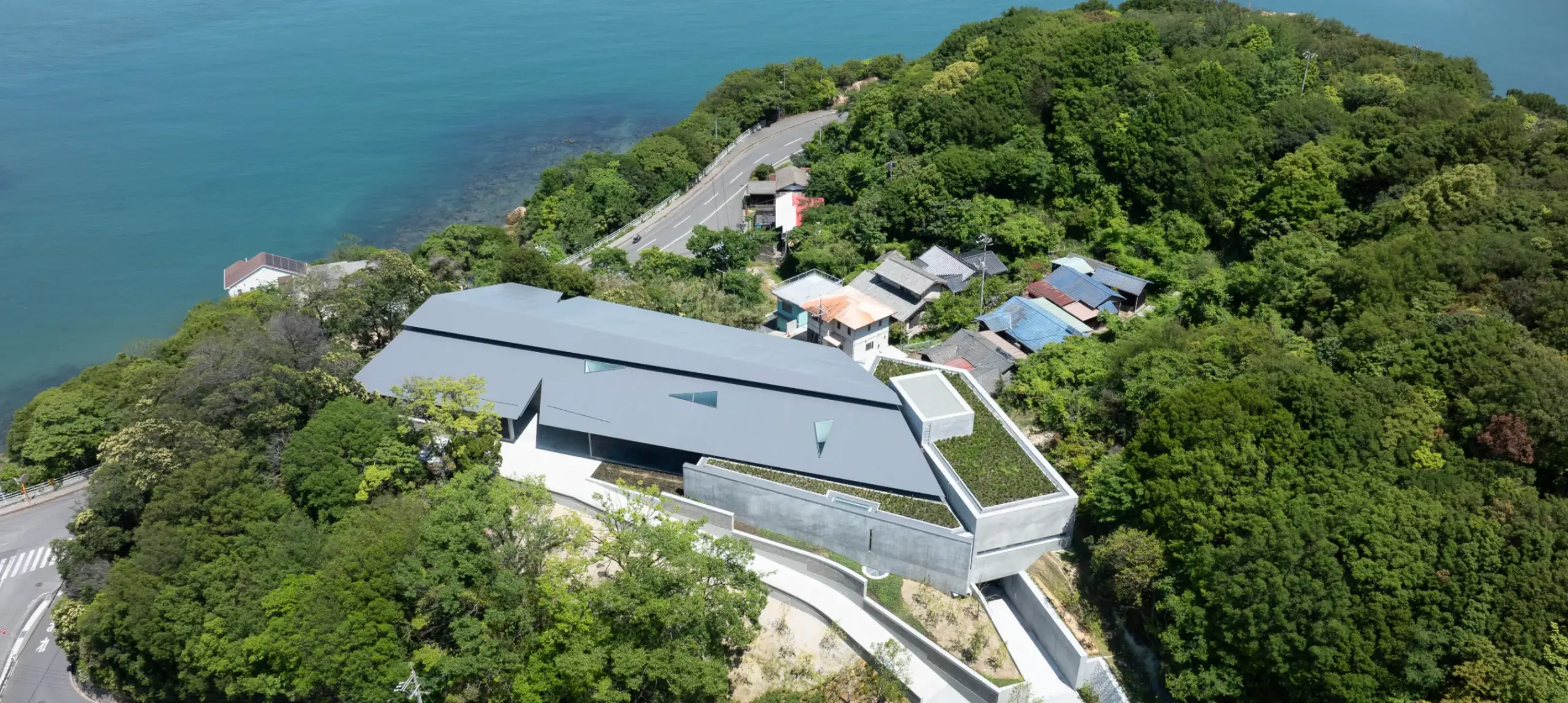
- ANDO Museum – Tadao Ando: A compact yet striking documentation of Ando’s architectural presence on Naoshima.
- Chichu Art Museum – Tadao Ando: Monet, James Turrell ve Walter De Maria eserleriyle ışık ve doğa deneyimi.
- Hiroshi Sugimoto Gallery: Time Corridors (2022): Sugimoto’nun fotoğraf, tasarım ve heykellerini içeren kapsamlı galeri.
- Naoshima New Museum of Art (2025, Tadao Ando): Adanın kültürel peyzajına entegre yeni müze; Japonya ve Asya çağdaş sanatını sergiliyor.
- ANDO Museum – Tadao Ando: Naoshima’daki mimari mirası belgeleyen küçük ama etkileyici müze.
Other Art Highlights
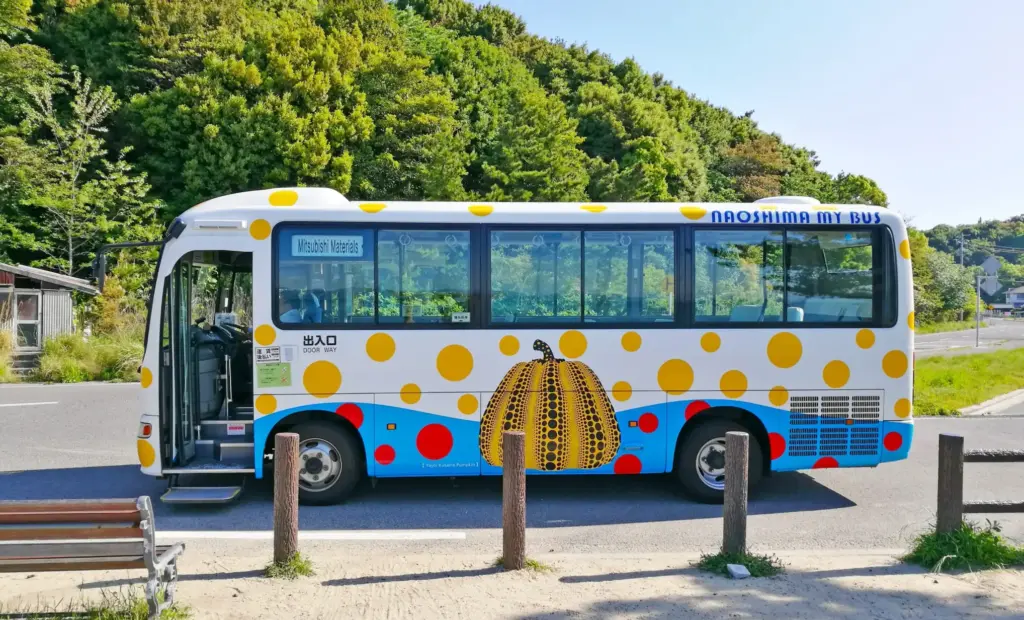
- Red Pumpkin – Yayoi Kusama (Miyanoura): The island’s most iconic landmark.
- Marine Station Naoshima – SANAA: A ferry terminal and architectural statement.
- Bunraku Puppet – José de Guimarães: A vivid public artwork inspired by traditional puppetry.
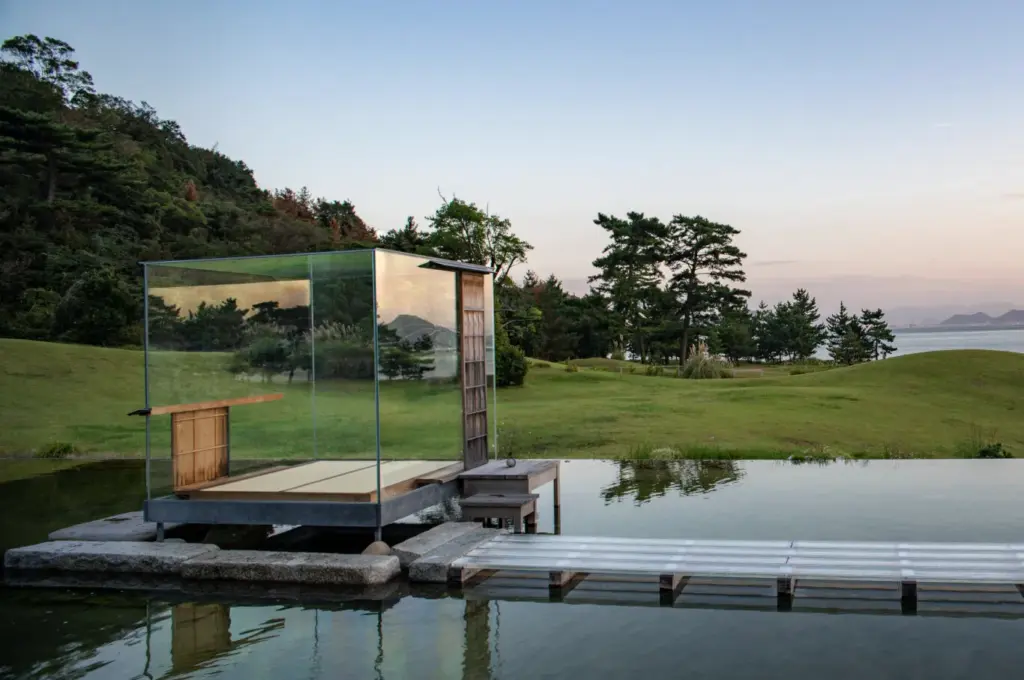
- Naoshima Pavilion – Sou Fujimoto: A geometric steel mesh structure that glows beautifully at night.
- Miyanoura Gallery 6: A compact gallery showcasing contemporary exhibitions.
- Labyrinth of Cherry Blossom – Tadao Ando: A living maze of cherry trees in bloom each spring.
- Valley Gallery: Sculptures and installations set within the natural landscape of the valley.
- The Naoshima Plan “The Water” – Hiroshi Sambuichi: A sustainable architectural work shaped by natural air and water flow.
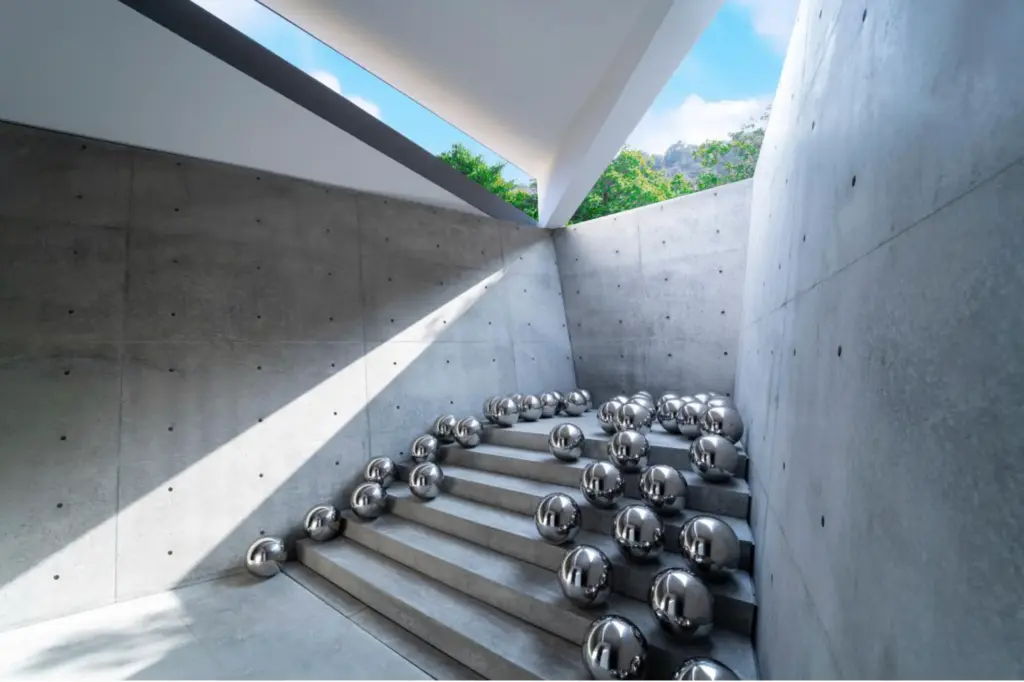
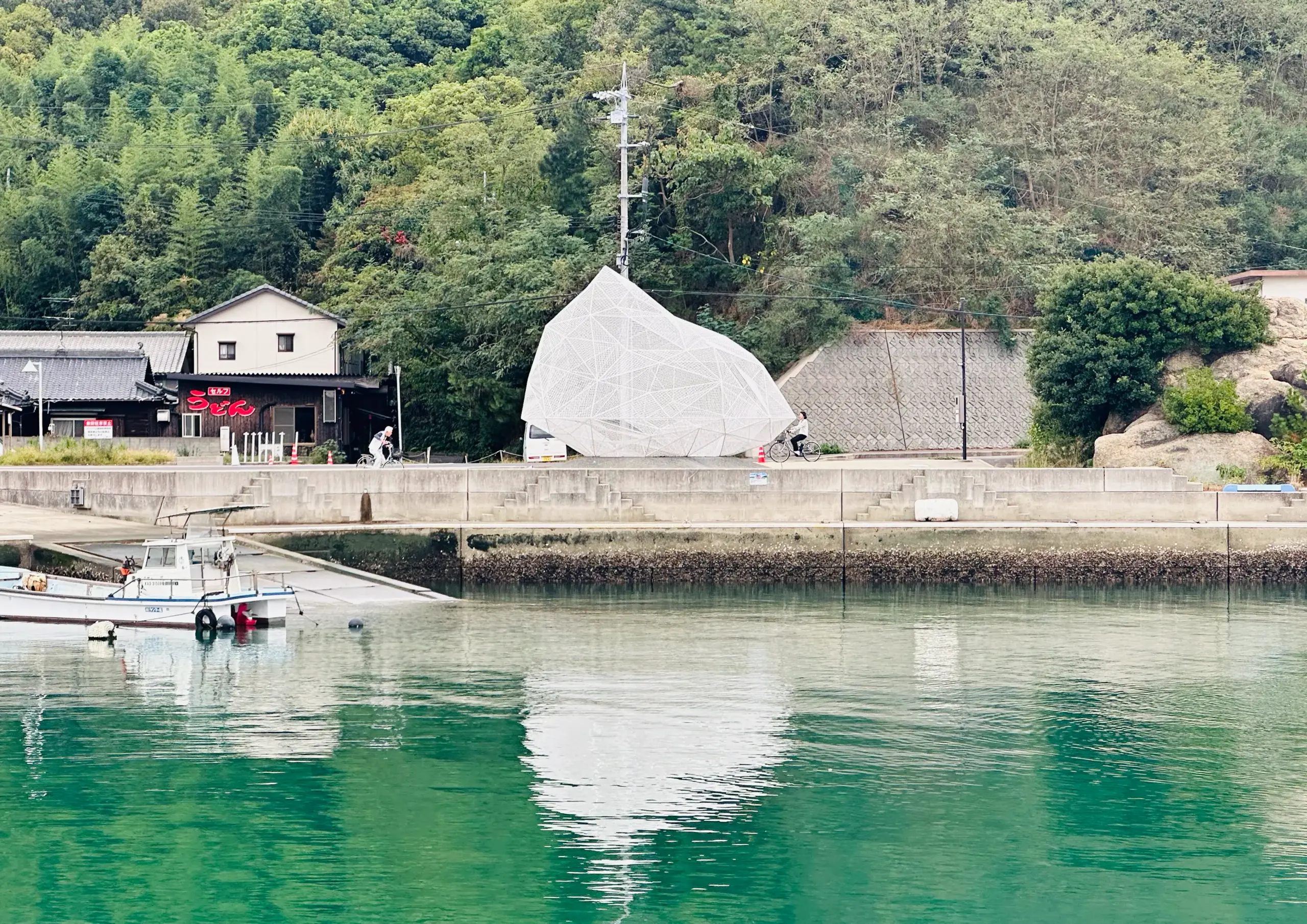
Art House Project (Honmura District)
This project captures Naoshima’s essence — transforming abandoned traditional houses into spaces for contemporary art:
- Kadoya – Tatsuo Miyajima
- Go’o Shrine – Hiroshi Sugimoto
- Minamidera – James Turrell
- Gokaisho – Yoshihiro Suda
- Ishibashi – Hiroshi Senju
- Haisha – Shinro Ohtake
- Kinza – Rei Naito
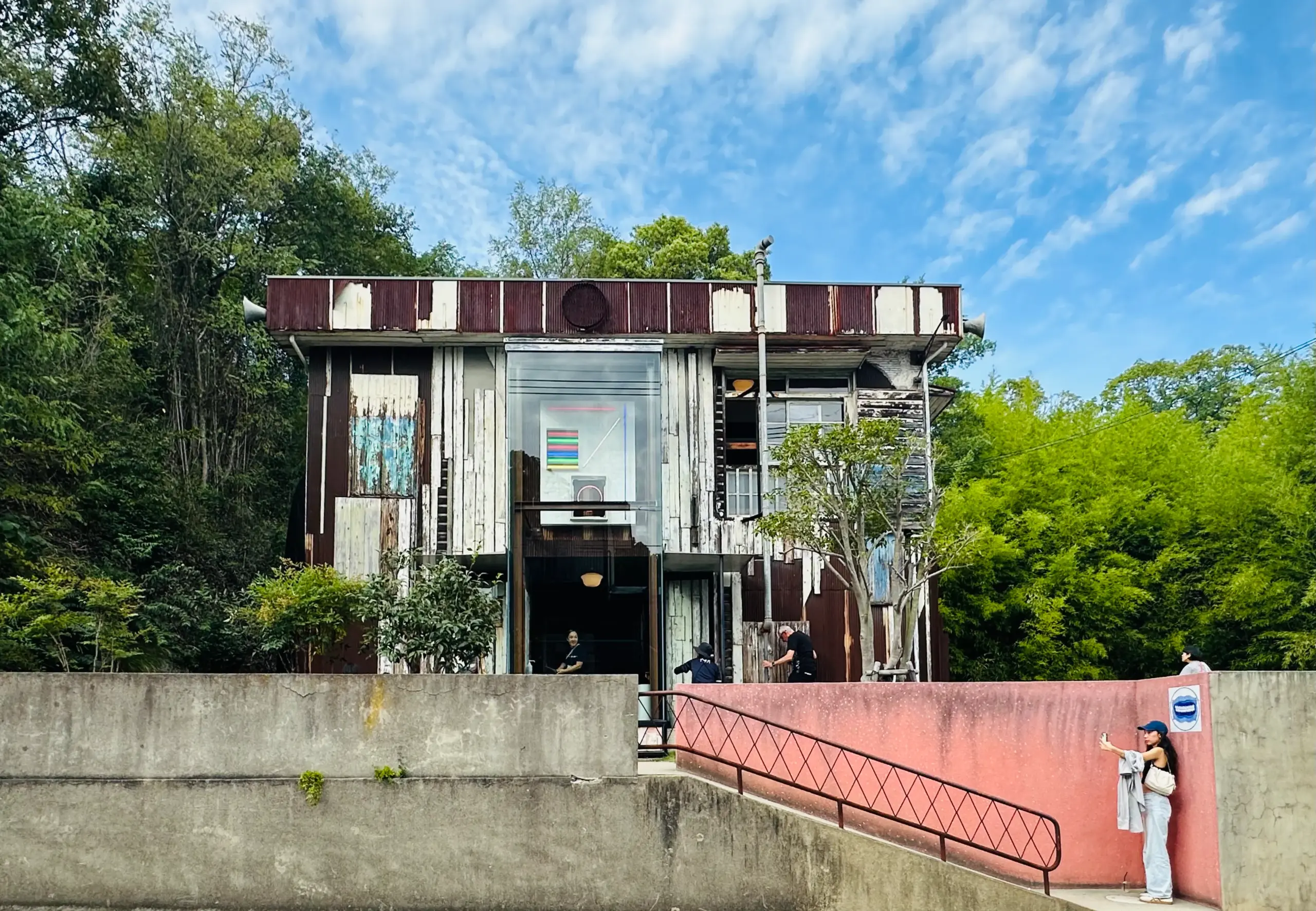
Teshima – Art in the Heart of Nature
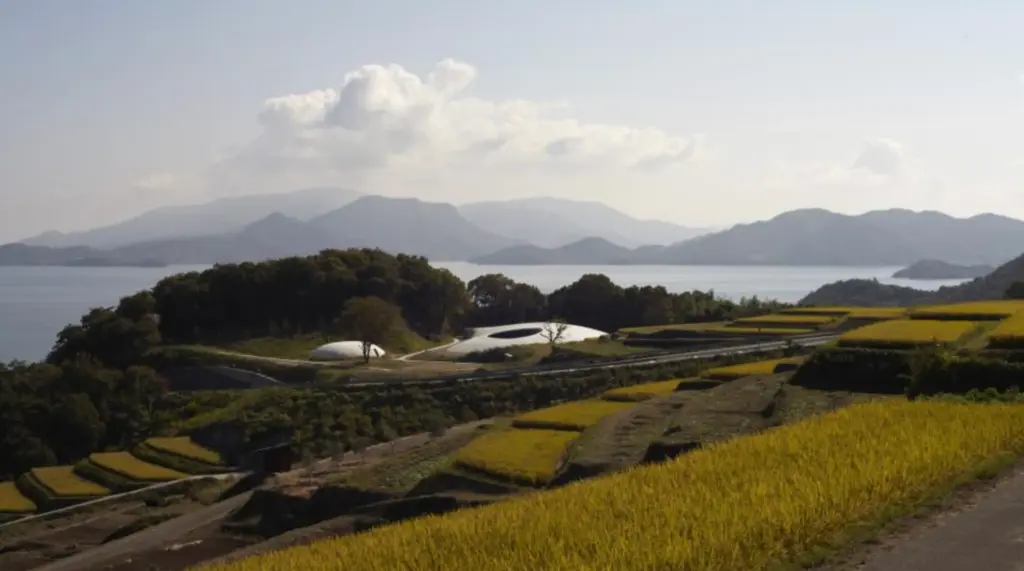
Teshima is defined by rice terraces, tranquil scenery, and a deep connection between art and landscape.
Must-See Places
Museums and Key Art Sites
- Teshima Art Museum – Rei Naito & Ryue Nishizawa: A meditative fusion of architecture and art.
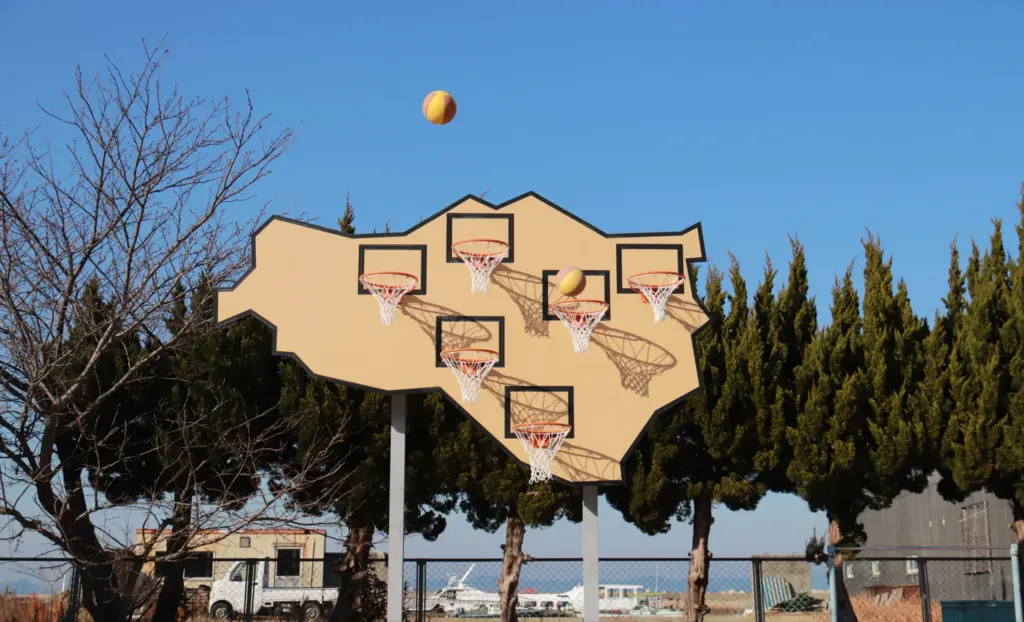
- No one wins – Multibasket (Llobet & Pons): A basketball court composed of multiple hoops, redefining the very nature of the game.
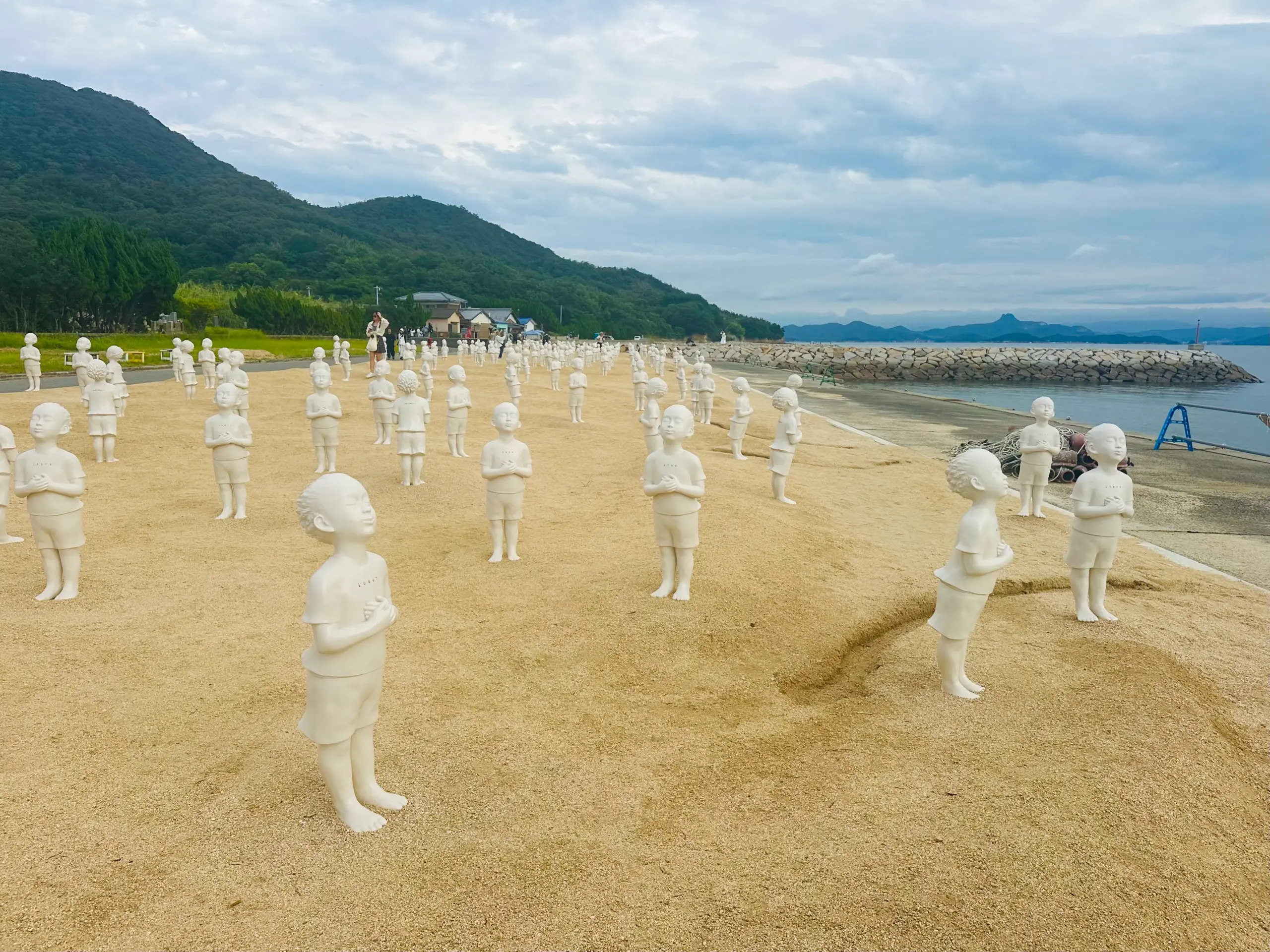
- Beyond the Border / Prayer – Lin Shuen Long: 196 child sculptures, each representing a nation of the world, stand on the beach facing their homelands.
- La Forêt des Murmures – Christian Boltanski: Hundreds of wind chimes resonating with memory and loss.
- Les Archives du Cœur – Christian Boltanski: A poignant archive recording the heartbeats of people from around the world.
- Teshima Yokoo House – Tadanori Yokoo: A surreal transformation of a traditional Japanese home.
- Shima Kitchen – Ryo Abe: A community space where local women serve food in a structure merging art and daily life.
- Particles in the Air / Karato – Noe Aoki: An installation in which steel rings undulate gracefully, in perfect harmony with the natural environment.
- Your First Color – Pipilotti Rist: A sensorial, color-driven installation.
- Needle Factory – Shinro Ohtake: A dramatic reinterpretation of an old needle factory as a ship’s hull.
Other Island Highlights:
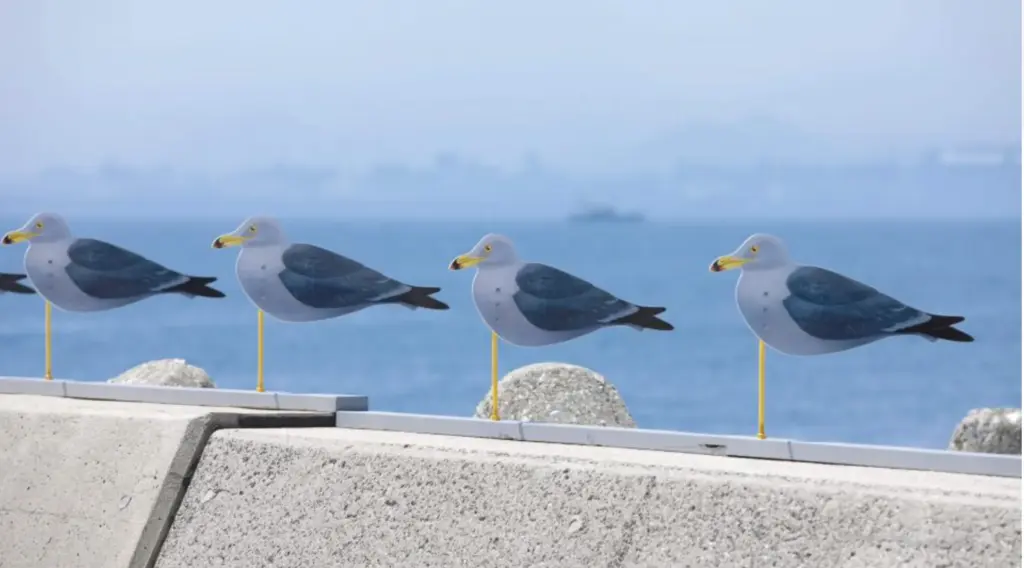
- Megijima: Sea Gulls Parking Lot – Tahakito Timura: A playful installation of wind-driven seagulls overlooking the shore.
- Ogijima: Ogijima’s Soul – Jaume Plensa: A striking local landmark made of interwoven letters beneath a white roof.
Access
Most visitors reach the islands via Uno Port, accessible by train from Okayama, with regular ferries to Naoshima and Teshima. Takamatsu Port is another convenient hub. Ferries are frequent but busy during festival periods.
- Ferry to Naoshima: 20–60 minutes
- Ferry to Teshima: 30–40 minutes from Uno or Naoshima
Bicycles and walking are often the best ways to explore the islands, though limited local bus routes connect longer distances.
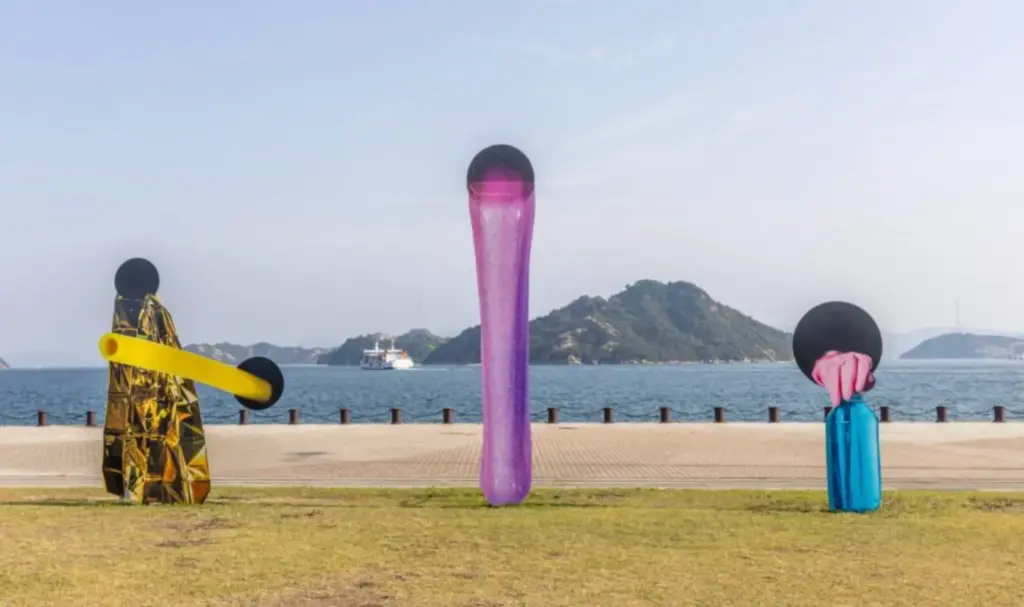
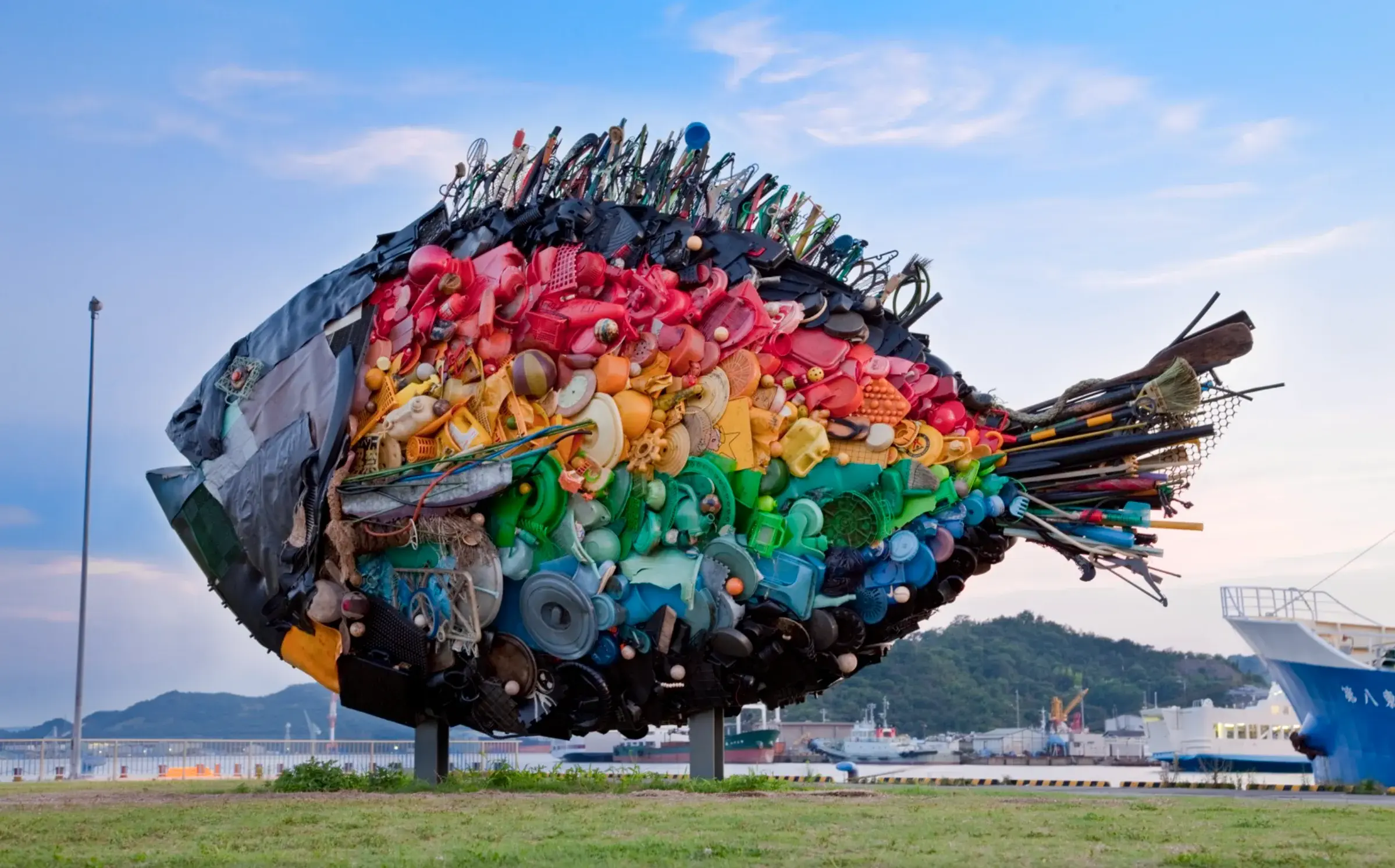
Uno Port – An Open-Air Gallery
More than a gateway, Uno Port itself hosts permanent and temporary artworks across its waterfront. Notable works include:
- Memory of Ship’s Hull
- JR Uno Port Line Art Project
- Restitution of the Tide
- Tower (UNO)
- The Home
- Uno Chinu / Uno
Accommodation
Where you stay shapes how you experience the Triennale. Staying on the islands allows you to witness art and nature by day and night.
- Benesse House (Naoshima): A rare museum-hotel by Tadao Ando, featuring in-room artworks and sea views.
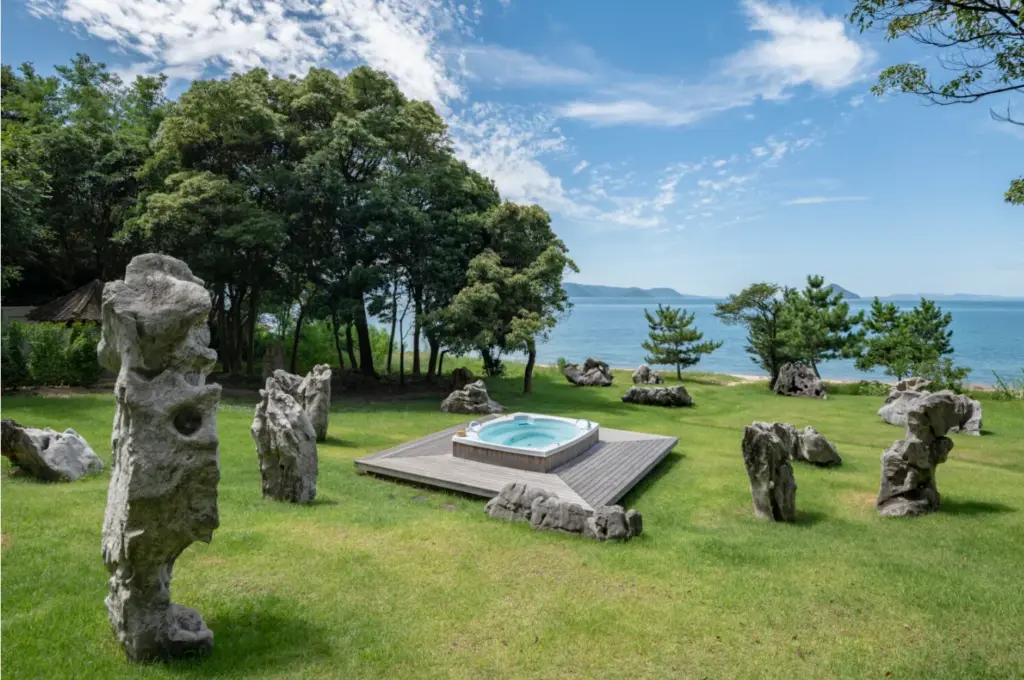
Naoshima, 1998
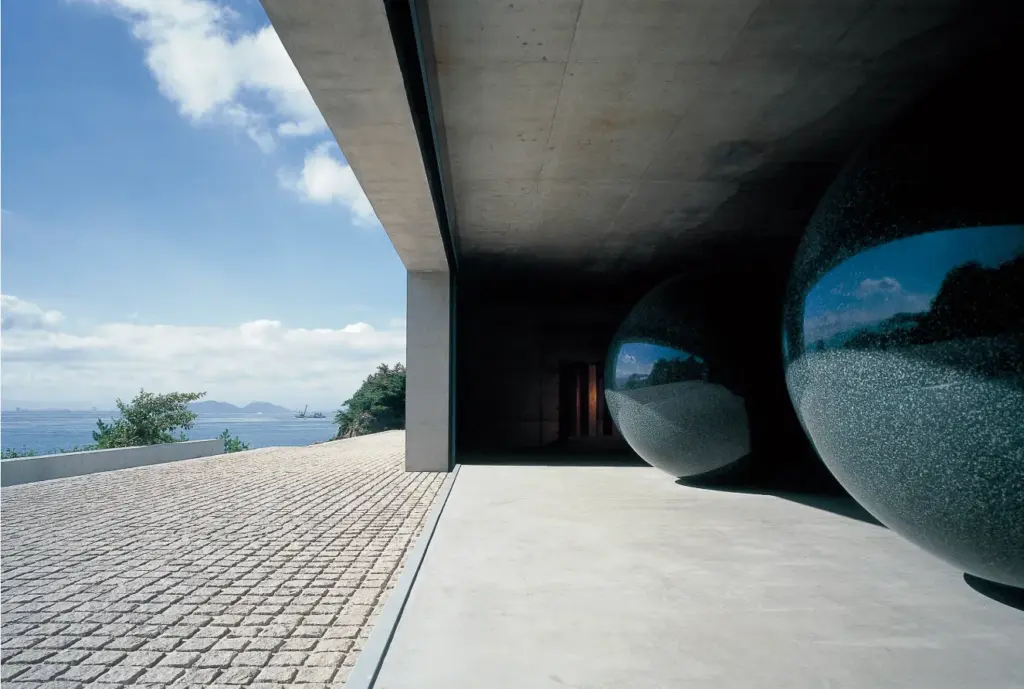
Known/Unknown 2000.
- Local Guesthouses (Naoshima): Family-run inns offering intimacy and affordability.
- MUJI House (Teshima): A minimalist retreat reflecting Japanese simplicity.
- Farm Stays and Small Lodgings (Teshima): Perfect for those seeking calm and proximity to nature.
- Uno Port & Takamatsu: Ideal for visitors planning frequent island trips, offering greater convenience and urban dining options.
Although not part of the Triennale, the nearby Simose Art Museum is also highly recommended for art and travel enthusiasts exploring the Setouchi region.
Güliz Özbek Collini
Cover Image: Heather B. Swann and Nonda Katsalidis, Place for Sea Dreamers (2022). Courtesy Setouchi Triennale. Photo: Keizo Kioku.