


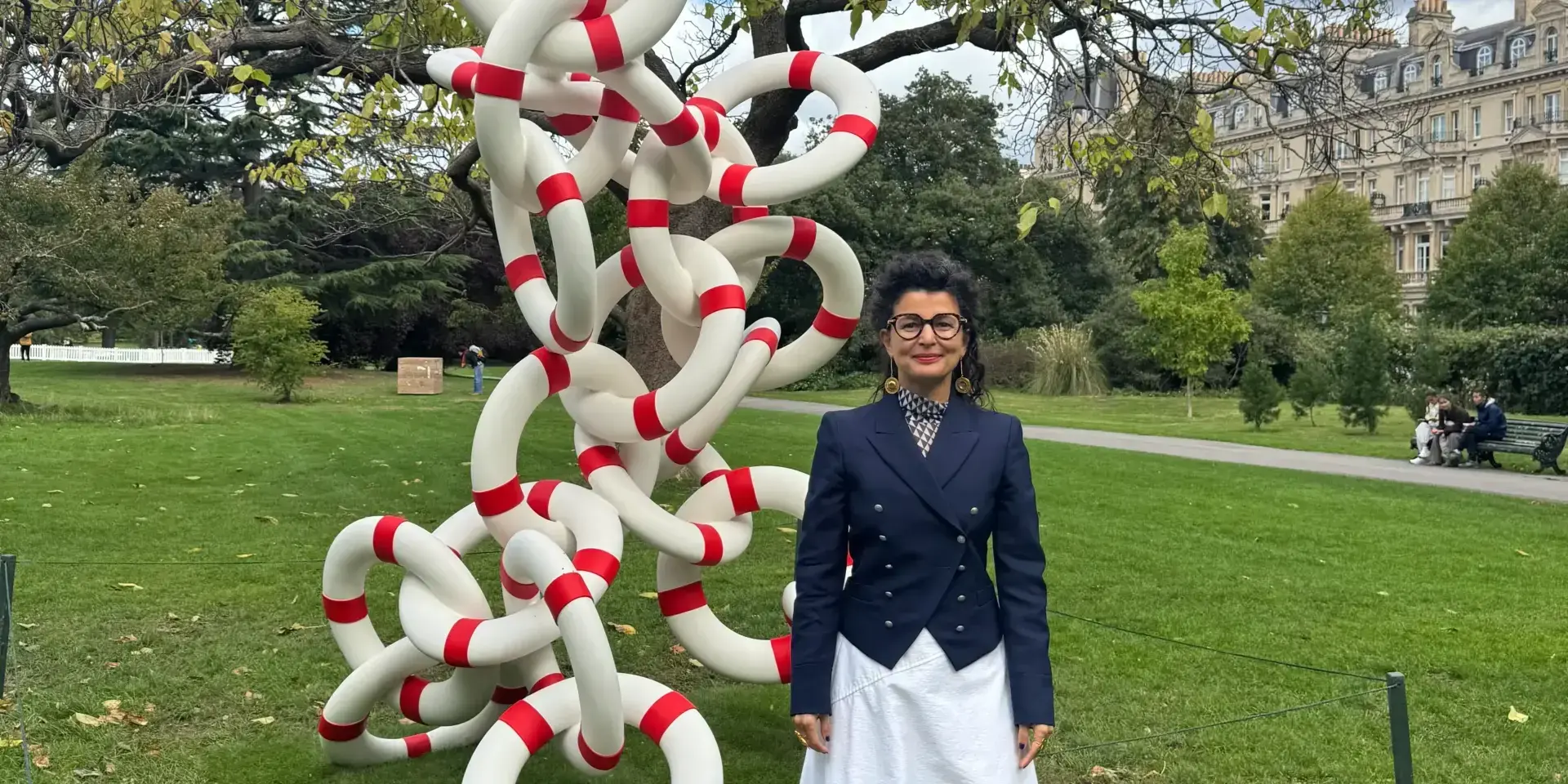
A Curator at the Crossroads of International Contemporary Art
Recognized for her visionary approach to art theory, public space, and contemporary cultural policy, Fatoş Üstek stands out as one of today’s most influential independent curators. After earning her degree in Mathematics from Boğaziçi University, Üstek completed her MA in Contemporary Art Theory at Goldsmiths, University of London. Since then, she has continued to lead and contribute to numerous international projects across art writing, curating, and cultural strategy.
Üstek has made her mark on the global art scene through key roles at major institutions such as the Liverpool Biennial, the fig-2 project, and the David Roberts Art Foundation. Since 2023, she has served as the curator of Frieze Sculpture, one of London’s most prominent open-air exhibitions. She is also a founding member of Frank, an independent platform supporting cultural production. In 2023, she published The Art Institution of Tomorrow, a book that sparked significant debate on the future of art institutions.
In this interview, held on the occasion of Frieze Sculpture 2025, we spoke with Üstek about the current relevance and meaning of public art, her artist-centered curatorial philosophy, and the conceptual framework behind this year’s exhibition theme, In the Shadows.
Frieze Sculpture sergisine üç yıldır küratörlük yapıyorsun. Öncelikle bunu netleştirelim: 2023’te yapılan bir atama mıydı, yoksa her yıl yenilenen bir görev mi?
The appointment wasn’t just for one year; however, the first year served as a trial period for me. Following that, we signed a three-year contract. In total, I plan to curate a maximum of five Frieze Sculpture exhibitions. There are a few reasons for this: first, I don’t want to repeat myself. More importantly, I believe that Frieze Sculpture should remain open to new ideas and fresh curatorial approaches.
Bu atama sana neler hissettirdi?
It’s a position I’m deeply proud of. It allows me to further develop my approach to art and the dialogue I build with artists. I’m someone who finds joy in giving back; through Frieze Sculpture, contributing to the landscape of meaning and artistic discourse in London, the UK, and the international art scene is truly exciting for me.
Dünya genelinde birçok sergiye küratörlük yaptın. Frieze Sculpture’ın senin için farkı ne?
Curating in the same park every year is a challenge I’ve embraced. As someone who avoids repetition, I strive to learn anew with each exhibition and to evolve my practice. Before Frieze Sculpture, I hadn’t curated more than one exhibition in the same open-air setting.
International projects are incredibly enriching, but focusing on a single site brings a different kind of depth. The history, nature, trees, open spaces, and wildlife of Regent’s Park offer new insights each year—and reflecting those elements in the exhibition is very important to me.
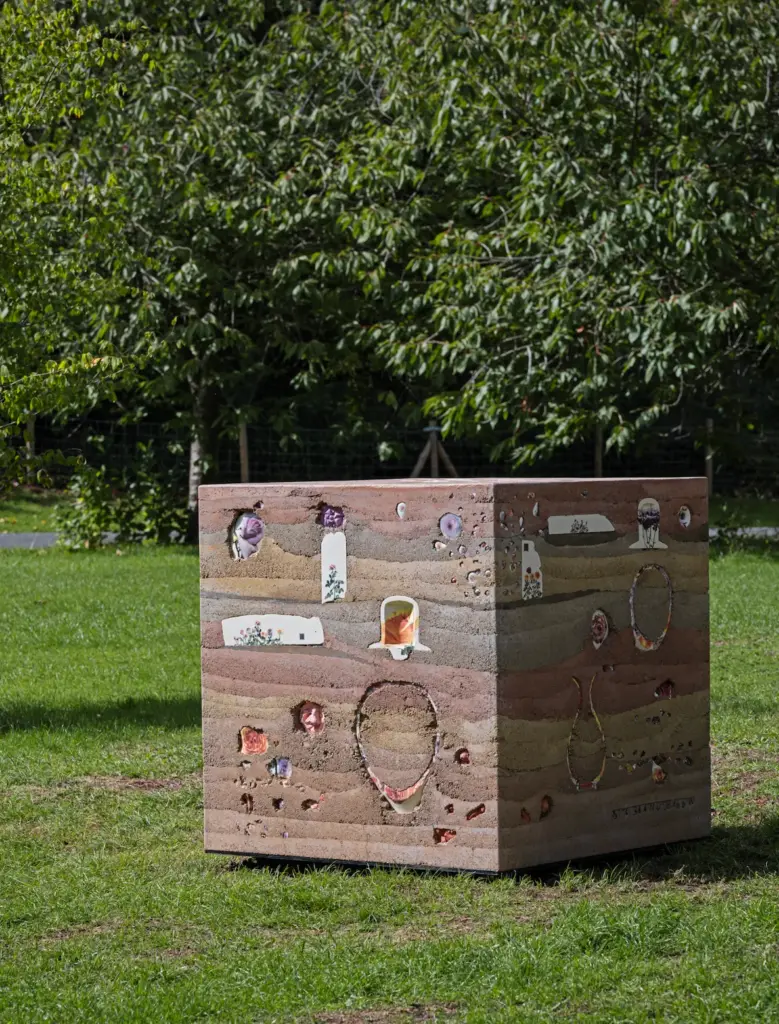
For instance, this year Burçak Bingöl researched the clay strata beneath English gardens and created a piece by blending clay brought from Turkey with local soil. Her sculpture, Unit Terranum, references not only the layers of earth but also archaeological remnants we encountered during installation—such as post-war metal fragments and ceramic pipes.
Frieze Sculpture aynı zamanda ticari bir girişim. Bu yapı senin için ne kadar tanıdık?
Much of my career has been rooted in public spaces and non-profit institutions. That was also the case when I led the David Roberts Art Foundation. With Frieze, however, there’s a need to merge these two worlds.
I’m very grateful to Eva Langret, Frieze Art Fair Director, who has been consistently supportive as I’ve brought my vision for Frieze Sculpture to life. I approach this project as a kind of “mini biennial.”
Since last year, we’ve been providing production grants to galleries and artists. This includes the long-standing bursary program from our logistics partner, MTEC. I also actively work with artists and galleries to engage collectors, foundations, and funders.
Although Frieze Sculpture takes place under the umbrella of the fair, it’s a public and free exhibition—reaching around 1 million visitors annually.
Bu süreçte London Sculpture Week’te de bazı değişiklikler oldu. Neler yaptınız?
Since I took on the role, we’ve transformed London Sculpture Week from a network of mutual references into a platform for strong collaboration. Each year, we build on it with new initiatives.
Last year, we organised a symposium at Metropolitan University with all our partners. This year, the symposium has evolved into a series, with the second edition taking place on 26 September at the Warburg Institute.
We also planned cross-venue tours. For example, an artist from Sculpture in the City will be leading a public tour as part of Frieze Sculpture. With support from Bloomberg Connects, we’ve hired a coordinator, and our new website went live just a few weeks ago.
Üç yıldır düzenlediğin sergiler arasında ne gibi değişiklikler oldu? Bu yıl nasıl bir yenilik var?
A consistent thread across all three editions has been the concept of the Expanded Notion of Sculpture. We explore sculpture through a lens that transcends material, medium, scale, and content.
In the first year, Hans Rosenström explored sculpture as sound; last year, FOS worked with sculpture as performance, and Albano Hernandez examined sculpture as painting—all more abstract approaches.
This year, we made a more radical decision and, for the first time in the exhibition’s history, introduced a curatorial theme and title: In the Shadows.
This shifts the exhibition’s focus beyond the question of “what is happening in sculpture today?” toward “how is art responding to tectonic shifts in society?”
Sanatçı seçimlerin her yıl kavramsal yaklaşım, deneyim ve özellikle coğrafya açısından oldukça çeşitli. İlk iki sergide ME/Afrika kökenli sanatçılar öne çıkarken, bu yıl Asya ağırlığı dikkat çekiyor. Bu dağılıma nasıl karar veriyorsun? Tema ve küratöryel vizyonun dışında, uluslararası trendler seçimlerini ne kadar etkiliyor?
Interestingly, this year artists based in the UK came to the fore—almost half of the participating artists live in London or elsewhere in the UK, though only Andy Holden is British by origin.
We also feature artists from Asia, the Middle East, and the Americas. This year’s selection process was particularly discerning, as I focused on works that could genuinely contribute to the In the Shadows theme.
I closely follow current trends in the art world—the materials and techniques being used, thematic directions, and more. It’s become part of my daily rhythm.
Her yılki sergide bir ya da iki Türk sanatçının olduğunu görüyoruz ve gururlanıyoruz. Bu seçimin arkasında, sergiye kavramsal uyumluluğun yanı sıra çok değerli Türk sanatçılarını uluslararası tanınırlığına katkıda bulunma misyonu da var mı?
Absolutely. Contemporary art from Turkey has gained significant momentum in recent years. Having Turkish artists represented on an international platform like Frieze Sculpture is very meaningful to me.
It’s not only about recognition but also about placing Turkish artists in dialogue with internationally established names. It sends a powerful message to global audiences and collectors.
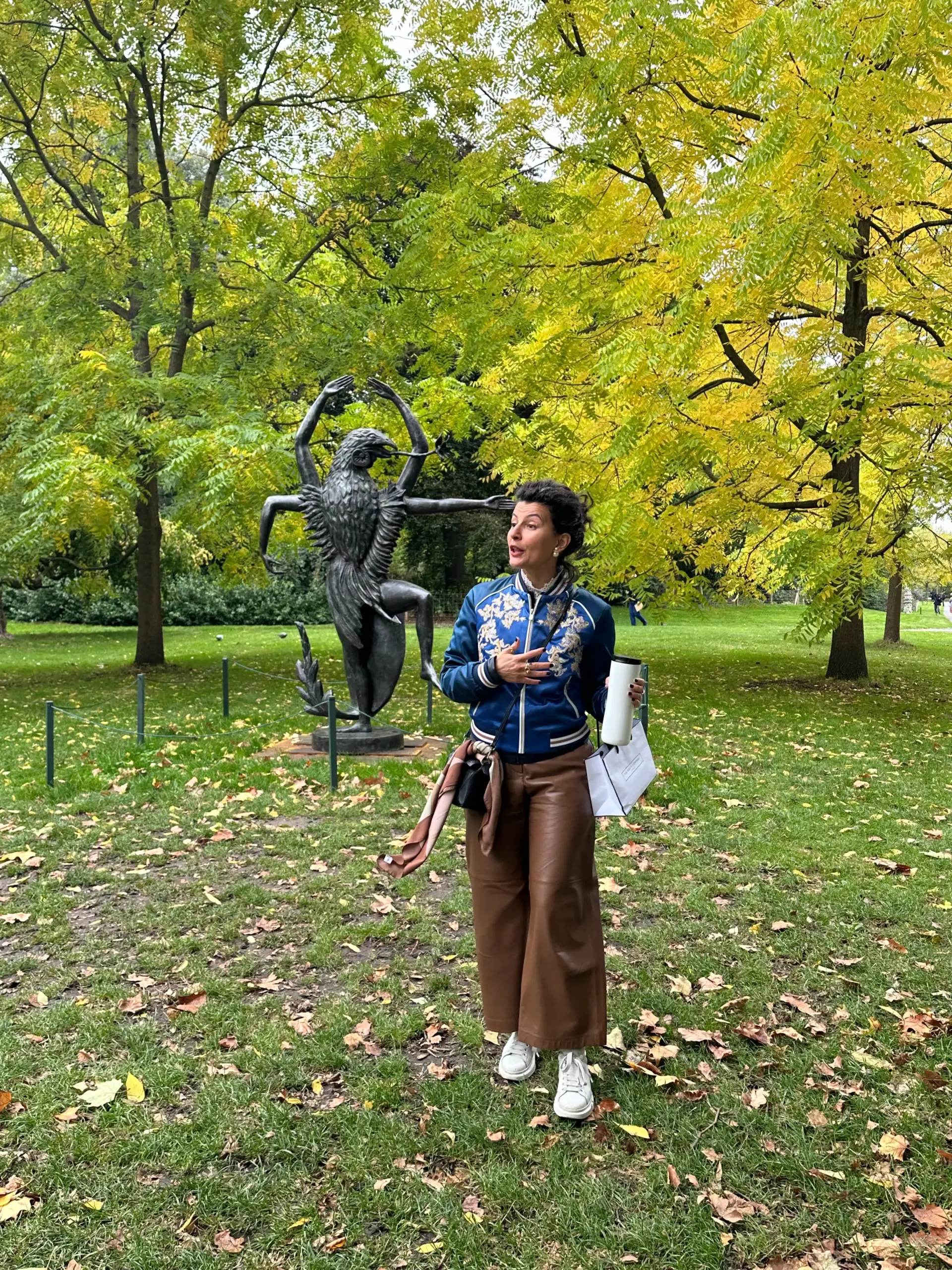
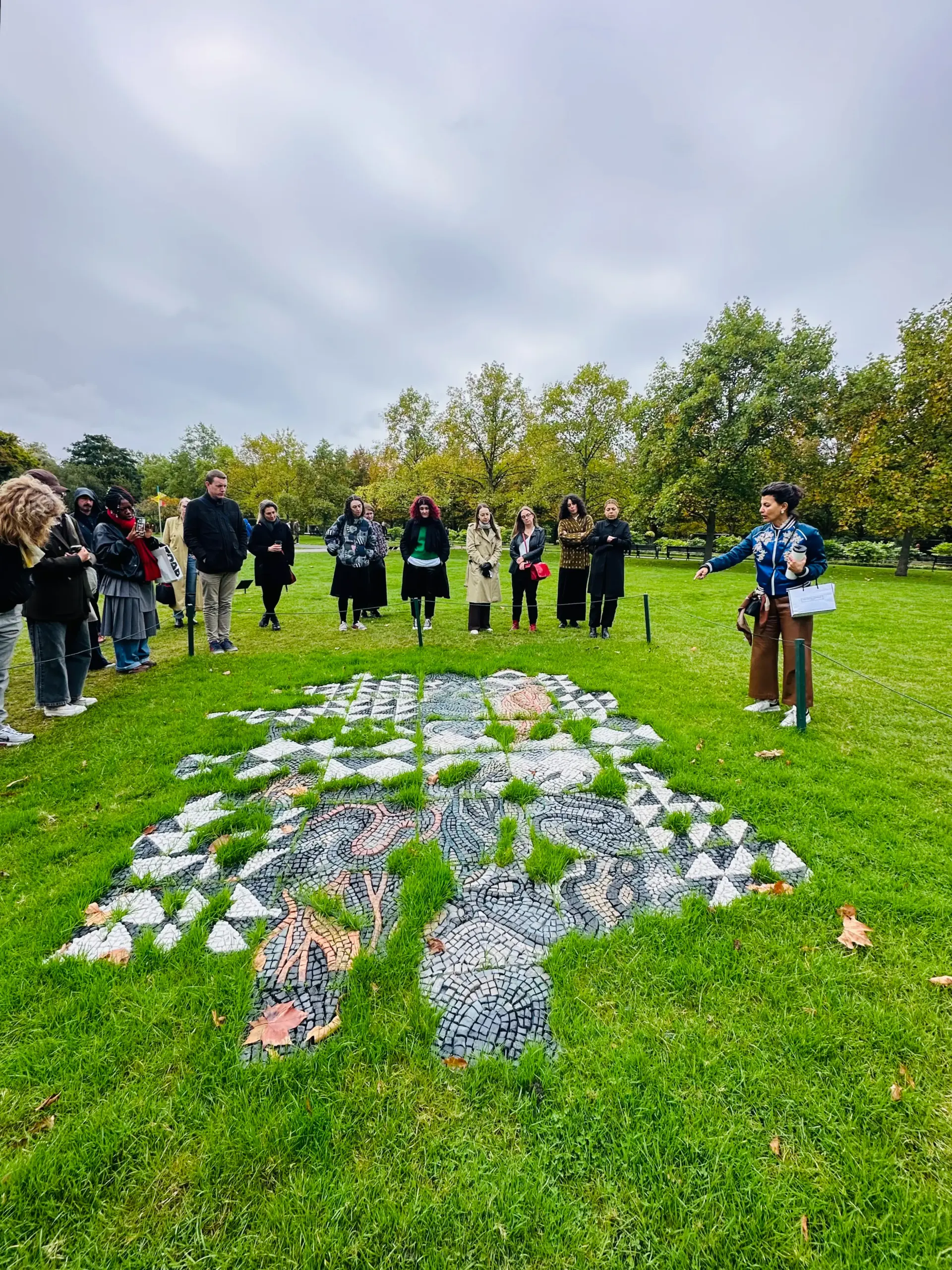
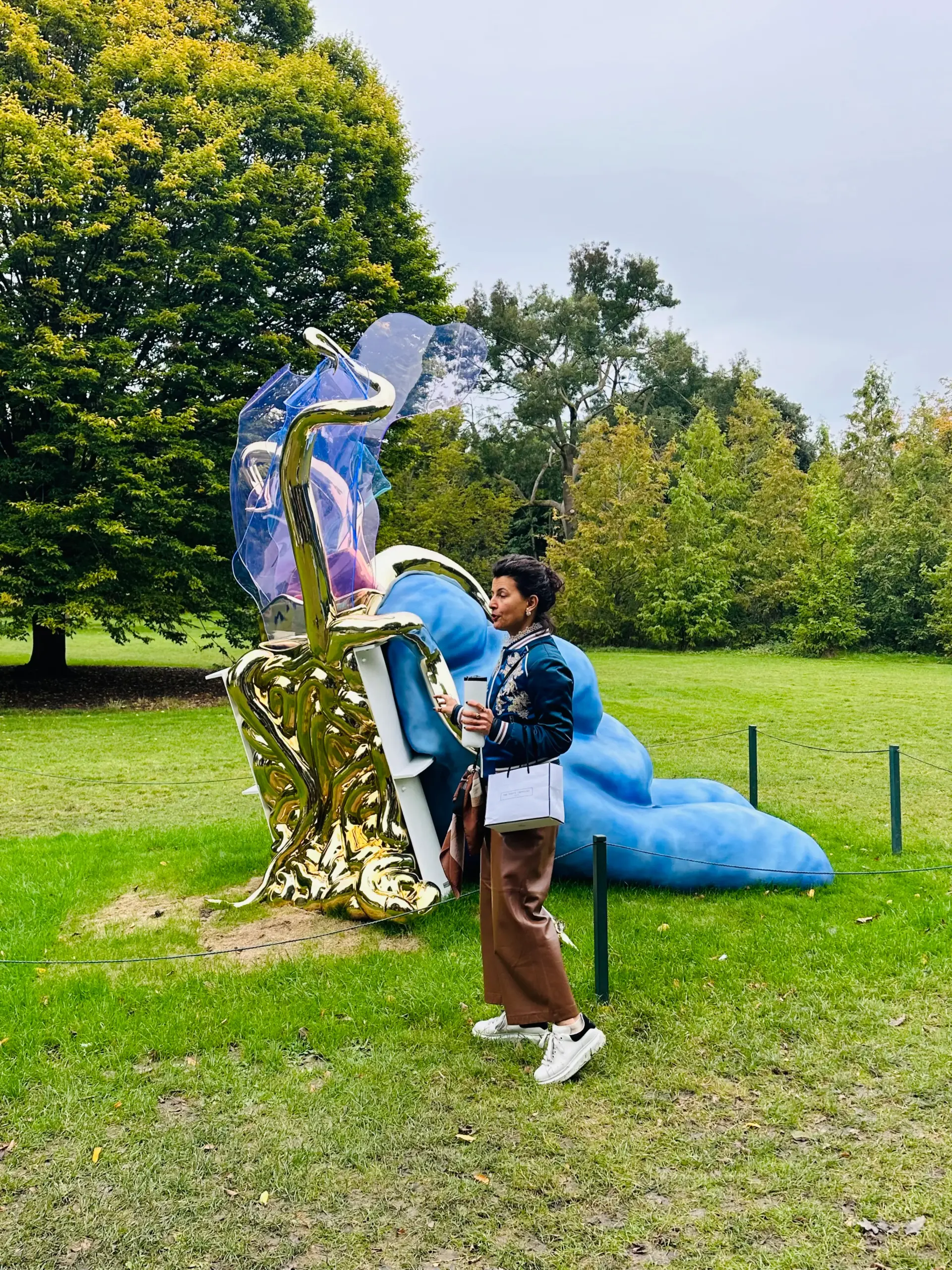
Fatoş Üstek, Frieze Sculpture 2024, curator-led tours. Photo: Güliz Özbek Collini
Geçen yılki performanslar ve küratörlü turlar oldukça ilgi gördü, sergiyi sürekli gündemde tutma, kulaktan kulağa popülerliğini artırmada çok olumlu etkiler yarattı. Bu senin fikrin miydi? Bu yıl programda neler var?
I always approach the exhibition as a holistic experience. It’s not only about the selected works, but also the relationships they build with the audience.
How visitors enter the exhibition, what they see, and how they feel—these are central to my curatorial practice. That’s why we develop public programming to support and expand on certain artworks.
Last year, for instance, Fani Parali’s piece was integrated with an opera performance, while İnci Eviner’s work transformed into a stage that gave life to characters from her narrative.
This year, we’ve created a structure that invites visitors to slow down and reflect. For example, Simon Hitchens will perform a durational piece from sunrise to sunset on 21 and 28 September—a first in Frieze Sculpture’s history.
Assemble is designing a procession or walk, while Lucía Pizzani’s performances are being developed in collaboration with Lucia Pietroiusti.
I also lead public tours that are open to everyone—not just VIPs. Every year, I host tours on the opening and closing Sundays, as well as a special evening walk on 21 September, marking the start of autumn.
Bu yılki işlerden kaçı sergiye özel üretildi? Biraz detay verebilir misin?
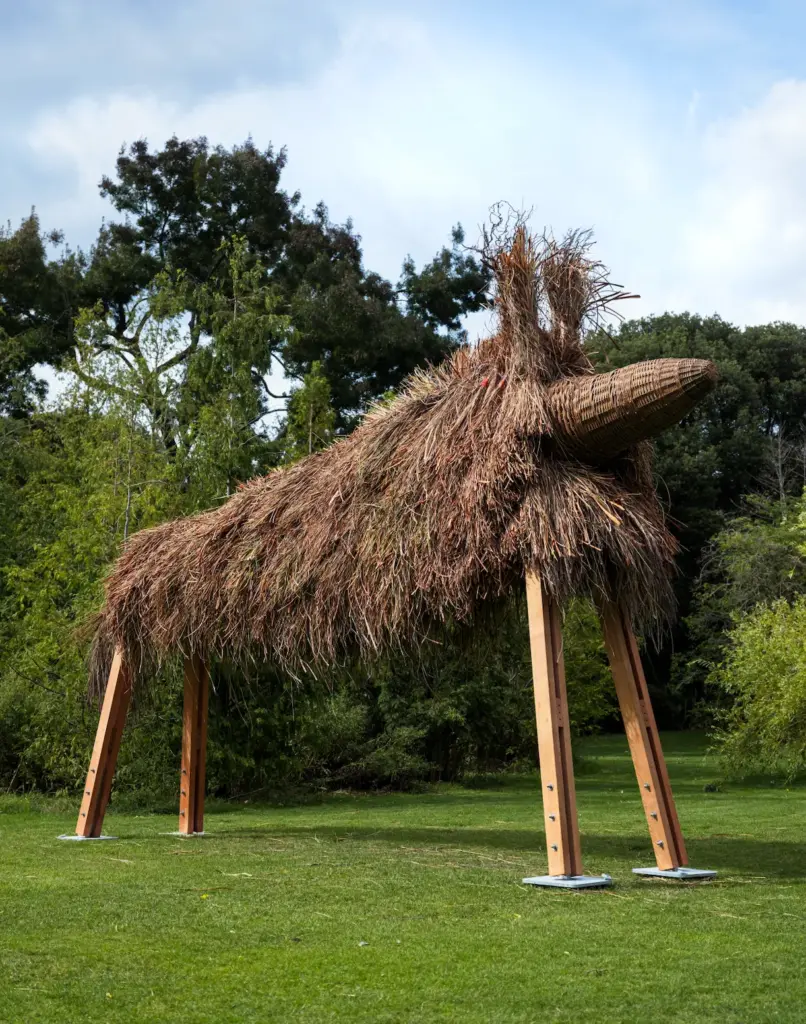
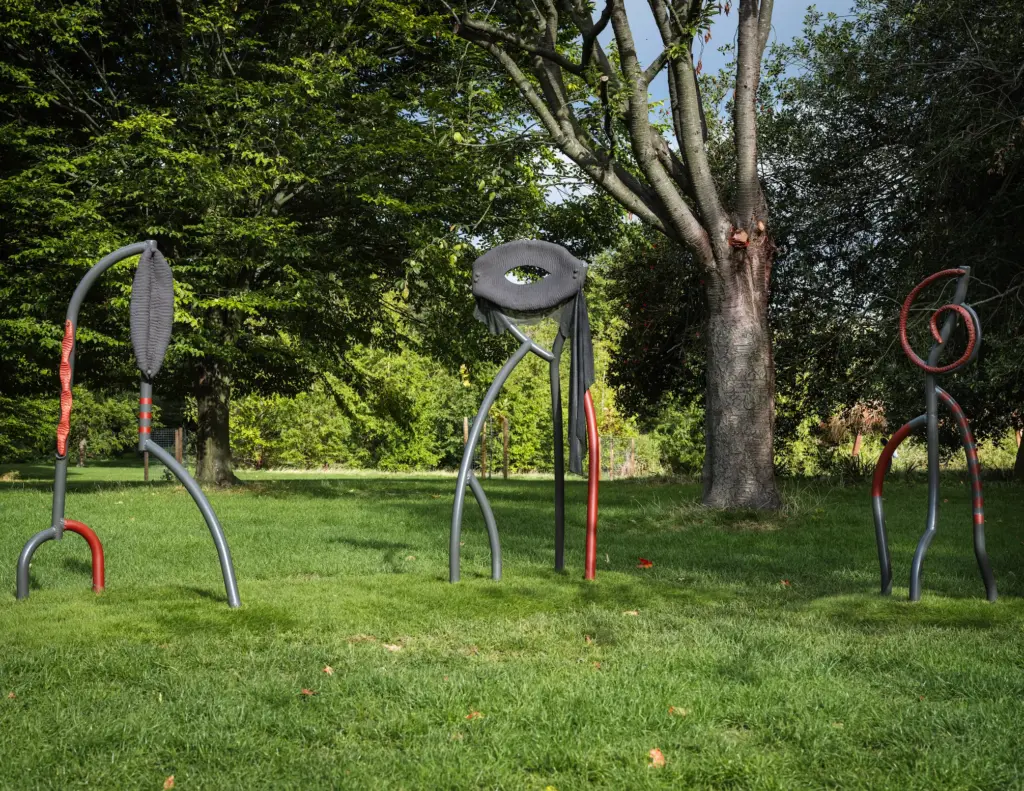
Assemble, Burçak Bingöl, and Lucía Pizzani have all created new works specifically for this exhibition.
Assemble and Pizzani are presenting pieces that focus on mythology and ritual. Burçak Bingöl’s sculpture is site-responsive—deeply connected to and embedded in the park itself.
Interview: Güliz Özbek Collini
Frieze Sculpture 2025 ile ilgili tüm detaylara ve eser görsellerine buradan ulaşabilirsin.
Kapak Görseli: Courtesy of the Wick