


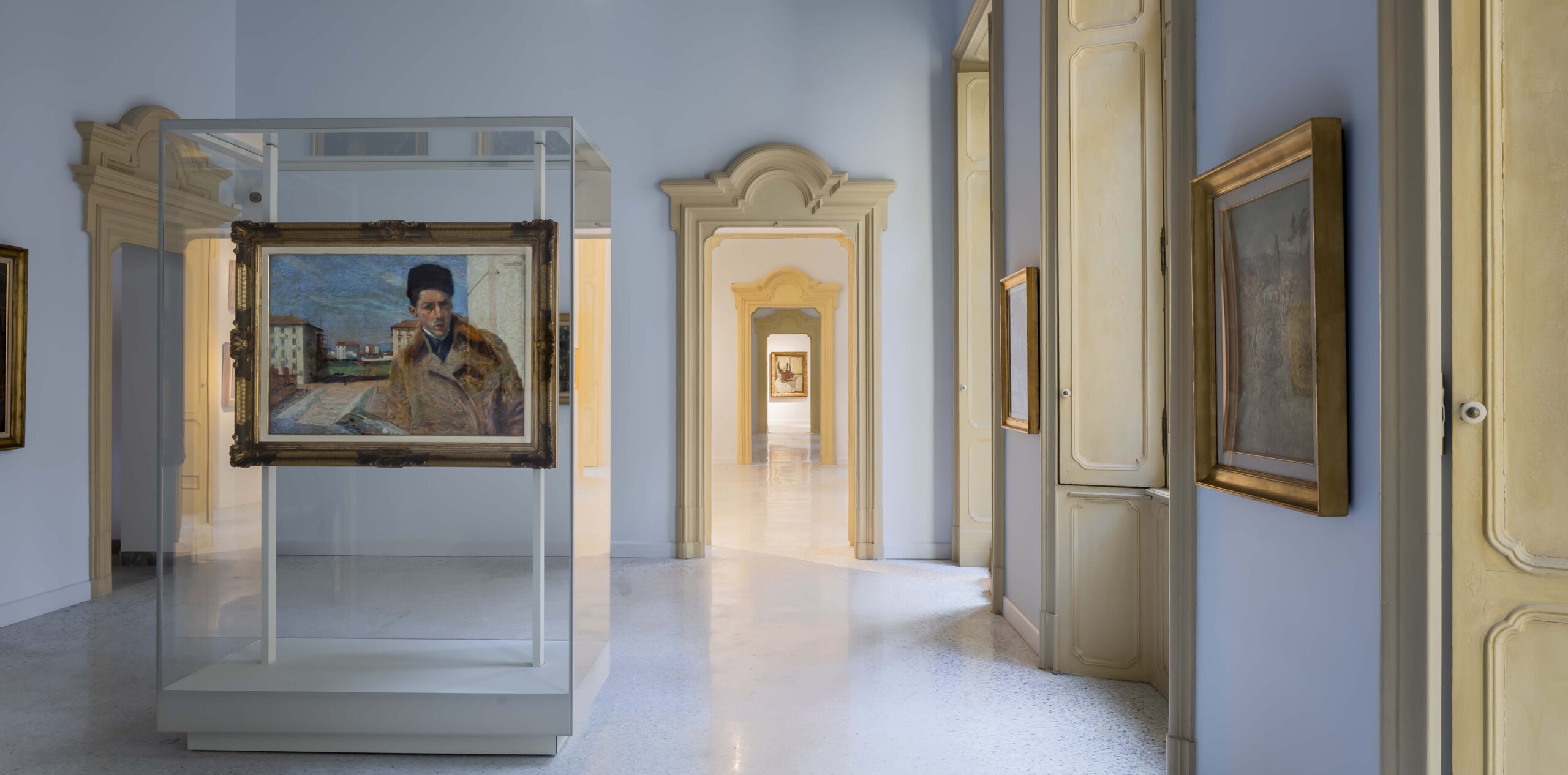
After a 52-year journey full of challenges, the long-awaited opening of Palazzo Citterio marks the realization of the “Grande Brera” project!
Art lovers are likely familiar with the Pinacoteca di Brera, one of the most important cultural treasures in Milan—and indeed, all of Italy. Housing masterpieces by the likes of Piero della Francesca, Raphael, and Caravaggio, this gallery spans works from the 14th to the 20th century, and is home to one of the world’s most prestigious art collections.
The inauguration of Palazzo Citterio on December 7 added a new chapter to Pinacoteca di Brera’s 52-year-long expansion process. The completion of the long-anticipated renovation of Palazzo Citterio has finally brought the vision of “Grande Brera” to life.
Franco Russoli, who served as the visionary director of the Pinacoteca di Brera between 1957 and 1977, imagined the “Grande Brera” not just as a collection of art, but as a center for modern art and scholarly research. Today, Palazzo Citterio turns that dream into reality, becoming a landmark institution of national and international importance in Milan.
Now, the 20th-century artworks of the Pinacoteca di Brera find their rightful home at Palazzo Citterio, particularly in the mezzanine level that hosts over 200 pieces from the Jesi and Vitali collections. In addition, two major exhibitions in other areas of the building are open to visitors.
This opening marks a turning point in Milan’s cultural evolution, enhancing its status as a global hub for the arts.
Signature Works of 20th-Century Art at Palazzo Citterio
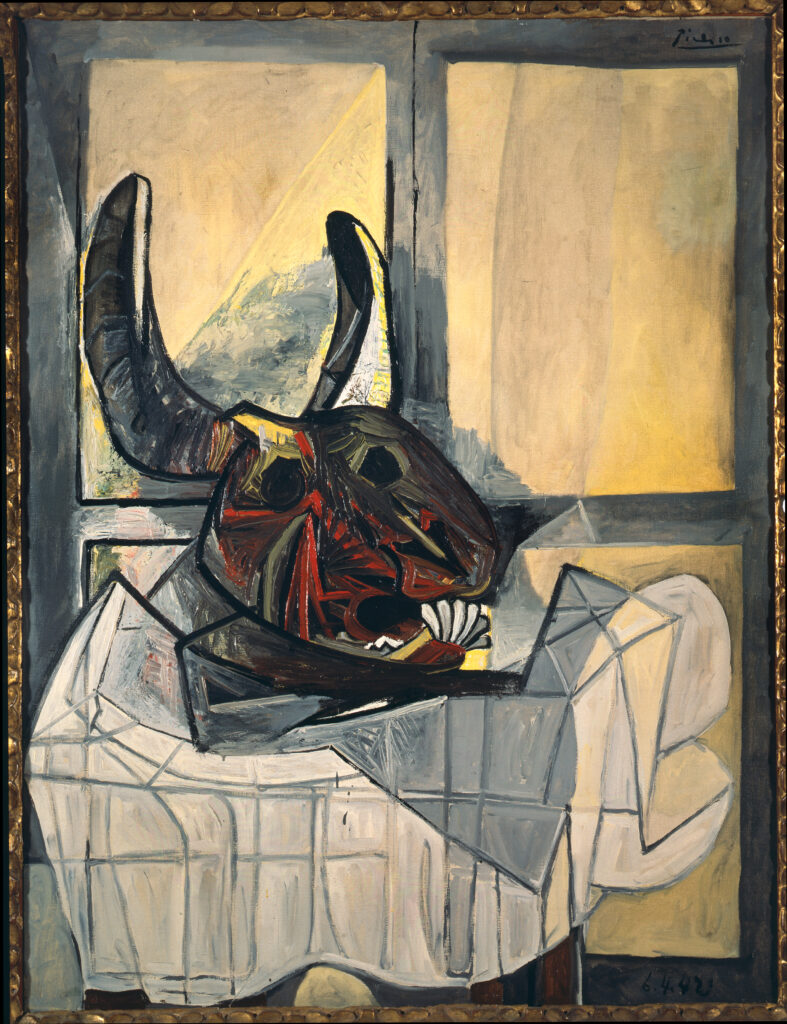
On the mezzanine level of Palazzo Citterio, masterpieces of Italian and international 20th-century art are displayed—from Boccioni to Modigliani, Morandi to Picasso. The collection also includes miniature self-portraits of key 20th-century artists once owned by renowned writer, screenwriter, and artist Cesare Zavattini (image available), as well as Mario Mafai’s visionary series 23 Fantasie, donated by Aldo Bassetti, which grotesquely and powerfully condemns the horrors of war.
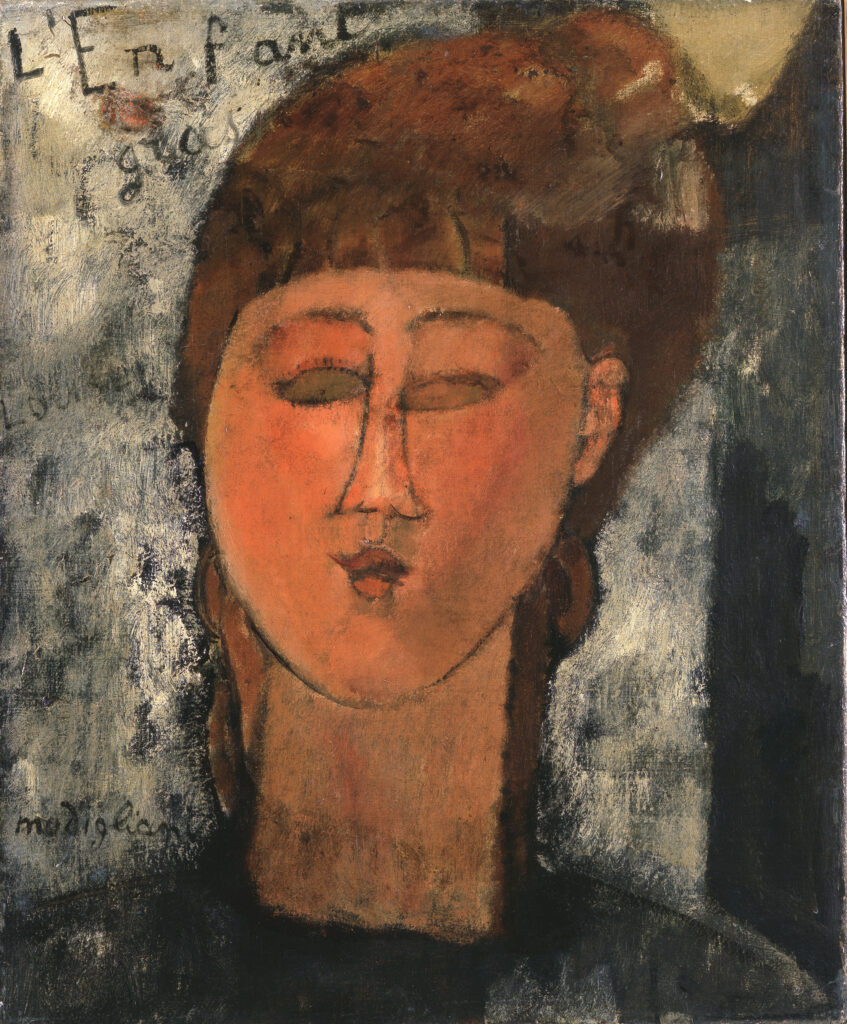
To enrich the 20th-century collection further, the Pinacoteca di Brera has recently acquired major works by Picasso, de Chirico, Savinio, Campigli, Cassinari, Melotti, and de Pisis, now exhibited throughout the halls of Palazzo Citterio.
Angelo Crespi’s Vision: Structural Renewal and Digital Innovation
Since his appointment on January 15, 2024, General Director Angelo Crespi has spearheaded a transformative project at Palazzo Citterio. This included structural reinforcement, updated HVAC systems, and redesigned exhibition spaces in parallel with restoration efforts.
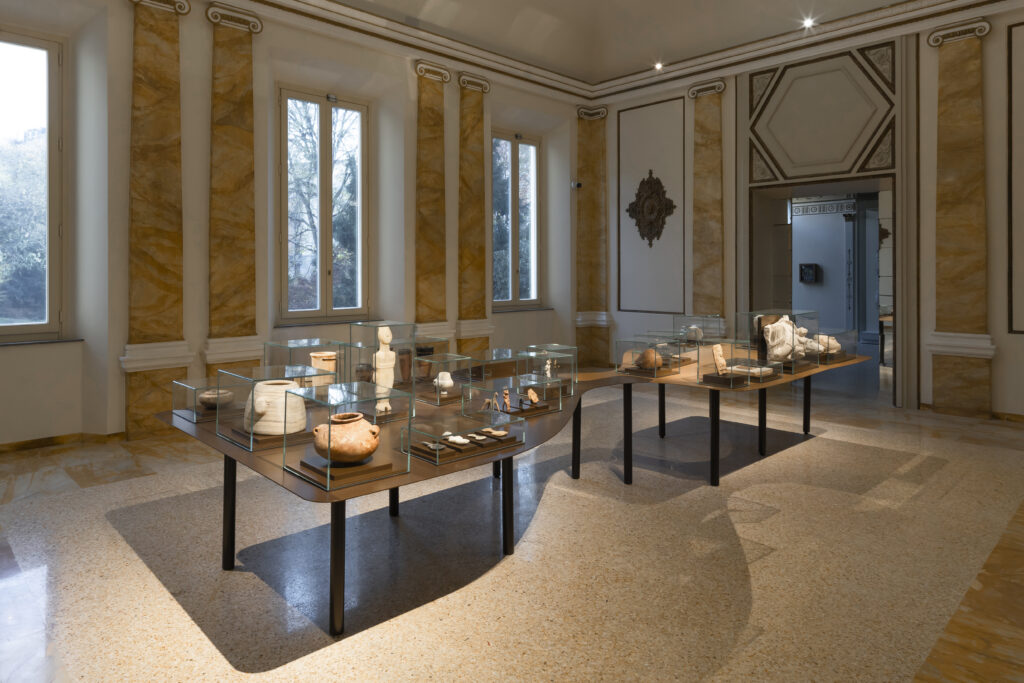
The project, developed with input from renowned architect Mario Cucinella, introduced an innovative tool for curators and art historians: the augmented reality software NOOR. Used for the first time in a museum setting, this technology allowed for pre-visualization of art placements and real-time evaluation of exhibition layouts.
Architecturally, the heart of the Palazzo now opens onto a grand hall on the mezzanine floor, referred to as “Number 40.” Maintaining continuity with the Pinacoteca di Brera, it displays artworks dating up to 1861. Designed by Isabella Marelli, the hall features one of the museum’s signature pieces: Fiumana by Giuseppe Pellizza da Volpedo. Two main collections begin from this space: the Jesi Collection overlooking Via Brera, and the Vitali Collection facing the garden.
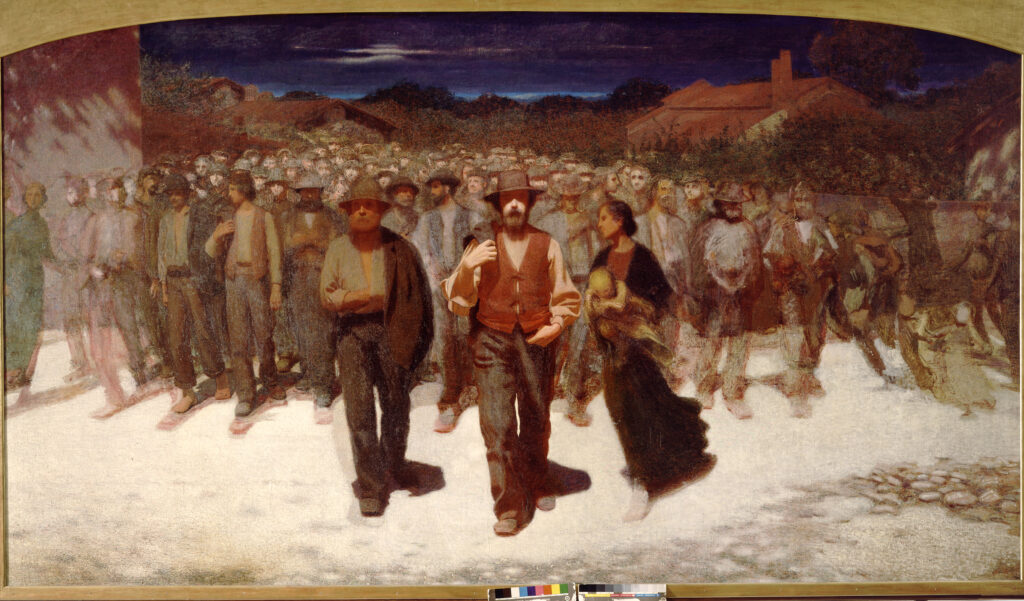
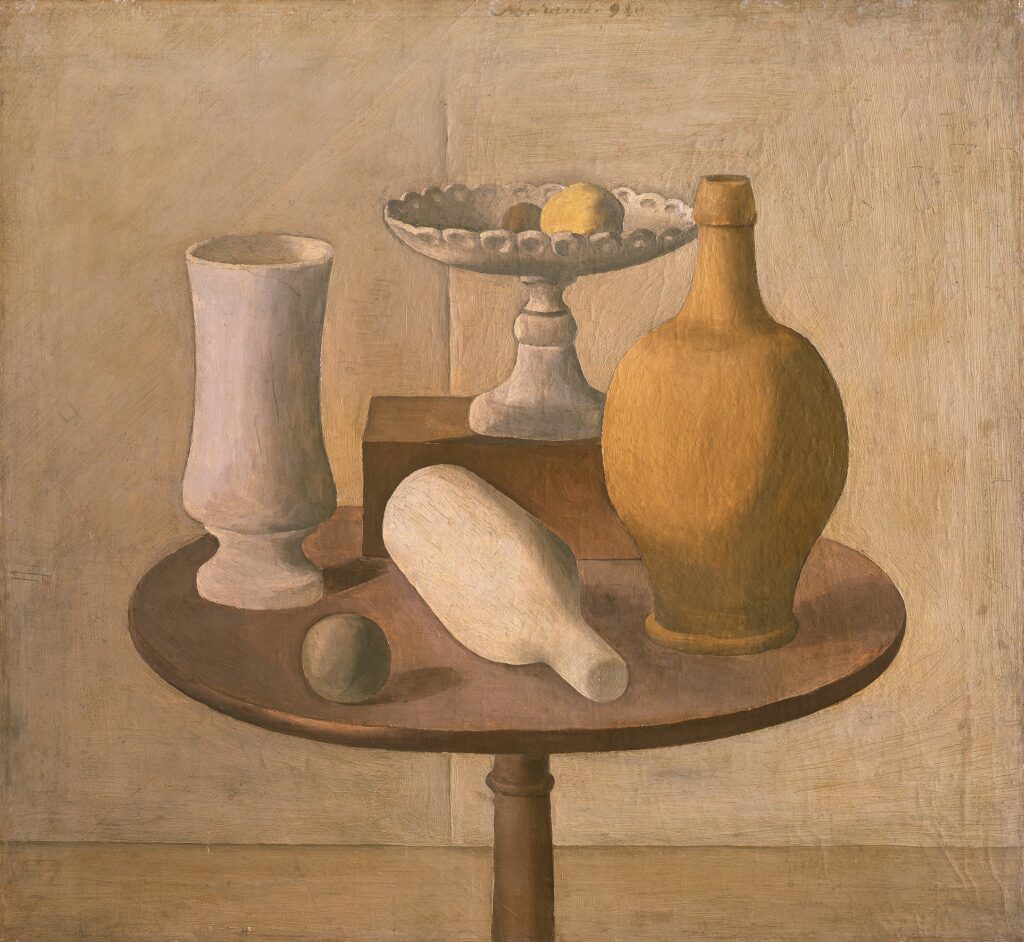
Curated by art historian Marina Gargiulo, responsible for Brera’s 20th-century collections, the artworks are arranged thematically and chronologically. The Jesi Collection focuses solely on 20th-century art, while the Vitali Collection spans a broad spectrum—from archaeology and medieval works to 17th-century art and Morandi.
A New Design Vision
Mario Cucinella’s architectural design was created in collaboration with ERCO, a leading global brand in museum lighting, and Goppion, a company renowned for Italy’s excellence in museum display cases. Cucinella’s aim was to create a focal point that fosters interaction between the Palazzo and the city, connecting outdoor and indoor spaces.
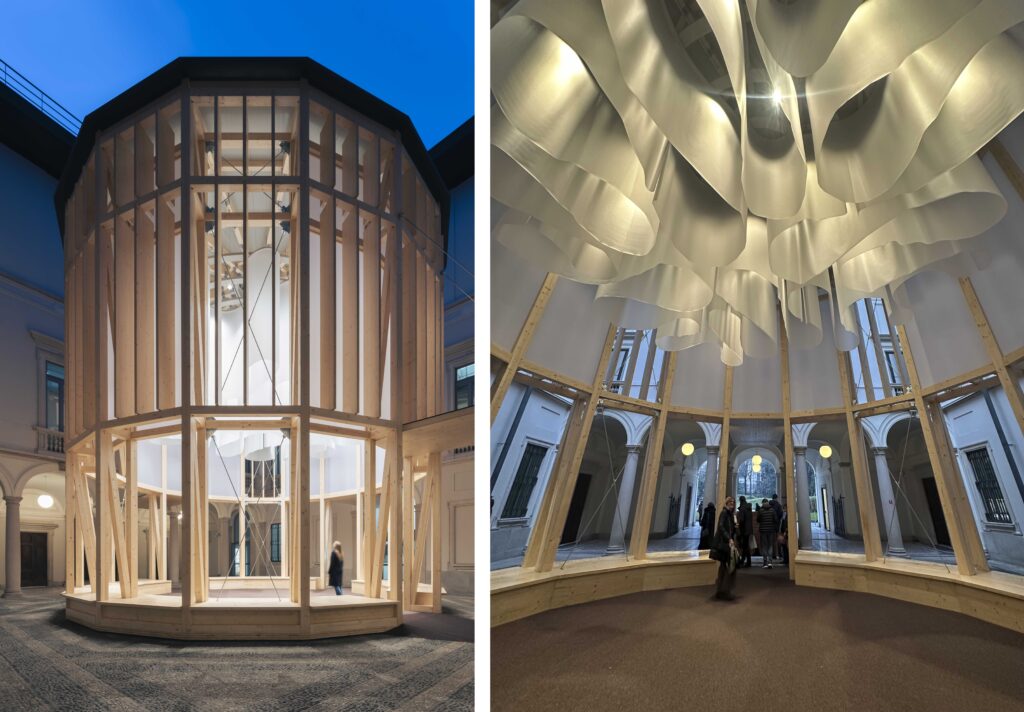
Starting from the courtyard, a wooden pavilion designed in the form of a small temple (tempietto) was built as a resting space for visitors and a transitional link between the various areas of Grande Brera. Donated by Salone del Mobile Milano, this structure draws inspiration from Bramante’s architectural language and from Raphael’s The Marriage of the Virgin (Lo sposalizio della Vergine), establishing a meaningful dialogue with the Pinacoteca.
Both entrances to Palazzo Citterio, at Via Brera 12 and 14, are now open to the public. The entrance at number 14 features a sculptural desk that integrates ticketing, information services, and a bookshop. With its rounded shapes and built-in seating, it offers a welcoming experience, inviting visitors to explore Grande Brera and its collections. In addition, large screens on the walls showcase works by digital artists, offering a deeper insight into the art.
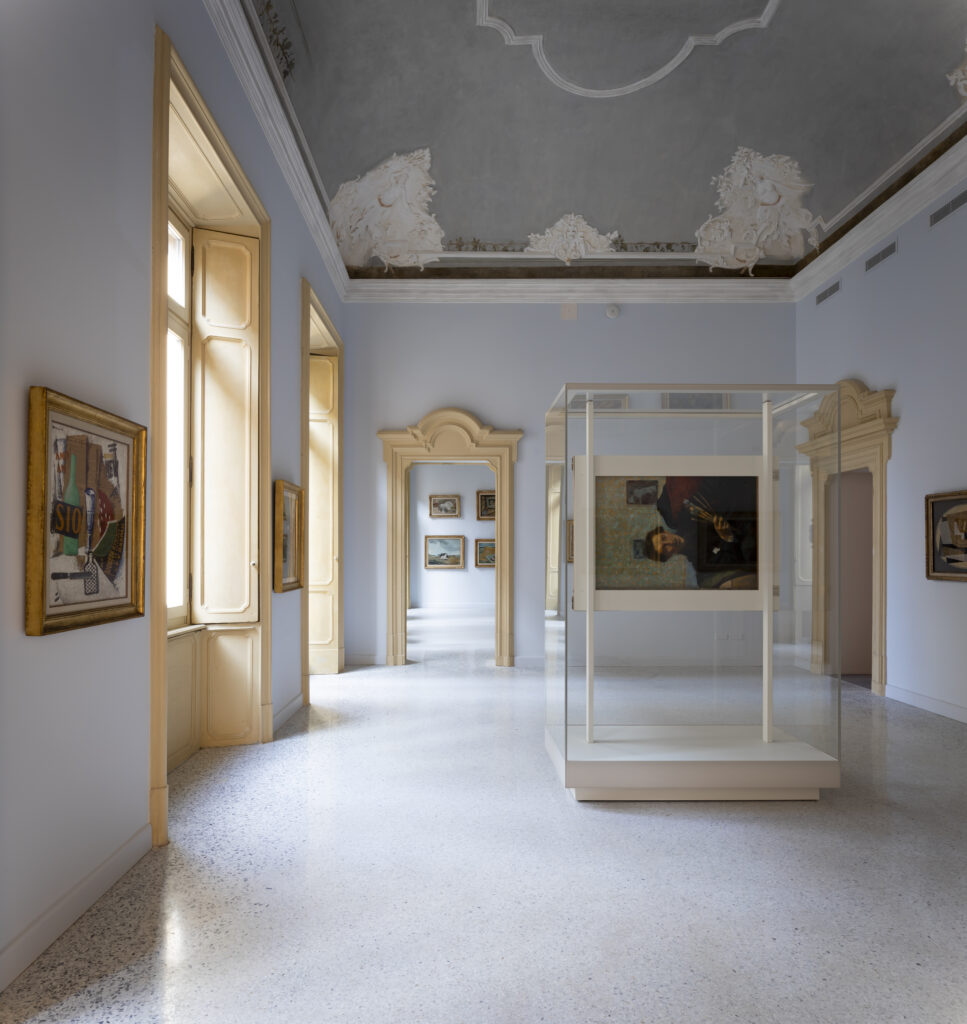
Digital Art and Temporary Exhibitions: A Groundbreaking Opening
Thanks to a collaboration between the Pinacoteca di Brera, MNAD (National Museum of Digital Art), and MEET Digital Culture Center (an international digital art hub in Milan supported by the Cariplo Foundation), the opening of Palazzo Citterio presents a major event in the field of digital art.
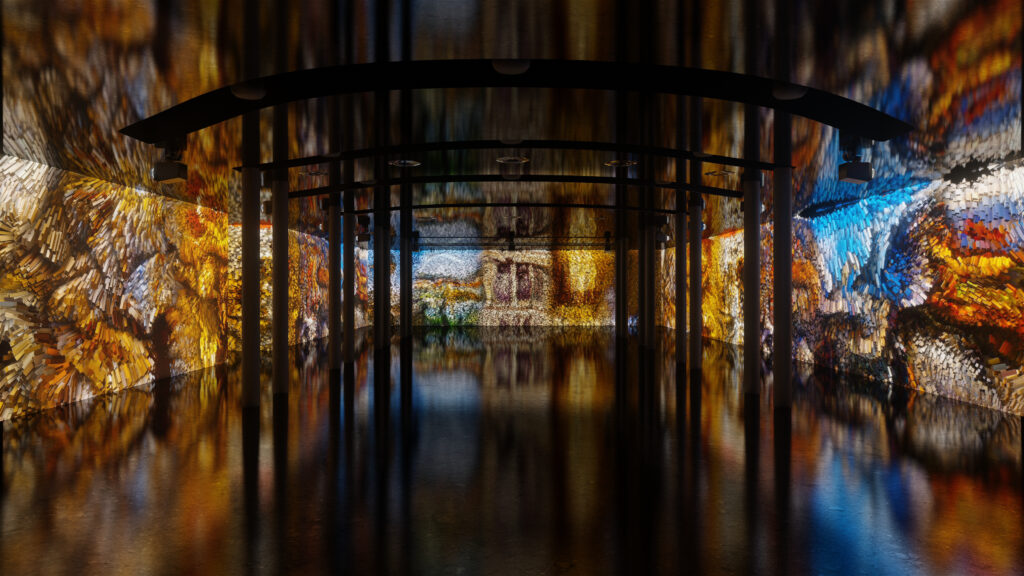
Created with the help of AI, the piece is based on a massive dataset of images and texts produced in Italy between 1300 and 1600. Through algorithmic processes, the work generates abstract shapes, colors, and sounds in a visual transformation that has led many to refer to Renaissance Dreams as the “Sistine Chapel” of digital art. The installation is also permanently exhibited in MEET’s Immersive Room, offering a full sensory experience.
From December 7, 2024, to March 30, 2025, the Capitolo Architettura section of Renaissance Dreams, a mesmerizing digital installation by globally renowned artist Refik Anadol, will be displayed on a massive LED screen at the Palazzo’s entrance.
A Meeting of History, Art, and Innovation at Palazzo Citterio
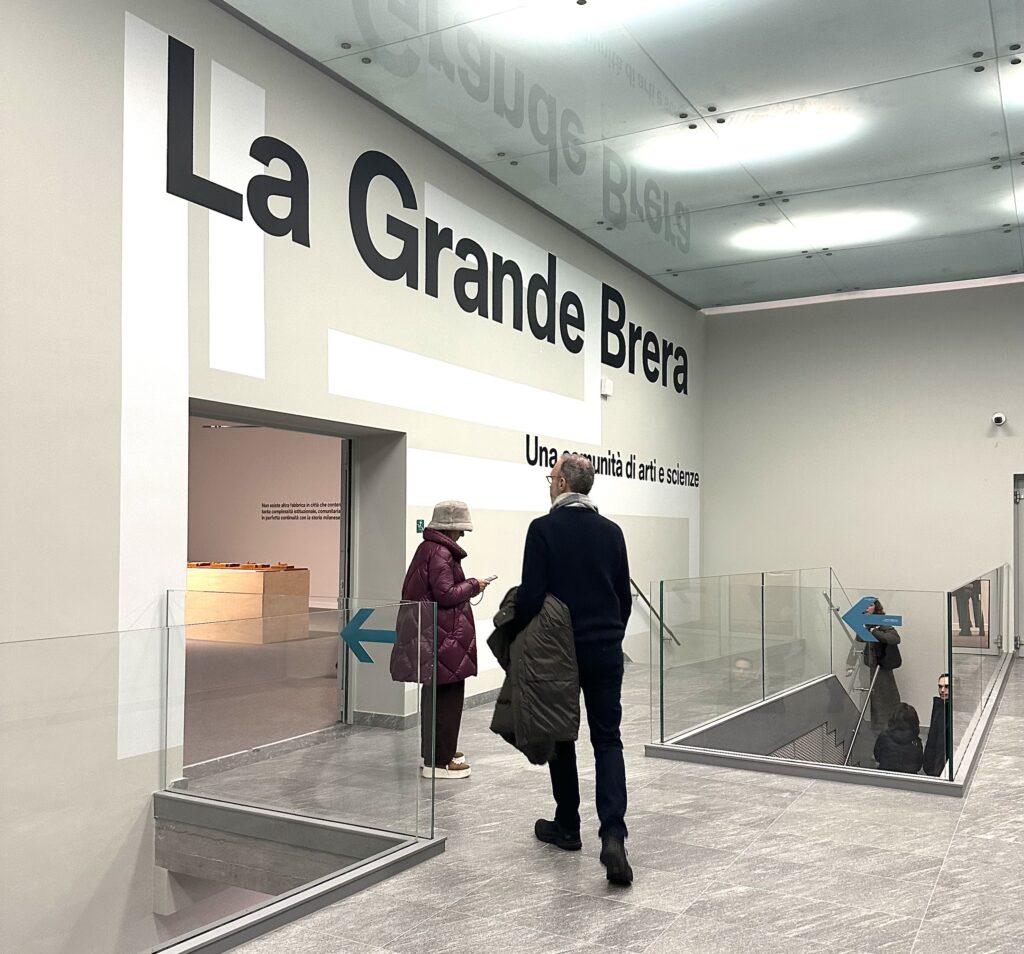
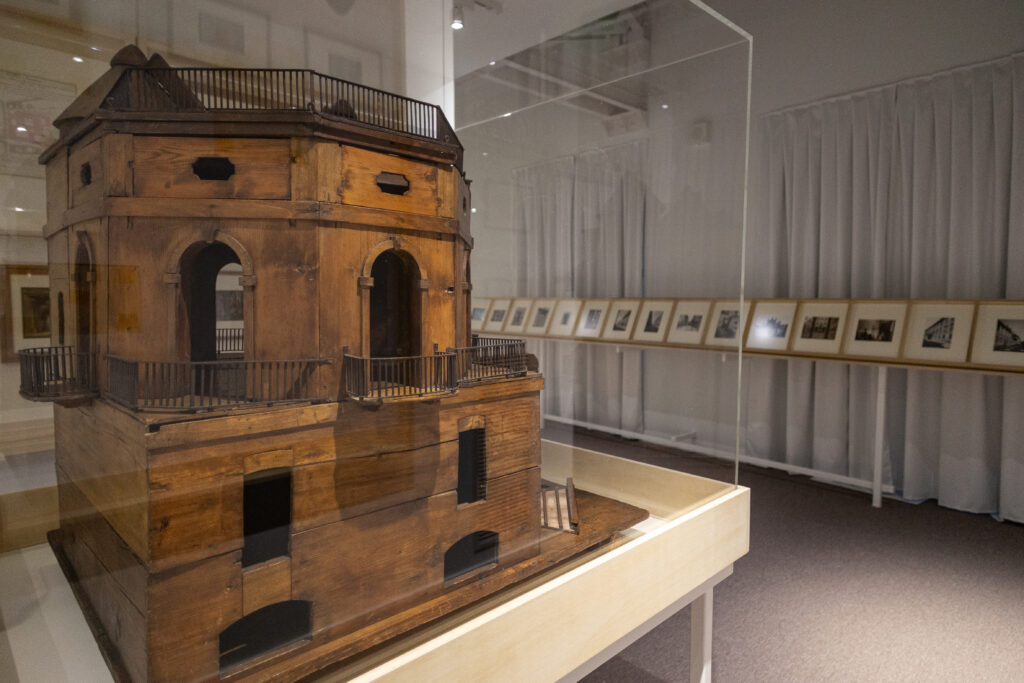
The second floor of Palazzo Citterio and Stirling’s underground space are dedicated to temporary exhibitions. From December 8, 2024, to March 9, 2025, the exhibition La Grande Brera. Una comunità di arti e scienze (The Great Brera: A Community of Arts and Sciences), curated by Luca Molinari, will take place on the second floor. It narrates the history of the communities that have lived within the Brera complex since the 1500s, alongside the architectural evolution of the building. The exhibition illustrates how Brera has transformed from a single architectural entity into a wide urban hub that unites institutions, heritage, communities, and projects. Designed by Francesco Librizzi, the exhibition is laid out in three parts. The first offers a general introduction to Grande Brera. The second focuses on the architectural history of Brera and Palazzo Citterio. The third merges the two narratives, creating a rich landscape interwoven with themes such as community, experience, creation, memory, and education. Visitors are invited to experience the deep and continuous richness at the heart of Milan.
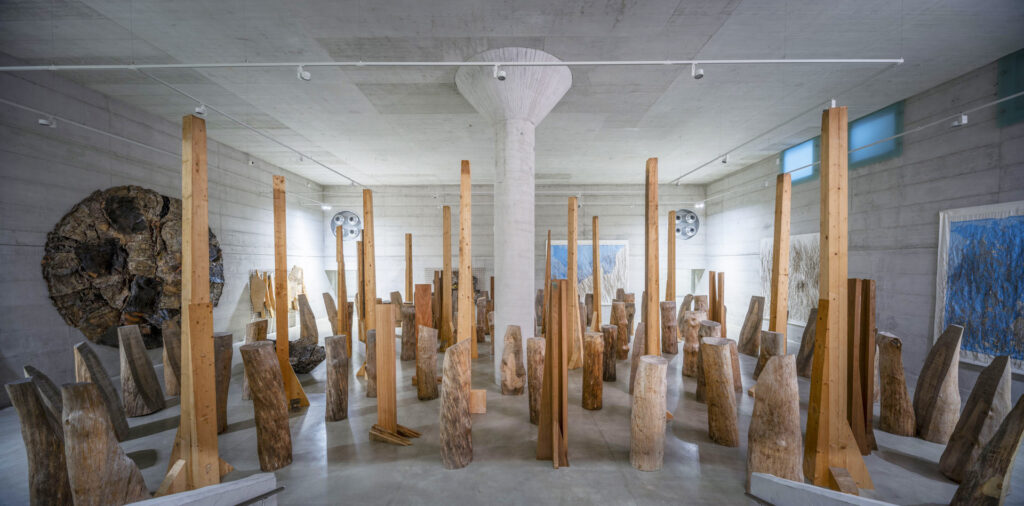
Finally, from December 8, 2024, to March 23, 2025, the underground space of Palazzo Citterio will host the exhibition Mario Ceroli. La forza di sognare ancora (The Strength to Keep Dreaming), curated by Cesare Biasini Selvaggi. It features ten large-scale works created by Ceroli specifically for the 1950s space designed by James Stirling. Mario Ceroli (b. 1938, Castel Frentano) is regarded as one of the most experimental and nomadic artists of his generation. Known for his interactive and open-ended sculptural forms, Ceroli uses wood—his archetypal material—as the protagonist in a sculptural language that invites viewers to participate in meaning-making.
Cover Photo: MCA Palazzo Citterio ©Walter Vecchio